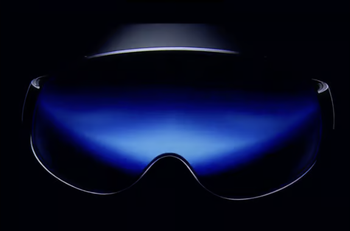
Samsung Galaxy XR: A Bold $1,800 Glimpse Into the Future of Spatial Computing
After years of anticipation and over two and a half years since Apple’s Vision Pro reshaped the conversation around mixed reality, Samsung has finally unveiled its own contender – the Galaxy XR headset. At $1,799.99, it’s less than half the cost of Apple’s $3,500 Vision Pro, but make no mistake: this isn’t meant to be a budget competitor. Instead, it’s Samsung’s public statement of intent – a blueprint for the future of spatial computing and AI-driven smart wearables.
More than a gadget, the Galaxy XR feels like a prototype for what Samsung envisions as the next evolution of personal technology. Think of it less as a product for the masses and more as a testing ground for an ecosystem of spatial, AI, and sensory technologies that could soon fit into a pair of stylish smart glasses.
The Galaxy XR Arrives With Ambition
Now available directly from Samsung, the Galaxy XR launches with a collection of bundled offers that can save buyers up to $1,140 in subscriptions and services. But what truly stands out is not the price or the deals – it’s the direction Samsung is heading. The headset’s release comes at a fascinating moment: just a week after Apple updated the Vision Pro with the new M5 chip and as rivals like Meta, Asus, and Steam prepare their own immersive devices.
From a technical standpoint, the Galaxy XR is built to impress. Its 3,552 x 3,840 Micro-OLED display delivers a stunningly crisp image, while its 100-degree-plus field of view enhances immersion. Backed by 16GB of RAM and 256GB of storage, the device is powered by the Qualcomm Snapdragon XR2+ Gen 2 chip – a slightly older processor, but one that remains highly capable in managing spatial data and sensor fusion. This hardware setup allows for a truly high-fidelity experience whether you’re watching immersive videos, exploring virtual cities, or interacting with 3D applications.
More Than Specs: A Platform for AI and Spatial Evolution
What sets the Galaxy XR apart from other headsets is its focus on AI-driven multimodal interaction. Samsung has embedded its Gemini AI system deeply into the device, creating an assistant that perceives not just voice commands but also gestures, eye movements, and environmental cues. The result is a headset that feels more like a digital companion than a passive tool.
Imagine looking around a virtual city in 3D Google Maps while asking Gemini for restaurant suggestions nearby – or pointing your gaze at an object and having the headset recognize and describe it instantly. Through features like Circle to Search, 2D-to-3D media transformation, and contextual voice responses, Samsung is demonstrating how artificial intelligence and spatial awareness can merge seamlessly into everyday life.
The Galaxy XR is not primarily built to dominate the consumer market right now. Instead, it’s Samsung’s sandbox for testing the building blocks of next-generation wearable computing. Every aspect – from the cameras and eye tracking to AI perception – feels like preparation for a future where these technologies live inside lightweight, everyday eyewear.
Advanced Hardware for a New Reality
Samsung didn’t hold back on the sensory hardware. The headset packs an impressive array of sensors: two high-resolution pass-through cameras, six world-facing tracking cameras, four eye-tracking cameras, multiple inertial sensors, and a dedicated depth sensor. Together, they enable precise spatial mapping and eye-tracked interaction that feels intuitive rather than forced.
There’s even iris recognition for biometric authentication, enhancing both security and personalization. While the Snapdragon XR2+ Gen 2 might not sound bleeding-edge next to Apple’s custom silicon, it still provides more than enough horsepower for today’s spatial experiences and AI-assisted tasks.
Lingering Concerns: Comfort and Refresh Rate
Still, no device is perfect. Early users and Reddit discussions highlight a few potential drawbacks. The battery remains tethered by a wire, third-party strap options are currently unavailable, and some users report that the forehead support feels awkward during long sessions. The included light blockers are described as a bit “janky,” and the controllers – though responsive – can feel cumbersome to attach.
Another sticking point is the 72Hz refresh rate. While this is fine for most applications, enthusiasts used to 120Hz or higher displays may notice reduced smoothness, especially during rapid motion scenes. It’s a reminder that, for all its innovation, the Galaxy XR still has one foot in prototype territory.
Who Should Buy the Galaxy XR?
If you’re an early adopter, a tech enthusiast, or a developer eager to explore the boundaries of spatial computing, the Galaxy XR might be your ideal playground. It’s less about entertainment and more about experimentation – a device that invites you to glimpse what Samsung’s future smart ecosystem could feel like.
However, for the average consumer, the headset’s $1,800 price tag and niche usability mean it’s far from an everyday device. Most people will likely prefer to wait until Samsung’s vision trickles down into lighter, more accessible smart glasses.
A Glimpse of What’s Coming
The Galaxy XR is not the endpoint – it’s a milestone. It symbolizes Samsung’s commitment to merging AI, spatial computing, and wearable design into one unified vision. Just as the Galaxy Note once paved the way for the modern smartphone experience, the Galaxy XR could lay the foundation for the next era of personal computing – one where digital information overlays the real world effortlessly.
At $1,800, it’s not a casual purchase. But for those willing to invest in the future, the Galaxy XR isn’t just worth it – it’s a preview of where our digital lives are heading.
4 comments
Samsung finally catching up to Apple but in a good way imo
looks dope but heavy af on forehead apparently 😬
Vision Pro is still too expensive, so maybe this is the move
That AI assistant sounds wild… like Jarvis vibes fr