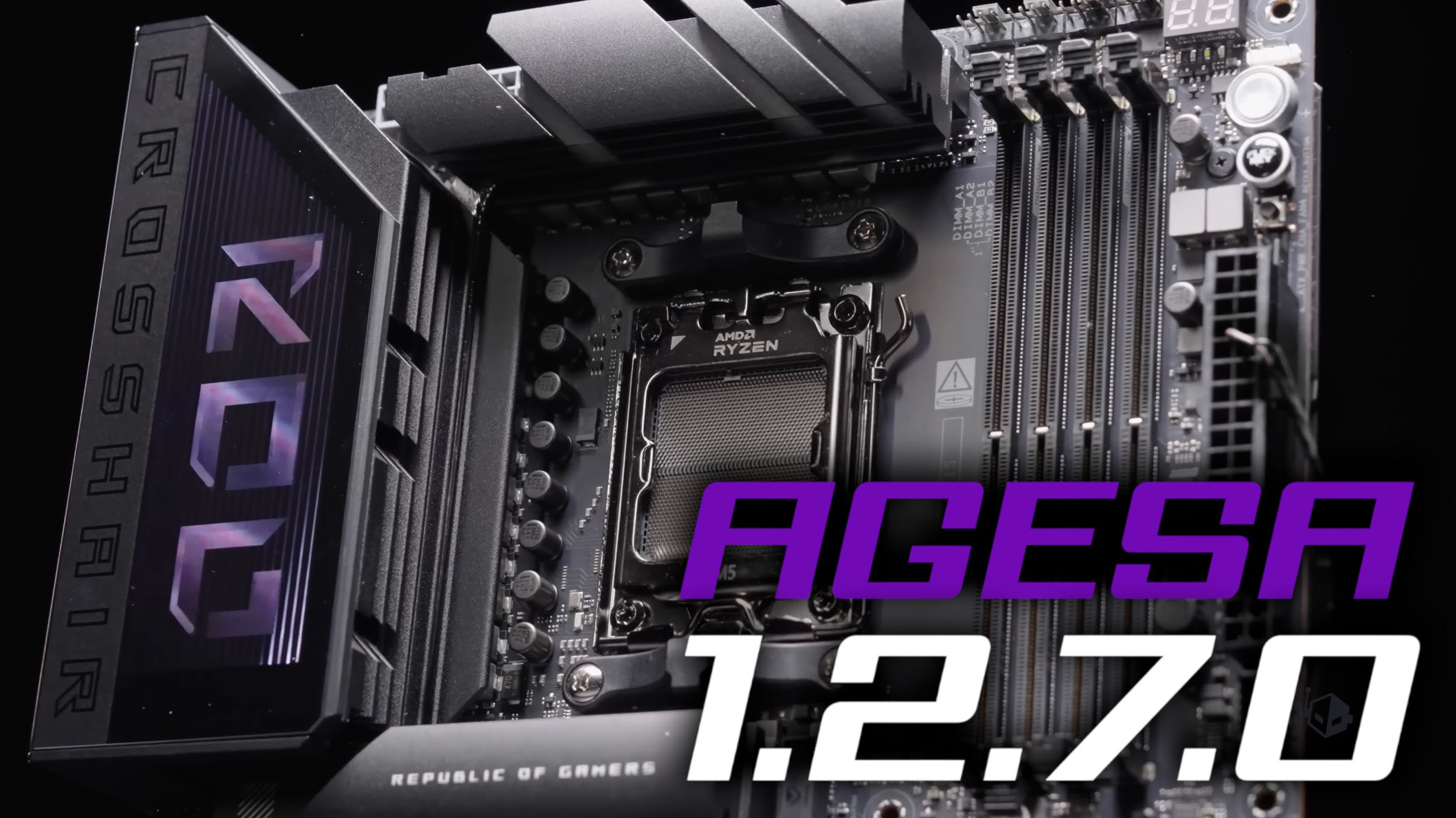
ASUS Prepares AM5 800-Series Motherboards for Next-Gen AMD Ryzen 9000G APUs with New AGESA 1.2.7.0 BIOS
ASUS has officially rolled out new BETA BIOS updates based on AMD’s latest AGESA 1.2.7.0 firmware, signaling readiness for the arrival of the next-generation Ryzen APUs. The move marks another step in the gradual evolution of AMD’s AM5 platform, as motherboard makers position themselves ahead of the Ryzen 9000G series launch – the much-anticipated successor to the Ryzen 8000G family.
The AGESA (AMD Generic Encapsulated Software Architecture) 1.2.7.0 update brings fine-tuned optimizations and extended compatibility for upcoming APUs believed to be part of the Strix Point or Kraken Point lineup. These chips will reportedly combine Zen 5 CPU cores with RDNA 3.5 integrated graphics and a significantly more capable NPU designed for AI acceleration, offering up to 55 TOPS of performance – a leap forward for everyday computing and light gaming.
AMD and its board partners have already hinted at early support for these APUs through earlier AGESA builds such as 1.2.0.3, but the latest version refines that groundwork with enhanced stability, improved thermal management, and better overall performance tuning. In essence, AGESA 1.2.7.0 is not just a compatibility patch; it’s a foundational update preparing the AM5 platform for AMD’s next leap in hybrid performance.
According to ASUS, this BIOS remains in BETA for now. The stable public version, 1.2.0.3g, continues to be the default on most retail boards. However, enthusiasts and early adopters eager to test next-gen readiness can already download the new firmware for their X870 and B850 motherboards from ASUS’s official support page. The brand has ensured that nearly every model in its AM5 lineup – from the flagship ROG CROSSHAIR X870E EXTREME to the TUF GAMING B850M-PLUS – is covered with version 1801 or 1301, depending on the chipset tier.
For ROG fans, that includes multiple editions such as the CROSSHAIR X870E HERO, the STRIX X870E-H GAMING WIFI7, and even limited variants like the Hatsune Miku Edition, all getting BIOS 1801. ASUS’s TUF GAMING and PROART boards haven’t been left out either, ensuring creators, gamers, and professionals alike can prepare for AMD’s forthcoming hardware ecosystem.
What makes this update particularly interesting is the forward-looking integration of AI-focused features. The Ryzen 9000G APUs are expected to leverage AMD’s new XDNA 2 NPU, improving AI-assisted tasks such as video upscaling, voice recognition, and productivity acceleration. Combined with integrated RDNA 3.5 graphics, this generation could finally make iGPU-based gaming truly competitive in the 1080p range – no discrete GPU required for many mainstream titles.
Beyond pure performance, ASUS’s implementation of AGESA 1.2.7.0 reflects how motherboard manufacturers are preparing users for the era of smarter, more autonomous systems. With Windows 12 rumored to emphasize on-device AI capabilities, these updates aren’t just technical necessities – they’re early groundwork for the next wave of PC computing trends.
While AMD hasn’t officially confirmed the Ryzen 9000G lineup’s launch window, sources point toward a Q1 2025 reveal. Once the official firmware drops, ASUS and other partners are expected to release final, fully validated BIOS versions. For now, enthusiasts who want to stay ahead of the curve can experiment with the BETA versions – though as always, with the usual caution that comes with non-final firmware.
The AM5 platform, initially met with skepticism for its thermal behavior and high cost of entry, has matured significantly through firmware updates. As one long-time user commented, the heat spreader design might still be controversial, but the platform’s reliability and performance scaling with each update show that AMD’s long-term support strategy for AM5 is paying off. With this latest BIOS, the platform feels more future-proof than ever.
So, while Intel continues to iterate rapidly on its hybrid architecture and new socket platforms, AMD and ASUS appear to be betting on refinement and longevity – ensuring AM5 remains a stable base for the next several CPU generations.
2 comments
The End of AM5? nah bro this platform just got started 🔥
cant believe they made a Hatsune Miku edition board lmao that’s peak gamer