Borderlands 4 Creative Director Randy Pitchford recently delivered a candid, provocative take on the looter-shooter genre and the surprising scarcity of worthy rivals. In a wide-ranging interview on BBC Radio 5 Live, he insisted that if more developers truly grasped *why* players obsess over loot decisions, Gearbox would already face “good competitors.”
“We suck!” Pitchford admitted early on. 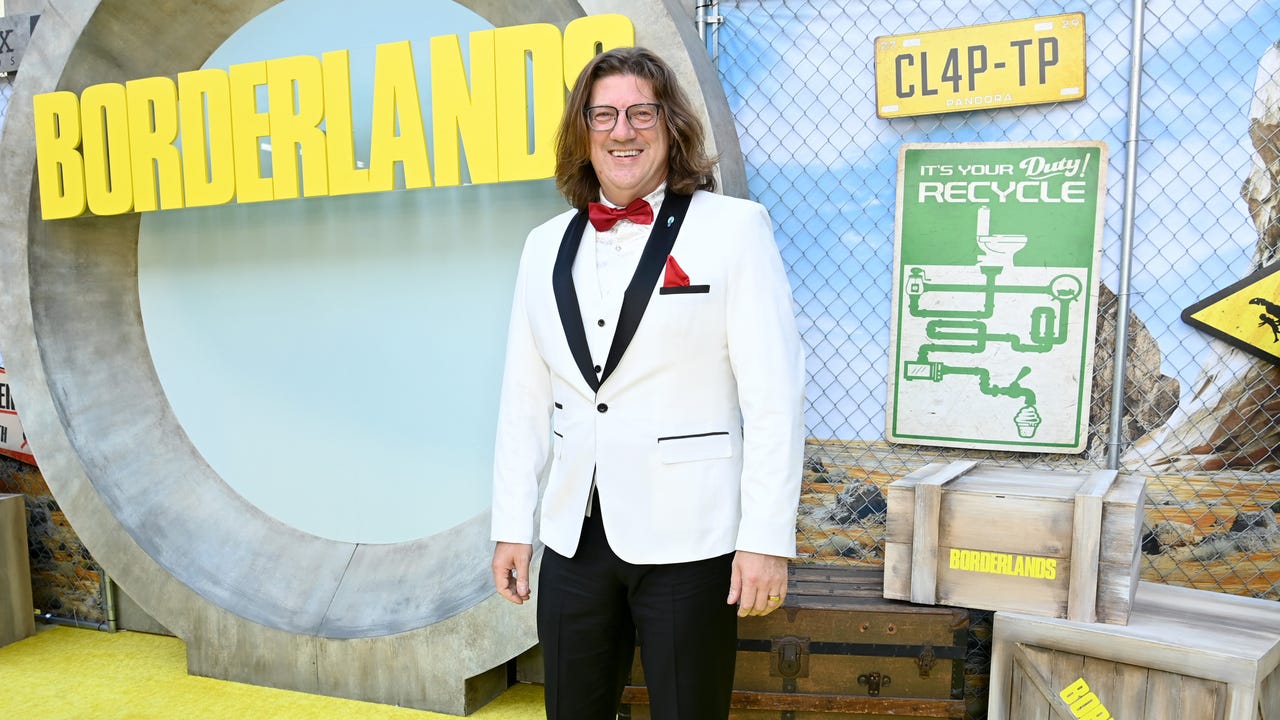
It’s not false modesty: he was contrasting Gearbox’s achievements with the ambitions of entertaining billions. Borderlands as a franchise is poised to cross 100 million units sold with Borderlands 4 – a feat that many studios envy. But to him, that number is still a sliver of the world’s gaming population. “So I feel like we’re just getting started,” he said.
After more than two decades working on the series, Pitchford claims the team is finally inching closer to mastering the balance of its signature gameplay. But he also made clear: the journey is far from over. “We’ve probed a lot of the endpoints. But I don’t think we’re anywhere near the end of a journey,” he added.
The Core Loop: Why Loot Decisions Make or Break a Looter Shooter
At the heart of Pitchford’s argument lies one deceptively simple mechanic: the constant decision loop between your current gear and whatever just dropped. Every moment in Borderlands nudges you to ask: is this new weapon better than what I already have? Will it meaningfully improve damage, usability, or synergy with my build?
That decision is the pulse of the game. Dropped weapons (sometimes from crates, chests, even toilets) force players to pause, compare, and sometimes agonize. Most of the time, the answer is “no – I’ll keep what I had.” But occasionally, it’s “yes,” and you slot in the new item, altering your character’s trajectory.
That tension – between objective stat gains and emotional attachment to your existing gear – is what Pitchford says human brains are wired to savor. “That is a very compelling, fundamental … both need and skill … our brains like doing it,” he reasoned. He even compared it to how our prefrontal cortex evolved to evaluate options, make judgments and weigh emotion against logic.
“We’ve reduced it down to this simple moment with this interface,” Pitchford explained. The more you make such decisions – in a game or in life – the more you engage that cognitive muscle. He insisted this is not about creating an “addictive” product but about tapping into a deeply human urge to assess, refine, and evolve.
Why There Aren’t More Borderlands-Style Games
Given the success of Borderlands, one might expect a flood of imitators – yet that hasn’t happened. Pitchford is openly puzzled: “If other game designers … understood that, we’d have more competitors, or we’d have good competitors.” Instead, he claims many studios launch “loot games” driven by business analytics, not by a nuanced understanding of the loot decision loop.
He recalled expecting rapid mimicry after the original Borderlands hit: “We’d immediately see lots of other games imitating and aping, and we’d be dead, because we can’t compete with a lot of other folks.” But that war for competitors never fully materialized.
Of course, Borderlands is far from the only looter shooter – Destiny, The Division, Warframe, Outriders, Remnant 2, and others share bits of the formula. Still, few have managed to emulate Borderlands’ blend of frenetic gunplay and loot tension. Some attempted and failed (like Rocksteady’s much-derided Suicide Squad: Kill the Justice League). Others remain niche or inconsistent.
Reception, Reality, and the Role of Criticism
Critical reaction to Borderlands 4 has been largely positive. IGN gave it an 8/10, praising its vast open world and improved combat, though noting occasional bugs and invisible-wall quirks. Yet the broader conversation – especially among fans – is far more mixed.
From fans and critics alike, one recurring complaint is that too much of the loot is garbage. One commenter lamented the constant need to sift through mountains of green, blue, and purple drops – most of which end up as fodder or fodder for vending machines. Others argue that the genre’s inherent glut devalues the thrill of finding something truly meaningful.
In the wake of Pitchford’s bold claims, reactions have skewed feral: some accuse him of arrogance or out-of-touch hubris, while others begrudgingly concede he’s onto something rare in modern design. Below, we reproduce some of the more colorful responses to his statements – rewritten in their own tone.
Fan Voices (unedited, for flavor)
- “He should be happy if there’s less competition – means Gearbox can put out a buggy mess and still get sales.”
- “This guy is so far up his own ass, it’s unreal.”
- “I hated the loot in Borderlands 3 (and Diablo 3/4 too). Tons of items, but 95% are junk. I’d rather have one-quarter the drops so I don’t waste time sorting.”
- “There’s zero competition because not enough people care about this genre.”
- “He doesn’t get it. Every time he opens his mouth he loses money. Just let the game speak for itself.”
- “Randy Pitchford is a walking meme. The out-of-touch CEO. Makes me not want to buy the game ever.”
- “Game is too easy. Loot’s broken. I finished campaign, but postgame is such a slog. Good story, weak loot loop.”
- “LESS LOOT!!! Don’t dump junk at me every kill. Make real drops rare, make me *excited* when I get something.”
Parsing the Praise, the Anger, and the Vision
Some complaints are predictable – every loot game attracts grumbling about inventory bloat, broken drops, and UI frustrations. But critics pointing to Pitchford’s attitude and tone raise another layer. When a studio head pontificates about their craft, fans often bristle – especially if they’ve been burned by bugs or unmet promises.
And yet, despite the backlash, one point remains hard to deny: Borderlands continues to occupy a rare space in the looter shooter firmament. No other franchise has consistently combined cheeky humor, off-the-wall weapon designs, and a deeply resonant loot loop the way Borderlands does.
Pitchford’s mission, by his account, is far grander than franchise success. He wants to capture the psychology of choice, the thrill of growth, the dopamine hit of a perfect drop – and use that to create a game that feels constantly alive and evolving.
Whether more studios will ever truly match that ambition is an open question. If Pitchford is right, many of today’s loot shooters fall short because they missed the point: not how much loot you drop, but how meaningful each choice feels.
Conclusion: A Genre Defined by Design
Randy Pitchford’s message is bold and self-aware: Borderlands isn’t just a franchise to him, it’s a design philosophy wrapped in wacky art and absurd guns. The decision loop is the core, not merely a garnish. The real challenge – for Gearbox and for any would-be rival – is capturing what makes that loop feel satisfying.
If more developers internalized that deeper insight – the tension between old and new, logic and emotion, quantity and significance – Pitchford firmly believes we’d see a wave of strong competitors. Today, he says, the bulk of imitators simply don’t operate at that level of design ambition.
He’s part evangelist, part provocateur, part designer – and whether you love him or hate him, his aim is clear: push the looter-shooter genre toward a place where every drop, every moment, every choice matters.
Photo by Jon Kopaloff/Getty Images for Lionsgate
2 comments
LESS LOOT!!! Don’t sprawl junk all over me when I kill something. Make real drops rare so I get excited
This guy is so far up his own ass it’s unreal