It’s been more than six years since Vampire: The Masquerade – Bloodlines 2 was first announced, and the journey to release has been anything but smooth. 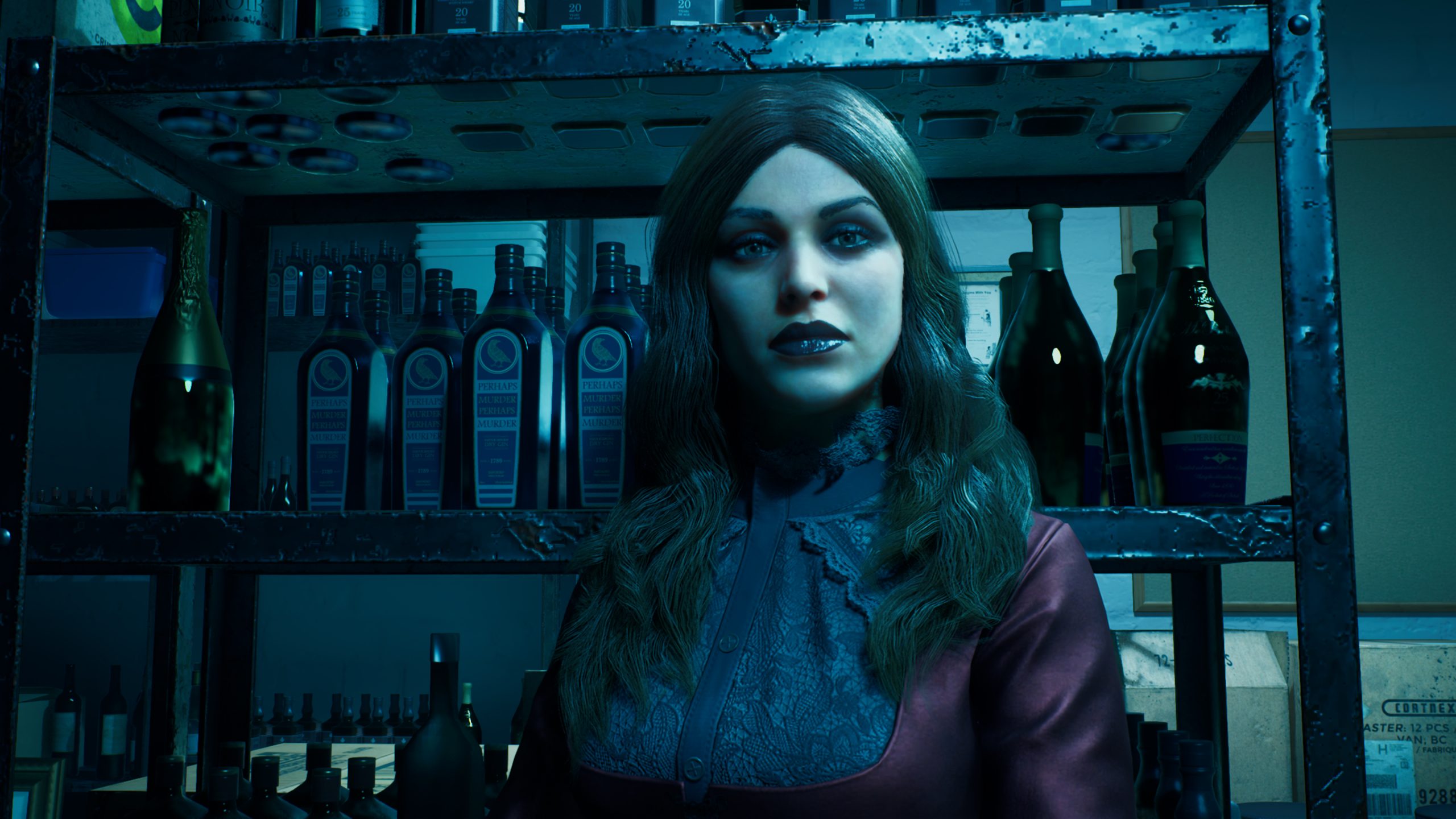
Fans longed for a sequel after the original 2004 cult classic – despite its troubled launch and rocky development led to Troika’s collapse, Bloodlines grew into a beloved cult RPG.
When publisher Paradox Interactive chose Hardsuit Labs to helm the sequel, many fans raised eyebrows: the studio had no track record in RPG development. Still, Paradox attempted to ease concerns by hiring Brian Mitsoda, key creative on the original Bloodlines, to help steer the narrative direction. But internal doubts and setbacks led Paradox to eventually remove Hardsuit from the project and put Bloodlines 2 on indefinite hold.
According to Paradox CEO Fredrik Wester, the project nearly got scrapped altogether. Fortunately, a new pitch arrived that convinced the publisher to greenlight a new development team. By September 2023, Paradox announced The Chinese Room – best known for narrative and atmosphere-driven titles like Dear Esther and Everybody’s Gone to the Rapture – would lead the project. That studio likewise lacked action-RPG experience, and player confidence was low without creative continuity from the original game.
Still, many fans simply wanted to finally see a full-fledged Vampire: The Masquerade game created with modern ambition. As someone who’s long played the tabletop RPG and believed this setting deserved a major video game, I approached Bloodlines 2 with cautious hope. After completing it, my verdict is: it’s not a flawless masterpiece – but for fans of the lore and setting, it offers real rewards.
Combat: ambitious but rough around the edges
Given The Chinese Room’s lack of action design experience, many feared the combat would fall flat. Surprisingly, though, the melee and vampiric combat mostly deliver. It won’t match genre benchmarks like God of War or Devil May Cry, but it often captures the satisfying fantasy of being a powerful vampire in a challenge-oriented system.
The core mechanics feel familiar: light attacks, heavy attacks (which can launch enemies), and dodges. There’s no stamina bar, which makes sense in a vampire fantasy – you aren’t a fragile human. But many enemies are also supernatural, so unlimited dodging doesn’t guarantee safety. My main gripe is the “parry” mechanic, which only works if you dash toward an opponent just before their strike. That timing is unintuitive compared to standard parry systems, and I often defaulted to dodge even when parry was theoretically more optimal (especially since it rewards counterattacks).
Stealth and feeding remain central. Feeding is your primary means of healing (unless you carry health elixirs), and many fights hinge on how well you can isolate a victim. Feed in combat too early or recklessly, and you risk being interrupted mid-gulp. Feeding also replenishes energy for your special vampire abilities, so timing and positioning become critical.
One of the early powers you unlock is telekinesis – great for pulling objects or enemies toward you. It also interacts funnily with firearms: grab a gun from an enemy, use telekinesis to shoot it at others, then toss the weapon aside once it’s spent.
Clans, abilities, and build limitations
At the start of Bloodlines 2, you choose from six clans: Brujah, Banu Haqim, Tremere, Ventrue, Toreador, and Lasombra. Each clan has six total abilities – two passives and four actives, categorized by Strike, Relocate, Affect, and Mastery. Shortly into the game, you gain access to abilities from other clans, but there’s a catch: you always carry just four active slots, and to add a new ability, you must swap out an ability of the same type (e.g. Strike for Strike). That limitation initially disappointed me, but upon reflection it’s a necessary balance measure to prevent player builds from becoming overly bloated.
Still, this restriction makes your choice of new powers feel weighty. You can’t just hoard every cool ability. And you can’t trade a Strike for a Relocate or Affect for Mastery – each swap must stay within its category. While restrictive, it keeps you juggling meaningful decisions rather than mindlessly collecting every power.
I played as a Toreador, drawn by their charm-based Entrancing Kiss strike ability. In harder fights where enemies swarm you, charming one foe to your side can shift the balance significantly – especially when the traitor turns on their allies. The Blink relocate ability is flexible for mobility or a follow-up kick. Meanwhile, Brujah’s Taunt (Affect) forces enemy attention and increases damage dealt to them. For Mastery, I split between Toreador’s Blurred Momentum (brief invulnerability) and Banu Haqim’s Unseen Aura (temporary invisibility). Used correctly, the combination makes you feel nearly unstoppable as an Elder vampire.
The build system isn’t perfect. Some fans have suggested removing the one-for-one swap rule entirely or allowing cross-type swaps. But at launch, it’s a measured limitation that pushes you to commit, adapt, and experiment rather than scooping everything in your path.
Bosses, world design, and Seattle under snow
Given the range of vampire powers, one would expect epic, memorable boss battles – but they’re surprisingly rare. Apart from the final encounter, most bosses feel underwhelming, lacking the spectacle your arsenal might suggest.
Bloodlines 2 is set in a snow-bound Seattle, where a persistent Christmas-season blizzard provides an in-universe excuse for disabling city traffic and vehicle pathing. Realistically, snow this heavy would hardly ground all vehicles – but it’s an understandable design shortcut to keep the focus on you, not NPC logistics.
You have traversal tools, like unlimited sprint, gliding from heights, and limited climbing, making vertical movement satisfying. Rooftops become preferred routes over busy streets – also essential for preserving the Masquerade.
The Masquerade is the setting’s central conceit: vampires must hide their supernatural nature from humans. Performing magical or superhuman actions in view of mortals fills a “Masquerade bar.” Green is safe, yellow draws suspicion, and red triggers lethal consequences – Camarilla assassins or police hunts. If fully red, you die instantly; if yellow, you can vanish and let the bar drop back down. Only when it’s green do civilians and police forget your track.
Feeding in public is the fastest way to increase your bar, but sometimes you can lure victims with abilities (like the Toreador’s Beckon) or by just starting conversations. You also manage a Blood Resonance system – Sanguine, Choleric, Melancholic – to unlock cross-clan abilities. You can see these tonal resonances using your vampire sense: if a target is at half resonance, try to seduce (for Sanguine) or anger (for Choleric) them before feeding.
Side content falls short, main quest saves the day
One of Bloodlines 2’s most disappointing aspects is its side content. The open world is relatively small by modern standards, and while true RPGs often let side quests be as engaging as (or greater than) main story arcs, this game fails that benchmark.
After you become Seattle’s vampiric Sheriff, you receive nightly optional missions from three NPC contacts: Mrs. Thorn (Tremere), Niko (Banu Haqim), and Onda (Lasombra). Each mission is underwhelming. Thorn gives you dull fetch tasks, Niko directs punishments for civilian transgressors, and Onda demands you eliminate named “ghoul leaders” with borderline no context. These quests seldom connect into deeper narrative threads – they feel standalone and perfunctory.
The game also oversells its runtime. I clocked out at 18.3 hours for nearly everything the story offers (with some preview familiarity). A typical player might stretch that to 20 hours, far short of the promised 25–40. It’s not catastrophic, but many fans will feel shortchanged.
By contrast, the **main quest** is the game’s greatest strength. Its narrative is twisty and compelling, populated by well-developed characters whose motives often surprise. One standout is Fabien, a Malkavian vampire with ties to the mysterious Phyre. They may have delayed the game’s launch, but their presence adds depth and intrigue. Ronan Summers’ voice work gives Fabien real gravitas, and I’d argue they’re the game’s best character.
My only real narrative gripe: at the ending, the fate of one major character feels sidestepped or forgotten. Whether due to time constraints or developmental oversights, it left the finale slightly unsatisfying for a few threads.
Performance, visuals, and technical frustrations
Running on Unreal Engine 5, Bloodlines 2 looks fine, though not revolutionary. Without ray tracing or other advanced visual gimmicks, it delivers solid, serviceable graphics.
On PC, it supports NVIDIA DLSS Super Resolution, Frame Generation, and Multi-Frame Generation, as well as AMD FSR 3.1 with Frame Generation. Even so, technical issues abound. My high-end PC (9800X3D CPU and an RTX 5090 GPU) suffered from crippling stutter and frame drops just while wandering Seattle. This is one of the more egregious UE-based performance issues I’ve seen.
I first observed stutter during the preview build and even raised it with developers – yet the final release hasn’t improved. Patch updates may help, but my optimism is low. Even more baffling: there’s no support for HDR displays. For a triple-A title releasing in late 2025, omitting HDR is inexcusable. Unreal Engine 5 already supports HDR in other titles, so this is a glaring oversight.
Verdict: flawed but intriguing
Vampire: The Masquerade – Bloodlines 2 isn’t a perfect comeback. Its side content disappoints, campaign runtime is modest, and performance stutters distract from immersion. But for players drawn to the World of Darkness, it still delivers satisfying vampiric combat and an engrossing main narrative.
If you’re a devoted fan of Vampire lore and willing to overlook rough edges, there’s a compelling experience here – and I think it’s worth a look during a sale rather than blind at full launch price.
Pros & Cons
- Pros: deep, layered main story; memorable characters; fun use of vampiric abilities and combat fantasy; atmospheric setting true to the lore.
- Cons: severe performance issues and stuttering on PC; weak, underdeveloped side content; brief overall playtime; missing HDR support; occasional narrative threads left unresolved.
Reviewed on PC (provided by publisher). For full disclosure and our editorial review standards, see our ethics policy. Final rating: 7/10.
2 comments
Side missions sound like fetch quests with flavor stripped off – total missed opportunity
18 hours is barely an RPG length – hope they add DLC or expansions