When Battlefield 6 entered its open beta, a simmering philosophical war began to brew: should this next-gen entry lean toward nimble, high-mobility “movement shooters,” or preserve the grounded pacing that longtime fans expect? That tension has since crystallised into a culture war between two camps – the hyper-reactive “zoomers” and the patient, veteran “battledads.” As Battlefield Studios and EA now navigate post-launch feedback, the question remains: can they satisfy both, or will they end up disappointing everyone?
The Movement Divide: Zoomers vs. Battledads
In contemporary FPS discourse, few debates are more polarizing than movement mechanics – and in no other franchise has this become so generationally laden. The “zoomers” are typically newer players, often more accustomed to games like Call of Duty or Apex, where wall-runs, slides, and fast pivots are staple movement tools. 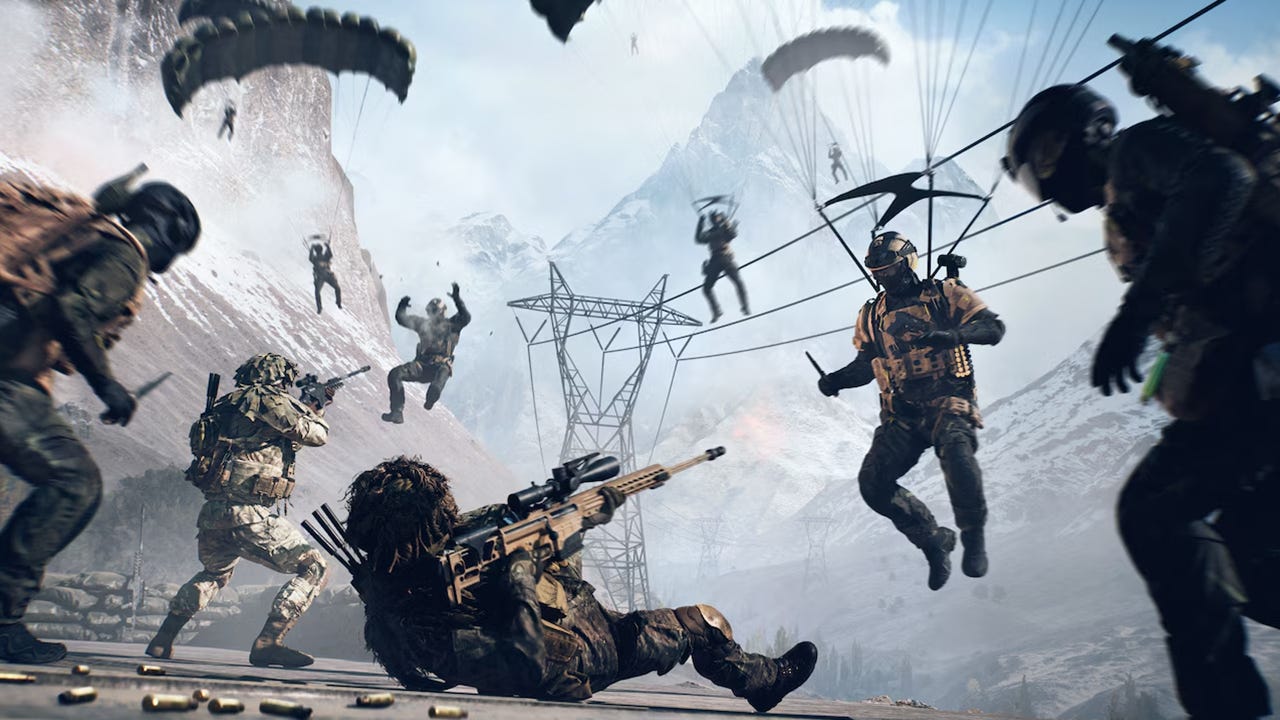
The “battledads,” by contrast, are longtime Battlefield fans who gravitate toward a more deliberate, tactical shooter approach.
Because the Battlefield series has long been viewed as the slow-to-medium paced counterweight to hyperkinetic shooters, fans have often expected a more strategic rhythm. But the beta version of BF6 introduced movement mechanics that pushed the series into more aggressive territory – quicker jump momentum, extended slide speed, and more forgiving mid-air control. That upset many “battledads,” who felt the core identity of Battlefield was being compromised.
Beta Reaction & Developer Course Correction
Developers listened. After the beta period, EA and BF Studios announced a series of movement nerfs aimed at dialing things back toward tradition: horizontal speed reductions, jump momentum limitations, and punitive accuracy penalties when firing while sliding or airborne. These changes were intended to curb “movement tech” abuse. :contentReference[oaicite:0]{index=0}
One user summed up the backlash: “Another AAA studio gutting movement to cater to people that play games one hour a week that will never run into people utilizing movement tech anyway.” The response was swift:
“If you want movement in your shooter go play COD. Battlefield’s a different kind of game.”
That kind of binary framing – movement or no movement – obscures a more nuanced reality. As the game launched on October 10 (for PC, PS5, Xbox Series S/X) and sold over 7 million units in its first three days, the community’s internal war only deepened. :contentReference[oaicite:1]{index=1}
Finding the Middle Ground: Devs Weigh In
DICE’s principal game designer, Florian Le Bihan, has stayed active on social media, attempting to moderate expectations and signal measured responses. He’s made it clear that the studio has no interest in rolling back to the “open-beta movement” wholesale, but is working on “slight adjustments” to polish parts that feel clunky or overcorrected. :contentReference[oaicite:2]{index=2}
Le Bihan further clarified that upcoming patches will address “rough case scenarios” – many of which pivot on animation issues rather than core movement physics – and emphasized that no “dramatic” movement changes are planned. :contentReference[oaicite:3]{index=3}
That said, not all feedback is theoretical. Within days of launch, community-flagged bugs were being addressed: a glitch that halted jump momentum when using melee weapons (like the knife or repair tool) was fixed. :contentReference[oaicite:4]{index=4} Meanwhile, a more spectacular exploit – “ladder launching,” wherein players use ladders to bounce 40–50 feet through the map – has drawn developer attention. EA has already committed to patching it out. :contentReference[oaicite:5]{index=5}
Even so, the core debate persists. For some longtime players, excessive rollback could make the game sluggish or dull. For others, too much movement invites chaos. One Reddit voice captured this fear: “My main concern is they’ll over-adjust again, just like what happened with [Battlefield 2042]… Don’t repeat the same mistake with movement DICE.”
Voices from the Trenches
Across forums, social media threads, and Reddit comment sections, the passions run high. Some representative takes:
“Sure, their session is shorter but unlike zoomer, they ain’t changing game based on the trending.”
“Battlefield was never about ridiculous movement tech. The craziest it ever got was dolphin-diving.”
“They’ll end up finding a messed up middle ground and pissing everyone off instead of only making half the people happy.”
“Movement is fine, not CoD fast and not too slow. I beat faster players by being smarter.”
“I classify myself as an older ‘Battle Dad’. But I’m proud I can still hold my own with the younger twitch-movement generation. :-)”
“Zoomers have Apex and Fortnite and CoD. As a show of support for Battledads we need a tactical small-night map in BF6 Portal.”
“Few things I love more in BF6 than taking out someone who thought they could slide away and get lucky.”
Risks, Rewards & What Comes Next
If there is a central tension at play, it’s balancing **momentum and control**. Too much movement skews fights toward mechanical reflexes and perks those who master movement tricks; too little risks turning matches into tedium and diminishing the expressiveness players associate with Battlefield.
So far, the devs’ approach is cautious: incremental fixes, bug patches, balancing of edge cases rather than wholesale overhaul. Whether that ultimately placates either side remains uncertain. But the early results have been promising, at least in terms of responsiveness and speed of deployment. :contentReference[oaicite:6]{index=6}
For the moment, players of all stripes should brace themselves for ongoing changes. Expect minor movement refinements, bug fixes, hit registration adjustments, and possibly responsiveness enhancements – not revolution. The devs seem determined to avoid past mistakes like those seen in Battlefield 2042, where sudden swings in map size and pacing alienated parts of the player base. :contentReference[oaicite:7]{index=7}
Final Word: A Battlefield Firmly in Transition
One week past launch, it’s clear that the movement debate is not a sideshow – it **is** the frontline. Developers feel the heat. The community is watching closely. And the balance they strike now could define the future of the series.
If they do this right, Battlefield 6 may offer a middle way – one that rewards timing, skill, and map mastery without leaning too hard into twitch and trickery. But success requires restraint, finesse, and constant recalibration.
In the end, both zoomers and battledads may still have complaints, but at least they’ll know the devs tried to listen – and that’s more than many recent shooters could manage.