China has officially gone into full frenzy mode for Apple’s newest creation – the iPhone Air. Within just hours of its release on Friday morning, October 17, Apple’s sleekest and lightest iPhone yet completely sold out across the country. According to the South China Morning Post, online pre-orders vanished in record time, with every color and storage variant snapped up before the day was even over. 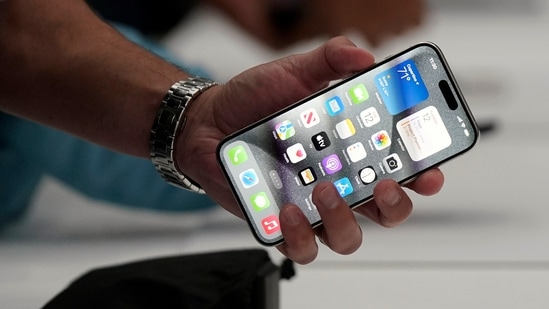
The demand was so fierce that Apple’s own store and Tmall both showed the iPhone Air as out of stock within the first two hours. For perspective, this level of interest even surpassed what was seen in the U.S. and Europe during the model’s earlier launch last month.
Starting at 7,999 yuan (around $1,122 USD), the iPhone Air isn’t exactly cheap, but its allure lies in its remarkable design. This device is part of the iPhone 17 lineup, launched in September alongside the iPhone 17 and iPhone 17 Pro models. Interestingly, Apple skipped the traditional ‘Plus’ version this year and instead introduced the Air as a bold experiment – an ultra-slim device that focuses on minimalism and design innovation. With a body thinner than any iPhone before it, the Air’s name is more than just branding – it’s an identity statement.
While Western audiences appreciated its aesthetic, Chinese consumers appear to have embraced it with unmatched enthusiasm. One major factor behind the delayed Chinese release was regulatory approval for eSIM technology. Unlike other iPhones, the Air doesn’t support physical SIM cards at all, allowing for a slimmer internal layout. China’s Ministry of Industry and Information Technology recently greenlit eSIM trials, marking the country’s first widespread shift toward completely digital mobile connectivity. This timing couldn’t have been better for Apple. As China Mobile, China Unicom, and China Telecom announced readiness for eSIM operations, the iPhone Air’s launch suddenly became symbolic – not just another phone, but a herald of China’s new digital era.
The enthusiasm wasn’t just about Apple’s branding. For many Chinese consumers, the iPhone Air represented progress: a blend of technological sophistication and national readiness for modern infrastructure. The device feels futuristic, lightweight, and refined – a design philosophy that aligns perfectly with Chinese users’ increasing preference for elegance and efficiency in personal tech. While Western buyers often favor performance and battery life, Chinese consumers tend to place higher value on form factor and usability, and that’s exactly where the Air shines.
Of course, not everyone is thrilled with its compromises. The iPhone Air’s smaller battery remains a sticking point for power users. It’s clear Apple had to trim somewhere to achieve that impossibly thin frame. Heavy users – those who rely on their phones for hours of screen time or gaming – might find themselves reaching for a charger far too often. In the U.S., many buyers have expressed similar concerns, stating they’d rather carry a slightly bulkier device like the iPhone 17 Pro Max to gain longer battery life. Still, for many others, the Air is the first iPhone in years that genuinely feels new – something that redefines the category rather than just polishing last year’s design.
Available in four colors – Sky Blue, Light Gold, Cloud White, and Space Black – and storage options from 256GB to 1TB, the iPhone Air also manages to look and feel premium despite its size. It’s a device made for people who see technology as an accessory as much as a tool. And in China, that blend of functionality and status is a powerful combination.
Personally, I admire the Air’s artistry but can’t help missing that massive battery of the Pro Max. As someone who lives on my phone – messaging, working, gaming – I find frequent charging a dealbreaker. Maybe once Apple integrates silicon-carbon battery tech, we’ll finally get the perfect fusion: a slim, featherlight phone with Pro Max endurance. Until then, the iPhone Air remains an object of desire – sleek, expensive, and emblematic of the way China now defines global consumer trends in tech.