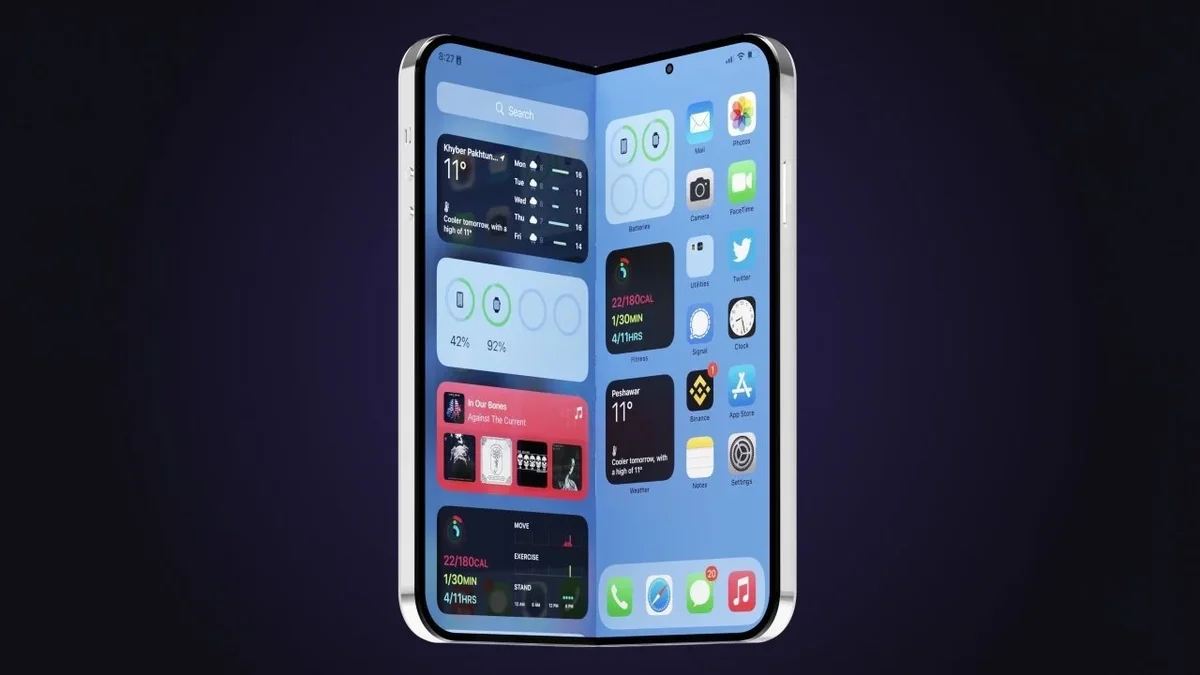
iPhone Fold’s Real Test: Not Price, but Apps, UX, and Staying Power
Apple has built an empire selling high-end phones at high-end prices, so the sticker shock around a hypothetical iPhone Fold isn’t the plot twist many think it is. History shows that Apple can command premium margins and still move millions of units. What will actually decide the fate of a foldable iPhone is not the number on the box, but whether the software and day-to-day experience justify the form factor. In other words: if the iPhone Fold is going to be more than a flashy Pro Max with a hinge, it needs to give people a reason to change habits – on day one, not in a year.
Price Isn’t the Boss of Apple – Value Is
Yes, some analysts have cooled on Apple’s stock and flagged the foldable’s potential price as a demand risk. Fair. But Apple’s customer base routinely chooses the pricier configuration: larger storage, better camera, the Max/Pro tier. Price matters, but perceived value matters more. If the iPhone Fold looks and feels like a clear step forward, financing, trade-ins, and carrier incentives will do the heavy lifting. The market has seen this movie before: premium hardware plus an aspirational brand equals lines around the block.
The Real Hurdle: Software That Earns the Fold
Foldables live or die by the apps. A big inner display is only magical if your favorite tools and pastimes adapt intelligently to it. Early Android foldables struggled because phone apps simply stretched to fill a tablet-like canvas. Over time, Google and partners rewired Android to treat larger screens as first-class citizens, nudging developers toward responsive layouts and dual-pane interfaces. It wasn’t instantaneous, but the ecosystem learned.
Apple has an added wrinkle: the iPhone and iPad are siblings, not twins. iOS and iPadOS have diverged just enough that many developers ship separate builds – or at least separate interface decisions – for each. If the iPhone Fold ships as an iPhone first and a mini-tablet second, Apple must make it painless for a single iOS app to gracefully morph across the cover display and the opened canvas. That means updated Human Interface Guidelines, SwiftUI components that snap into dual-pane modes without heroics, and system behaviors (windowing, drag-and-drop, continuity) that feel native, not bolted on.
Developers will need motivation, too. Supporting a niche device can look like extra work for unclear return. Apple can prime the pump by showcasing exemplary first-party apps: Mail with tri-pane reading, Notes with side-by-side pages, Safari with tab view and split browsing, Messages with media on one side and thread on the other. Then it can back that up with tooling: templates, adaptive components, and analytics that show fold-specific engagement. If building for the fold becomes the default path – because it’s easier, not because it’s mandatory – developers will follow.
Multitasking Must Be a Feature, Not a Feature Request
Foldable enthusiasts swear by multitasking: two apps open, content flowing between panes, video on one side and notes on the other. On the iPhone today, true side-by-side multitasking is conspicuously absent. A foldable iPhone without robust, intuitive multitasking would feel like a missed opportunity. Picture quick gestures to split an app, drag images or text between panes, and pin a floating mini-player while you triage email. These are not nice-to-haves; they are the proof that the hinge has a purpose.
Apple also needs to nail the transitions: cover display to inner display and back again. Start an article on the outside, open the device, and the layout should bloom into a multi-column view with your scroll position intact. Collapse the device and the app should smartly reflow without jarring jumps. This is continuity at the millisecond level, and it’s the kind of detail that turns a party trick into muscle memory.
Hardware Still Matters – Just Not the Way You Think
Of course, the iPhone Fold must be a physical triumph: a hinge that disappears, a crease you forget, a chassis that’s thin enough to pocket and light enough to hold for a long read. Battery life needs to be Pro-grade despite the larger canvas. Cameras must avoid the trap of “great phone, compromised camera” that haunted some early foldables. None of these will sell the device alone, but any one of them – done poorly – can sour the whole experience.
Will It Sell? Almost Certainly – But That’s Not the Metric
Foldables still represent a small slice of the broader smartphone market – single digits in share. The iPhone Fold does not have to outsell the iPhone 18 or the iPhone 18 Pro to be a hit. It needs to dominate the foldable category. Given Apple’s brand gravity, retail footprint, and the pent-up curiosity among iPhone loyalists who avoided Android foldables, the first-gen iPhone Fold will likely be the best-selling foldable out of the gate, even if the price makes headlines.
Initial demand, though, is not vindication. Sustained adoption is the test. If early buyers rave about transformative workflows – reading and note-taking that feels like an iPad, pro-level email triage, photo editing with tools on one side and canvas on the other – then the second cycle will be bigger than the first. If they shrug and say “it’s basically a big iPhone,” interest will fade to a novelty curve.
Apple’s Walled Garden Is a Superpower – If the Garden Adapts
A huge chunk of the audience intrigued by foldables simply doesn’t want to jump to Android. Continuity with Mac and iPad, AirDrop, iMessage, the Apple Watch: these lock-in benefits are real. A foldable iPhone lets those users try the new form factor without leaving the garden. But the garden must grow: handoff between Mac and a two-pane iPhone experience, clipboard and drag-and-drop that understand panes, and accessories – keyboards, cases, stands – designed for the open posture. When the ecosystem harmonizes, the fold stops feeling like a separate device class and starts feeling like the next natural shape of an iPhone.
About That Price
Will it be expensive? Almost certainly. But Apple has three aces that blunt price pain: financing (spreading cost across 24–36 months), aggressive trade-ins (especially from recent Pro Max models), and carrier bundles. More importantly, price is a narrative lever. If Apple tells a compelling story – this is the ultimate iPhone for work and play – the number will be rationalized the way the first Plus and Max premiums were. If the story is thin, no discount will save it.
Lessons From Other New Categories
Every fresh Apple category faces a second-year reality check. Hype fuels launch-year curiosity; software maturity fuels staying power. We’ve seen that arc with other first-gen products: dazzling demos, early adopter buzz, and then a clear need for iteration and developer momentum. The foldable iPhone will be no different. The winning path is simple to describe and hard to execute: ship a cohesive v1, court developers with low-friction adaptive design, and deliver rapid OS updates that unlock more of the form factor within 12 months.
The Checklist Apple Must Nail
- Unified adaptive design: One code path that elegantly spans the cover and inner displays.
- First-party showcases: Mail, Safari, Notes, Photos, Music, and Messages that demonstrate fold-native advantages on day one.
- Real multitasking: Side-by-side apps, fluid drag-and-drop, and glanceable media controls.
- Seamless transitions: Instant, stateful reflow when opening and closing the device.
- Durability and comfort: A hinge you trust, weight you can live with, and battery that lasts.
- Developer incentives: Templates, components, and store promotion for apps that embrace the fold.
Bottom Line
The iPhone Fold will likely sell like every other ambitious Apple product: briskly at launch, amplified by curiosity and loyalty. But price won’t be the make-or-break. The verdict will hinge on whether Apple – and the wider developer community – turn the extra screen into extra capability. If they do, the iPhone Fold will redefine what an iPhone can be. If they don’t, it risks becoming a gorgeous, costly detour. The hinge, ultimately, must open more than a screen; it has to open new ways to work, create, and unwind that a slab simply can’t match.