Intel’s Arc B580 graphics card has quietly gone from being dismissed as an underwhelming budget option to becoming one of the most talked-about GPUs of the year, thanks to a relentless series of driver updates that are finally addressing its biggest flaw: CPU overhead. When the card launched at $249, many gamers were intrigued by its specs – a 12 GB memory buffer at that price was rare – but early adopters quickly discovered that performance tanked when paired with CPUs that weren’t cutting edge. This wasn’t about pairing with ancient hardware either; even Ryzen 5000-series processors like the Ryzen 5 5600 were dragging the card down, with benchmarks showing massive slowdowns compared to AMD’s and NVIDIA’s mid-tier offerings.
The reason was CPU overhead, where the driver stack itself demanded more cycles than competitors. 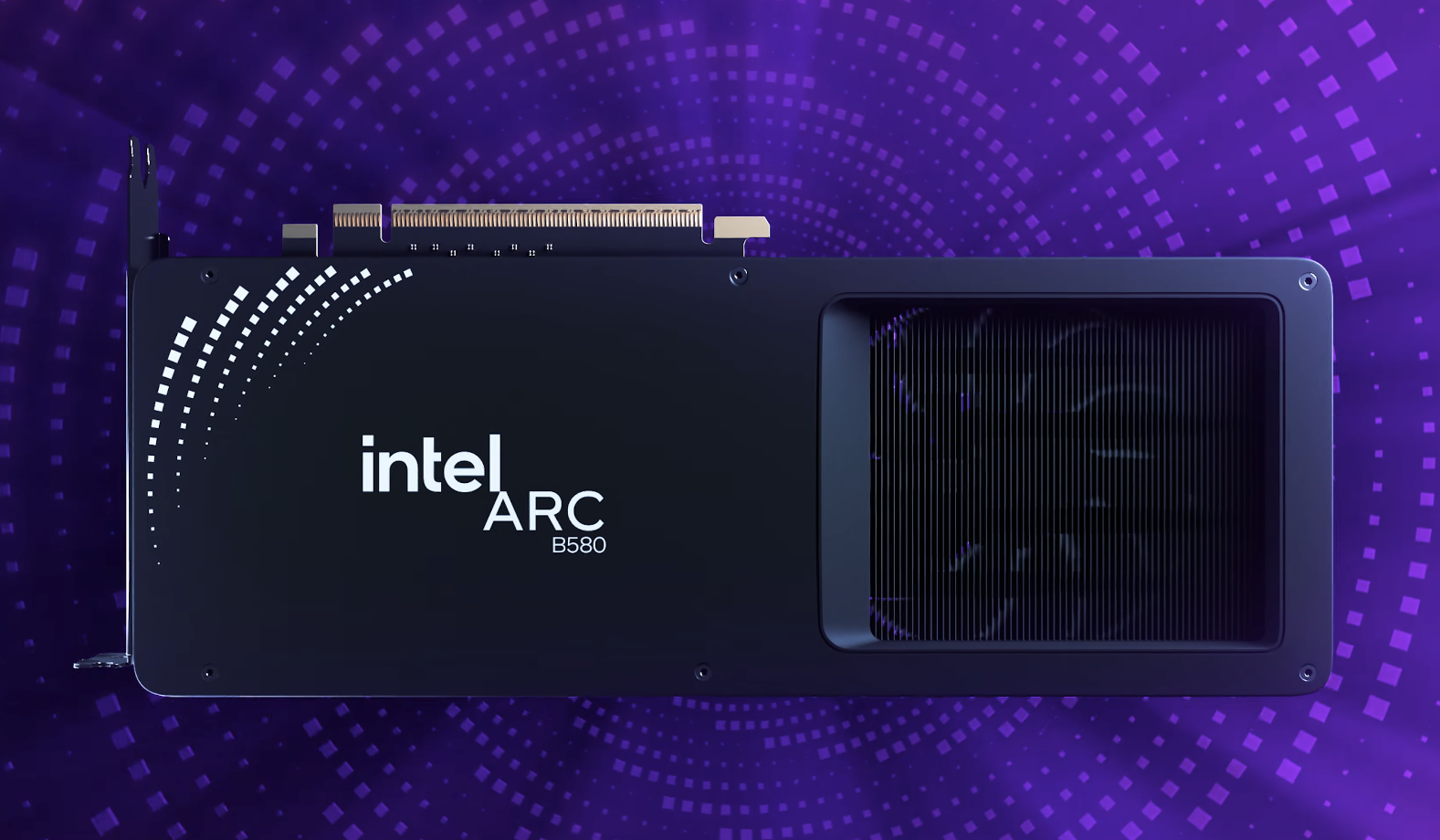
In simpler terms, the Arc B580 was eating away at the CPU’s capacity before even getting to render frames, leaving gamers with stutters and inconsistent frame pacing. Intel openly acknowledged the issue, which was important, but what mattered more was what they did next: they started rolling out driver updates at a brisk pace. The results are now becoming clear, and independent testers such as Hardware Unboxed have confirmed that the difference is not just theoretical – it’s showing up in games in a big way.
Take Marvel’s Spider-Man Remastered as a prime example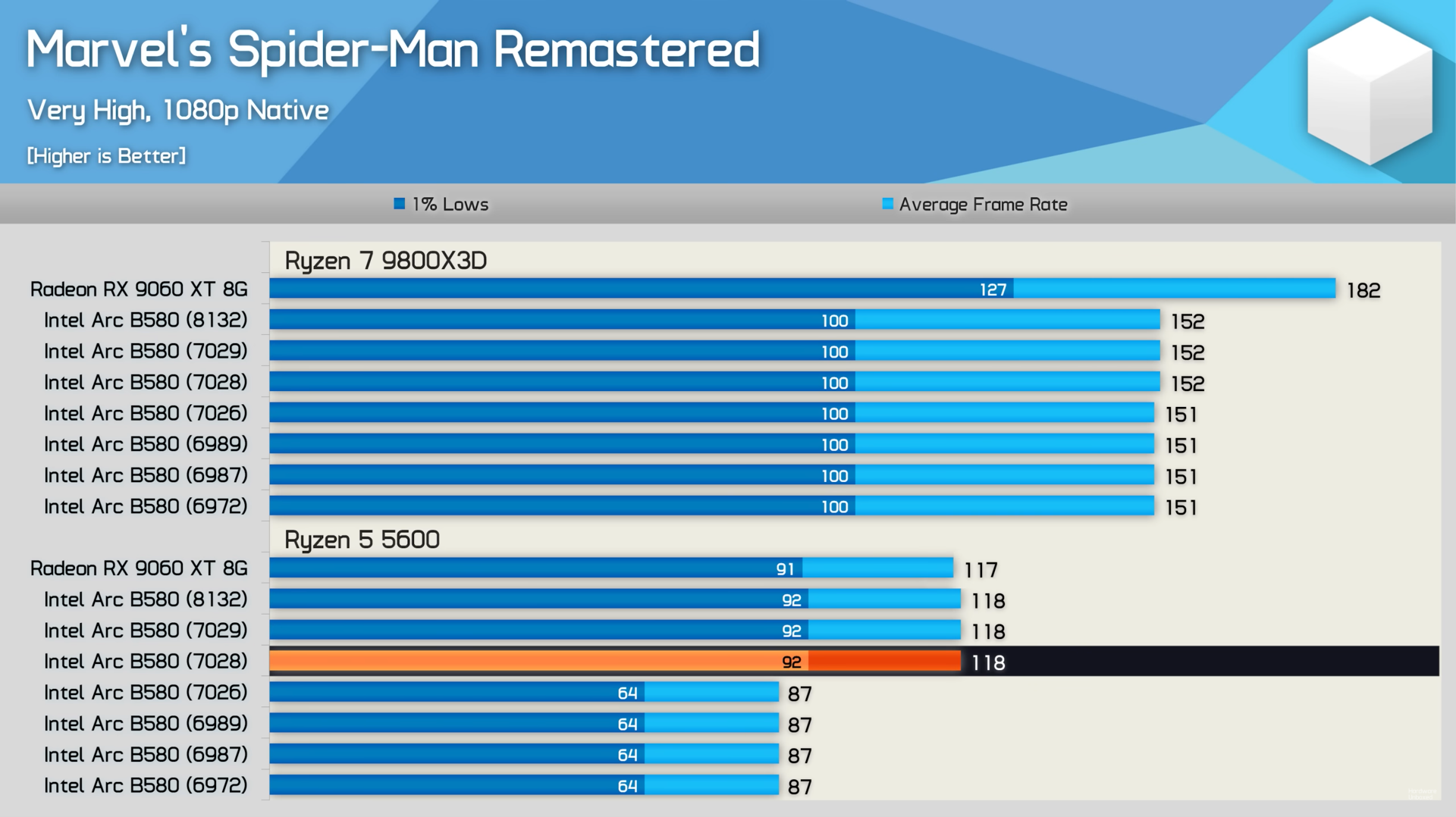
. On launch drivers, the B580 paired with a Ryzen 5 5600 looked like a disaster, losing badly to an RX 9060 XT. Both cards suffered some bottlenecking from the CPU, but Intel’s GPU collapsed under the overhead. With the August 7028 driver release, however, the same setup now shows performance gains of more than 30% compared to earlier drivers, effectively putting the B580 on par with AMD’s card in that scenario. Cyberpunk 2077: Phantom Liberty paints an even better picture. When tested with a Ryzen 5 2600, the B580 no longer regressed against the RX 9060 XT – an astonishing turnaround for a card many wrote off as broken just months ago.
The improvements don’t stop there. Titles like Dying Light: The Beast, Marvel Rivals, Kingdom Come: Deliverance II, and Borderlands 4 are all seeing consistent bumps with the Ryzen 5 5600, demonstrating that Intel’s driver engineers are targeting real-world workloads rather than synthetic fixes. It’s worth noting that overhead is still a real issue with older CPUs like the Ryzen 5 2600, so Intel hasn’t solved everything, but the progress is undeniable. The pattern shows that newer Ryzen processors are much less impacted, which means the B580 is now far more viable for mainstream gamers who don’t necessarily own the very latest CPUs but still want decent pairing options.
What makes this evolution so fascinating is the pricing context. At $249, the Arc B580 is currently the only 12 GB card sitting at that price point on major retail shelves. AMD and NVIDIA cards with similar memory sizes cost significantly more, and while raw performance still often favors those rivals, Intel has done something almost unheard of in the GPU space: it turned a widely criticized launch into a redemption story through persistent software support. In a market where gamers often complain that vendors abandon cards too quickly, Intel’s approach has sparked fresh discussion about long-term GPU value.
There’s no denying that the Arc B580 still has challenges – frame time consistency, certain DX11 titles, and optimization gaps remain on the to-do list. But the recent leaps prove that the architecture wasn’t fundamentally flawed; it simply needed more software maturity. If Intel keeps this cadence of improvements, the Arc lineup could carve out a serious niche, especially in a world where graphics card affordability continues to be a pain point. Right now, the B580 stands as a surprisingly strong option for budget-conscious gamers willing to ride along with Intel’s ongoing driver journey.