Sometimes the most daring tech experiments are the ones that end in disaster – at least at first. That’s exactly what happened when a brave modder attempted to upgrade the storage on an iPhone Air, only to end up with a bricked device. 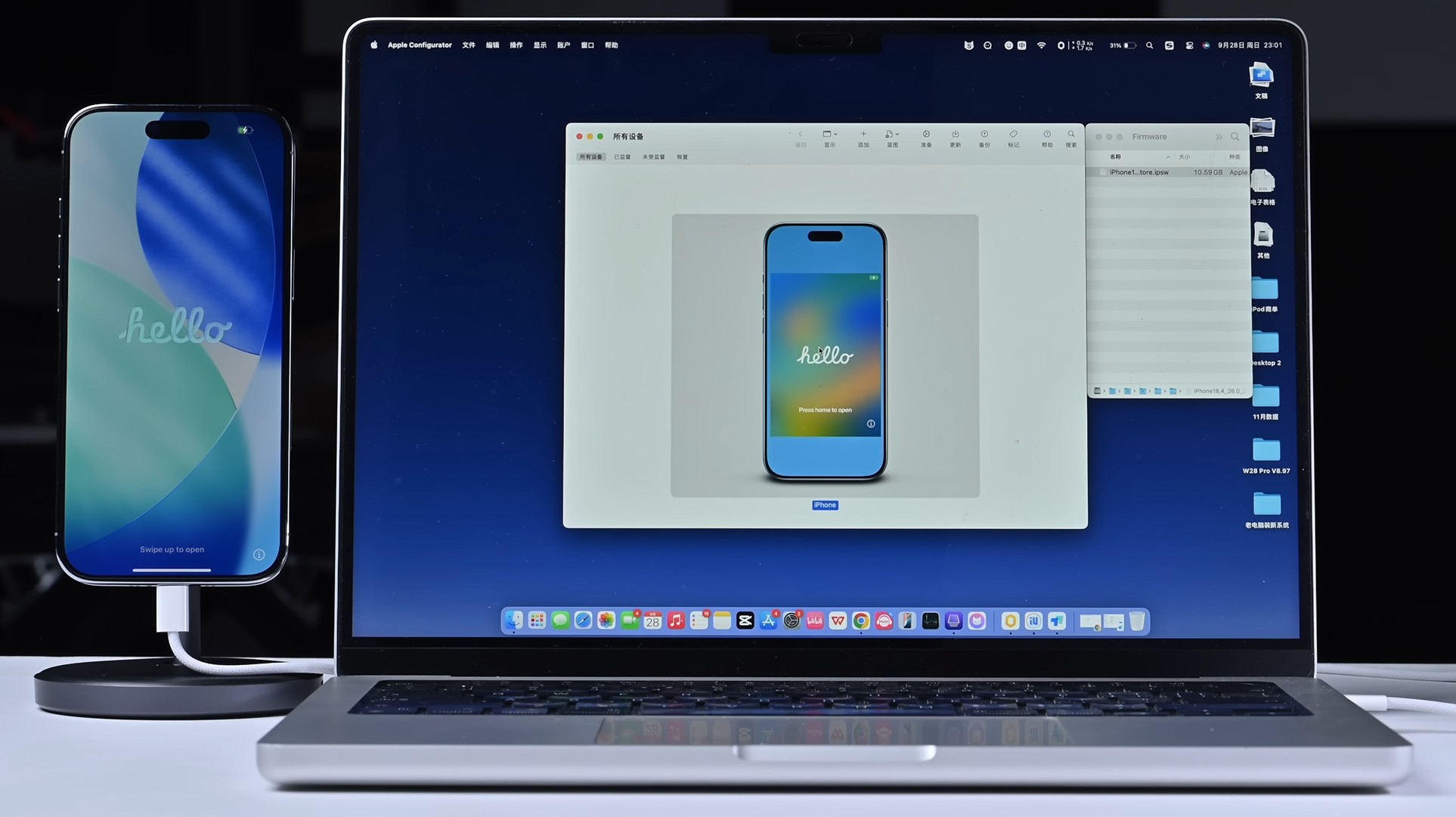
For most people, that would have been the end of the story, but instead of giving up, he managed to not only bring the phone back to life but also double its capacity, pushing the internal storage to a whopping 512GB.
The original attempt failed because the iPhone Air didn’t recognize the upgraded chip when iOS was being flashed. Apple’s storage modules carry unique identifiers, and the 256GB chip inside the iPhone Air was marked with a serial starting with ‘2NB.’ At the time, there was speculation from the creator, YouTuber DirectorFeng, that Apple might have sourced these chips from YMTC. However, in his latest update, the mystery supplier took a backseat to the real breakthrough: swapping out the problematic NAND flash for a newer Toshiba variant.
Instead of the older ‘S5E’ flash modules found in earlier iPhone generations like the 15 and 16, this time he used a Toshiba NAND identified as the ‘S6E’ family, with the model number K8A8 (sometimes confused online as K848). This newer generation seems to be better aligned with Apple’s current iOS requirements, and most importantly, it was successfully recognized during installation when connected to a Mac. That patience paid off – no last-minute errors, no sudden crashes, just a clean system boot on a modified iPhone Air.
Why does this matter? Because it challenges a long-standing assumption in the tech community that Apple completely locks down its storage modules against third-party tinkering. DirectorFeng’s experience suggests that while Apple certainly doesn’t make it easy, the barrier isn’t an absolute technical blockade. If you have the right components and an incredibly steady hand, the upgrade is possible. The Toshiba K8A8 NAND also turned out to be the perfect fit, physically matching the layout so precisely that no additional resistor adjustments or motherboard tweaks were necessary. That detail alone significantly reduces the risk for anyone bold enough to attempt the procedure.
The video goes further, noting that the base iPhone 17 models still carry the older S5E chips, which helps explain why some earlier modding attempts failed. It’s not just about soldering skills or courage – it’s about sourcing the exact right hardware. Without it, even the most carefully executed upgrade will end in frustration and another bricked phone.
For now, the iPhone Air in question not only survived the ordeal but came out better than before, doubling its storage and proving that there’s still room for modders to push Apple’s hardware beyond official limits. And this is likely just the beginning: DirectorFeng has already teased plans to try a full 1TB upgrade as soon as the chips become available. If he succeeds, it could set a new benchmark for what’s possible with iPhone hardware mods in the underground community.
So while Apple will never endorse such risky adventures, enthusiasts everywhere are watching closely. After all, nothing captures the imagination of the DIY tech world quite like an iPhone that beats its own limitations.
2 comments
ngl I’d never risk my 1k phone for soldering practice 🤯
512gb on an iPhone Air is insane, better than some laptops