The $1000 iPhone Air: Apple’s Slimmest Gamble That Looks Like the Future but Lives in the Past
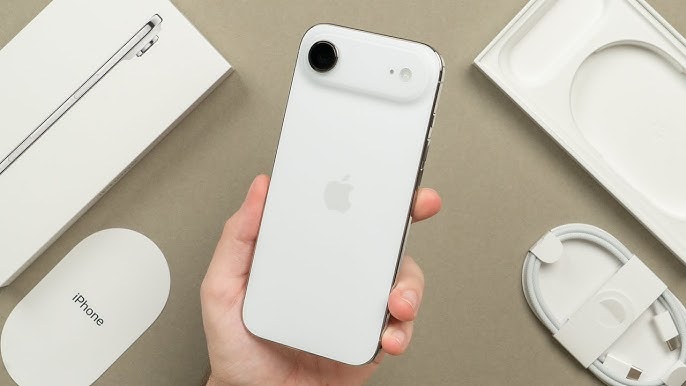
Apple has once again managed to dominate headlines by doing what it does best: selling us a dream wrapped in titanium and glass. The iPhone Air, unveiled in 2025, is the company’s thinnest and lightest iPhone ever. At just 5.6mm thick and weighing 165 grams, it feels more like a futuristic prototype than a mass-market phone. People who try it in Apple Stores describe the experience as surreal: holding something that seems impossibly thin and weightless, a product that appears more like industrial art than consumer electronics.
But here’s the catch. That first spark of wonder – the sensation of holding the future – fades much faster than Apple would like you to think. Once you start living with the iPhone Air as your daily driver, the excitement gives way to the frustrating reality that this $1000 device prioritizes style over substance. In fact, calling it a “fashion phone” might not just be clever wordplay; it may be the most accurate way to describe it.
The Allure of Thinness – and the Sacrifices Behind It
Let’s give Apple credit where it’s due. The Air is undeniably a technical achievement. The engineering that goes into compressing modern smartphone technology into something as slender as a stack of three toothpicks is remarkable. No competitor has produced anything this sleek – not Samsung, not Google, not even the experimental brands that thrive on risky design. At first glance, the Air feels like a whole new category of iPhone, one that could reset expectations for how thin and elegant smartphones can be.
Yet, once you look past that surface-level brilliance, you realize just how many compromises had to be made. It’s as though Apple’s design team wrote a single instruction on the whiteboard – “Make it thinner than anything ever” – and let every other consideration fall by the wayside. That choice comes at a high price for anyone who expects their $1000 phone to be a capable all-rounder.
One Camera in 2025? A Dealbreaker
The most glaring problem is the camera setup. Or, rather, the lack of it. In 2025, the expectation for a flagship device in the $1000 bracket is clear: at least a dual-camera system. Apple itself reinforces this standard, since the regular iPhone 17 features two lenses. Meanwhile, Samsung’s Galaxy S25 Edge comes with both a main and an ultrawide, and does so at a similar price point. And yet, the iPhone Air arrives with only a single main lens. It’s not just disappointing – it feels insulting.
The numbers back up the disappointment. The iPhone Air’s Photo score lands at 126 and Video at 122. Compare this to the iPhone 17’s 150 and 145 or the S25 Edge’s 140 and 134, and the Air looks painfully underpowered. Buyers miss out on ultrawide versatility and telephoto zoom entirely. On a mid-range phone, that might be forgivable. On a premium $1000 iPhone? It’s simply unacceptable.
Apple does attempt to compensate with a reimagined selfie camera featuring a square sensor, making it easier to snap landscape selfies while holding the phone upright. It’s a quirky addition, but not a meaningful upgrade. Early tests suggest image quality is marginally improved over last year’s 12MP sensor, but the improvement isn’t drastic enough to offset the missing hardware. For those who use their phones primarily as cameras – which, let’s be honest, is most people these days – the Air feels like a downgrade disguised as minimalism.
Mono Audio on a $1000 Phone
If the missing cameras weren’t enough, the audio situation seals the Air’s fate as a style-over-substance product. In 2025, stereo speakers are the bare minimum expectation for any phone above $500. Even budget models manage to deliver dual-channel sound these days. And yet, Apple ships the iPhone Air with a single mono speaker. Not only is this a downgrade in immersion when watching videos, but the sound itself lacks depth, volume, and bass. The end result feels like listening to a cheap Bluetooth speaker at half power.
Pair the underwhelming audio with noticeably weaker haptic feedback compared to the iPhone Pro models, and you start to see the pattern: the Air doesn’t deliver on the premium experience its $1000 price tag suggests. Instead, it delivers shallow design with shallow sound, leaving you constantly reminded of what you gave up in exchange for thinness.
A Surprise: Battery Life Holds Up
There is, however, one silver lining – the Air’s battery life. On paper, with a smaller 3,149 mAh cell, expectations were dire. Yet in testing, the Air lasted 6 hours 43 minutes, slightly outperforming the Galaxy S25 Edge and even holding its own against the iPhone 17. How? Ironically, it’s because of its weaknesses. Without stereo speakers draining extra power and with fewer components to juggle, the Air manages to stretch its efficiency further.
But while longevity is decent, charging speeds reveal another compromise. The Air is capped at 20W wired charging, which feels archaic compared to the iPhone 17’s 40W or Samsung’s 25W. In practice, a full charge on the Air takes 1 hour 36 minutes, compared to just over an hour for the iPhone 17. It’s not catastrophic, but it adds yet another frustration to the ownership experience.
Raw Power, Poor Heat Management
Another baffling decision is Apple’s inclusion of the A19 Pro chip in the Air. This processor is a powerhouse, rivaling and in some cases surpassing Samsung’s Snapdragon 8 Elite. On paper, the Air scores 3,500 in Geekbench single-core tests and nearly 8,836 in multi-core, putting it in the same league as the iPhone 17. In GPU benchmarks, it holds its own as well, even when under pressure from graphically intense tasks.
But here’s the problem: the Air doesn’t have the thermal capacity to keep that performance stable. Without vapor chamber cooling and with a titanium body that traps rather than disperses heat, the phone throttles quickly under sustained load. This means while you can boast about your benchmark numbers, real-world performance – particularly for gaming, video editing, or long photo sessions – quickly deteriorates. For a device so focused on appearances, it’s yet another case of Apple flexing specs without ensuring practicality.
A Fashion Statement More Than a Phone
At the end of the day, the iPhone Air is a phone that belongs in an art exhibit more than in your pocket. Walk into an Apple Store and you’ll be tempted. The lighting, the presentation, the first feel in your hand – all of it is designed to seduce you. You might even feel a rush of pride at showing it off to your friends for the first week or two. But then the reality sets in. You’re left with a device that compromises on the essentials: cameras, sound, charging speed, and thermal performance.
Meanwhile, sitting right next to the Air on the display table is the iPhone 17 – a phone that costs $200 less, has better cameras, faster charging, dual speakers, and fewer sacrifices. It’s not flashy, it’s not groundbreaking, but it’s the better deal by a wide margin. In fact, it may be Apple’s most balanced phone in years. That contrast makes the Air feel less like the future and more like an expensive experiment that consumers are paying to beta-test.
The $1000 Mistake
Apple’s marketing brilliance ensures that the Air will sell, at least initially. But will it hold its value? History says no. Like most fashion-driven devices, the iPhone Air is destined to age poorly. Its lack of practical features means that a year from now, resale prices will plummet as early adopters offload their regret onto secondhand markets. And since it’s eSIM-only worldwide, even loyalists who prefer physical SIMs will find themselves excluded from using it comfortably.
The Air is a statement piece, and statements fade. If you want something to admire, go to an Apple Store and spend ten minutes with it under the perfect retail lighting. Enjoy the illusion. But unless you’re the kind of buyer who can shrug off a $1000 disappointment, don’t buy it. The thinness isn’t worth the thick regrets that will follow.
So, the lesson is simple: admire the Air, but don’t take it home. Your wallet, your ears, and your photo albums will thank you later.
1 comment
tbh it looks amazing but sound on 1 speaker is just sad 😅