Microsoft has officially set the stage for its entry into the handheld PC market with the upcoming release of the ROG Xbox Ally X and ROG Xbox Ally, confirming prices that are sparking heated debates across the gaming community. On October 16, these devices will hit store shelves at $999.99 for the high-end Ally X and $599.99 for the standard model, marking Microsoft and ASUS’s joint push into an already crowded market dominated by Valve’s Steam Deck and Nintendo’s handheld ecosystem.
The pricing decision has been a long time coming. Back in August at gamescom, executives from both Microsoft and ASUS hinted that global economic uncertainty and shifting U.S. 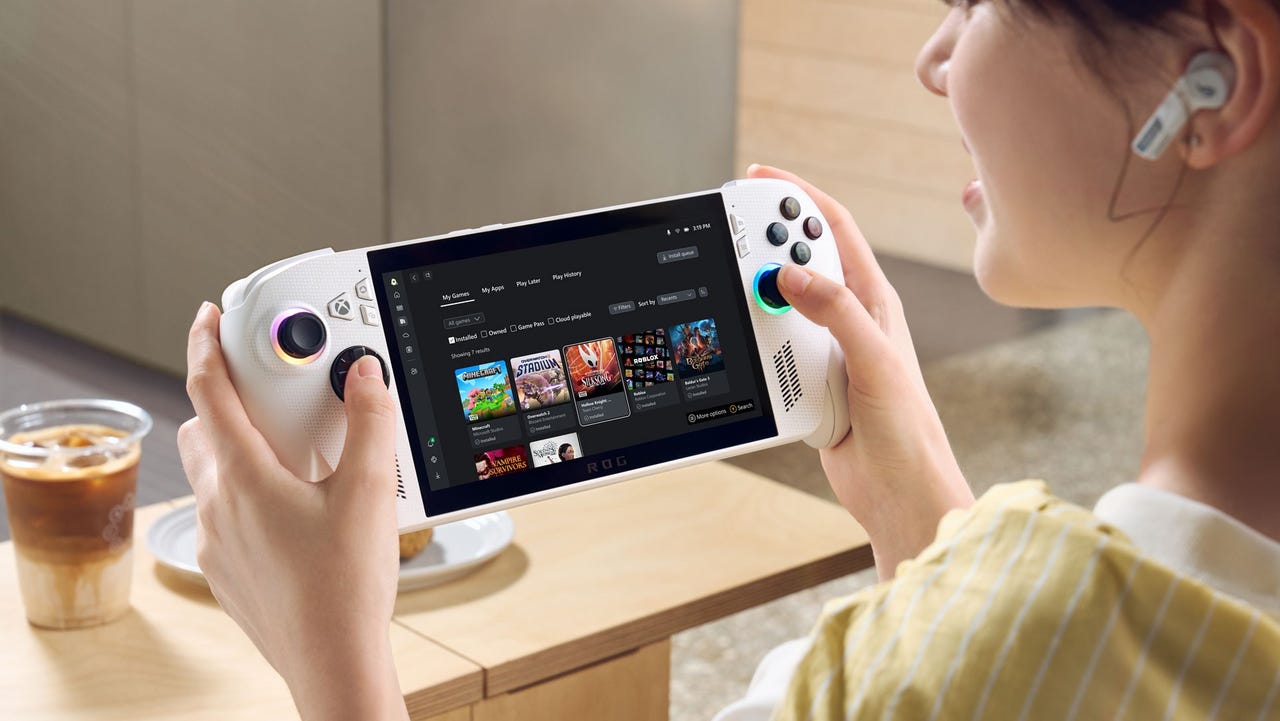
tariffs were complicating their ability to settle on final numbers. Jason Ronald, vice president of Xbox gaming devices, stressed the difficulty of balancing affordability with performance in a portable device, pointing to factors such as battery life, thermal design, and the broader economic climate. Shawn Yen, senior vice president at ASUS, echoed that the companies needed time to assess the impact of tariffs and market conditions before locking in prices. That time has now come – but the results have left gamers divided.
The controversy largely stems from how these devices stack up against the competition. Valve’s Steam Deck remains the benchmark for affordable PC handheld gaming, particularly with its OLED refresh now discounted as low as $319 for the entry model. Nintendo’s Switch 2, priced at $450, has also set expectations that portability should not necessarily demand a four-digit price tag. By contrast, the $999.99 sticker for the Ally X has drawn sharp criticism from players who see little justification for the markup, especially when the hardware is fundamentally a rebranded ASUS ROG Ally with Xbox branding and deeper Windows integration.
Analysts note that Microsoft is not alone in raising hardware costs. Sony recently increased PlayStation prices in the U.S., while Nintendo quietly pushed up the price of the original Switch and its accessories. Even game software and services are affected: Xbox Game Pass saw subscription hikes earlier this year, and publishers briefly flirted with $80 price points for new releases. Rising manufacturing costs and U.S. tariffs are frequently cited as culprits, and the Entertainment Software Association (ESA) has warned repeatedly that tariffs create ripple effects across the entire industry, not just individual companies. Yet for gamers, those macroeconomic justifications feel abstract compared to the reality of handing over a thousand dollars.
On paper, the Xbox Ally X and its sibling do offer certain perks. Both promise a more integrated Xbox experience on the go, with access to cloud gaming, PC titles, and native Windows support for storefronts beyond Steam. The Ally X pushes specs higher, with better cooling, longer battery life, and expanded storage options. However, critics argue that none of these enhancements justify the price leap when compared to alternatives like the Lenovo Legion Go 2 or MSI Claw, which hover in the same range but bring larger screens or bolder hardware designs. Many see the Ally as caught in the middle – too expensive to lure budget-conscious gamers away from Steam Deck, yet not offering enough unique features to justify its premium over rivals.
Gamers’ reactions have ranged from cautious optimism to outright hostility. Some acknowledge that $600 for the base Ally is at least competitive, given its 1080p 120Hz display and Windows support, which allows native access to all major PC game libraries. But the leap to $1,000 for the Ally X has led many to dismiss it as dead on arrival. Common refrains include comparisons to investing in a new graphics card or laptop instead – purchases that arguably deliver broader utility. Others note that handheld PCs remain a niche within a niche: even Valve’s heavily hyped Steam Deck has not reached mainstream console sales, and it’s unclear whether Microsoft can do better by simply adding its logo.
The skepticism also ties into a broader frustration with Microsoft’s hardware strategy. Fans have watched Xbox console prices rise multiple times this year in the U.S., while long-promised first-party games such as Fable remain mired in delays. The perception of a company chasing acquisitions and experimental hardware while failing to deliver consistent value has only sharpened the backlash to the Ally pricing. For some, this handheld announcement underscores a sense that Xbox is out of touch with its base, more focused on market positioning than on affordability.
Still, there are those who see potential. For niche users such as traveling professionals or first responders working long shifts, the idea of carrying a full-fledged Xbox/PC hybrid that can run modern games at 60fps is appealing. These users argue that while $1,000 is steep, the ability to collapse console and PC gaming into a single portable machine is worth consideration. Yet even among these enthusiasts, doubts remain about long-term support, performance on blockbuster titles, and whether Microsoft will truly commit to the platform rather than treating it as another short-lived experiment.
Pre-orders for both models are now open across 38 countries via the Microsoft Store, ASUS’s eShop, and select retailers. The company’s official messaging emphasizes portability, flexibility, and the promise of a handheld that embodies the Xbox ethos. Whether that pitch resonates enough to overcome sticker shock is the looming question. With tariffs, inflation, and competition all shaping the market, Microsoft’s gamble on the ROG Xbox Ally family may either redefine handheld gaming or serve as another cautionary tale about pricing missteps in an industry already struggling to balance innovation with accessibility.