The Timing Debate Around Palworld: Palfarm and Pokémon Pokopia
When Pocketpair announced Palworld: Palfarm just a week after Nintendo’s reveal of Pokémon Pokopia, sparks flew across the gaming community. Fans of both franchises immediately drew comparisons, with some accusing Pocketpair of opportunism. Others, however, defended the studio, pointing out that game development cycles span years, not days, and timing overlaps are inevitable. What was intended as an exciting new reveal for a cozy farming spin-off quickly turned into yet another chapter in the ongoing rivalry between Pocketpair and Nintendo.
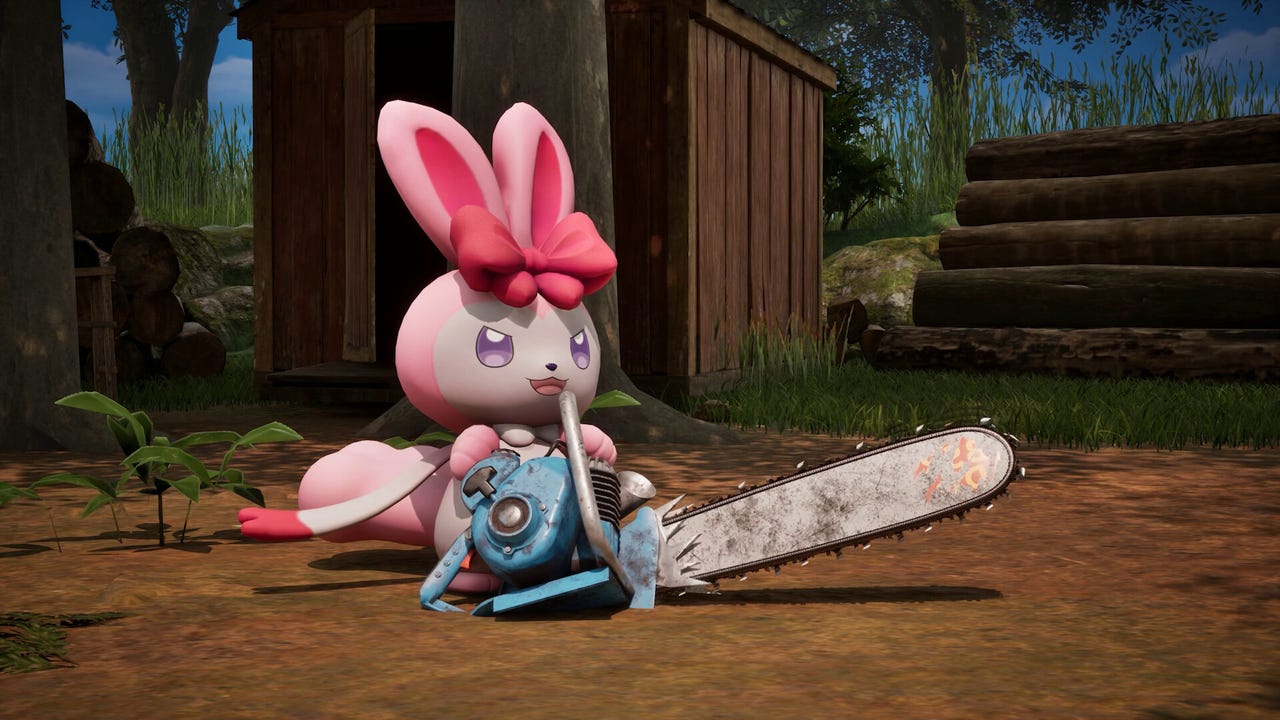
Palworld: Palfarm was introduced as a farming and life simulation experience that lets players collaborate with Pals to transform raw fields into bustling farms. The game promises cooperative play, quirky encounters with mischievous Pals who might steal your crops, and story arcs that unfold in unexpected ways. It emphasizes the charm of community-building while also warning that not everything will remain serene for long. According to Pocketpair, players will delegate farm tasks, nurture crops, and foster connections with in-game locals, blending pastoral calm with moments of chaos.
Meanwhile, Nintendo’s Pokémon Pokopia represents a bold new direction for the world’s most profitable entertainment brand. Coming to Switch 2 in 2026, Pokopia puts Ditto – reimagined in human form – at the center of a narrative where players can learn Pokémon moves to interact with the world. Using Squirtle’s Water Gun to revive parched gardens or Bulbasaur’s Leafage to encourage plant growth, the game layers traditional Pokémon mechanics onto the slow-life farm-sim framework. Nintendo promises real-time day-night cycles, dynamic weather, and the chance to build communities where Pokémon thrive alongside human players.
These back-to-back announcements were bound to invite scrutiny. One fan joked online that Pocketpair’s developers must be “wizard-level coders” to pull off a complete game in just a week. Others speculated the reveal was rushed forward to avoid accusations of copying Nintendo. While conspiracy theories bubbled up, John “Bucky” Buckley, Pocketpair’s communications director, stepped in with a sarcastic response: “The tinfoil hats are out in force.” He noted the irony that critics simultaneously labeled the company a “slop factory” while also crediting them with the ability to ship an entire polished game practically overnight. His comments struck a chord, highlighting how online discourse can twist itself into contradictions.
The controversy echoes familiar criticisms that surfaced during Palworld’s early days. Marketed as “Pokémon with guns,” the game exploded in popularity but was quickly accused of borrowing heavily from Nintendo’s formula. In response, Nintendo and The Pokémon Company filed lawsuits, leaning on divisional patents crafted specifically to challenge Palworld’s mechanics. These patents – concerning monster capture and release, as well as riding mechanics – dated back to earlier filings but were repurposed after Palworld hit the market. In effect, Nintendo weaponized the patent system to try to rein in what it viewed as direct competition.
Pocketpair, however, adapted. They rolled out patches altering controversial mechanics, removing Pokéball-like summoning systems and tweaking gliding features. These changes demonstrated a willingness to compromise while also underscoring just how far Nintendo was willing to go to protect its intellectual turf. For Pocketpair, it was a survival strategy in an industry where giants guard their dominance fiercely.
But beneath the drama lies a broader question about creativity and competition in gaming. Is the market healthier when one company dominates, or when multiple studios challenge each other to innovate? Some gamers argue that Nintendo’s monopoly over the monster-collecting genre has led to stagnation. Titles like Pokémon Sword and Shield or Scarlet and Violet sold millions, but critics complained about recycled formulas, graphical shortcomings, and performance issues that wouldn’t fly in other AAA franchises. Against this backdrop, a scrappy competitor like Pocketpair is seen by some as exactly the pressure Pokémon needs to evolve.
Others, however, maintain that Pocketpair’s work veers too close to outright imitation. For them, announcing Palfarm mere days after Pokopia wasn’t coincidence but cheeky provocation. They see it as evidence of a studio more interested in chasing clout than developing distinct experiences. Even among Palworld fans, debates rage: is the game genuinely good on its own, or does it thrive mainly because it positions itself as an alternative to Nintendo?
The truth, as always, is more nuanced. Farming sims have long drawn from one another, from Harvest Moon to Stardew Valley and Dragon Quest Builders. Mechanics like crop growth, resource gathering, and community-building are hardly proprietary. The overlap between Pokopia and Palfarm might reflect shared genre conventions more than industrial espionage. What feels like copycatting could just as easily be parallel innovation – two teams chasing similar ideas because the market shows demand.
Still, Nintendo’s legal aggression looms large. The company’s willingness to litigate rather than iterate sends a chilling signal to smaller studios. While patents protect innovation, using them retroactively to target competitors risks stifling creativity. Pocketpair’s case highlights the delicate balance between safeguarding IP and allowing an industry to thrive through rivalry. If anything, history shows that competition doesn’t kill franchises; it strengthens them. Sega’s challenge in the 1990s pushed Nintendo to innovate. Rival shooters like Battlefield and Call of Duty have coexisted for decades, each pushing the other forward. Why should cozy monster-farming sims be any different?
As Pocketpair focuses on getting Palworld ready for its 1.0 release in 2026, the studio will likely continue to walk this tightrope. Fans remain divided – some mocking the “tinfoil hat” theories, others embracing Palworld as a refreshing break from Nintendo’s dominance. What’s clear is that this debate won’t fade anytime soon. Whether you see Palfarm as a competitor, a copycat, or simply another entry in a crowded genre, its existence signals something important: the cozy sim market is heating up, and no single company, not even Nintendo, can claim absolute ownership over its future.