Samsung has once again proven why it holds the crown as the world’s leading smartphone maker. The company’s latest update strategy has surprised many by rolling out One UI 8 to its mid-range lineup ahead of schedule. 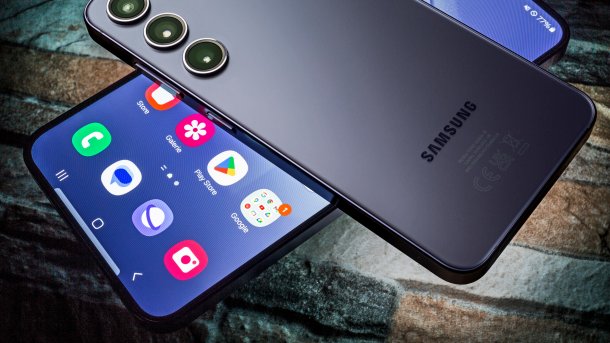
While premium devices like the Galaxy S24 family and foldables were obvious candidates for priority treatment, Samsung’s willingness to treat the Galaxy A36 5G and Galaxy A56 5G with equal urgency signals a major shift in how mid-tier smartphones are valued.
Traditionally, mid-range devices often received software updates months after flagship models, if at all. This created a two-tier ecosystem where affordability came at the cost of long-term reliability. Samsung is rewriting that narrative by giving these models the same respect as its $1,000+ flagships. Just days after South Korean users of the S24, S24+, S24 Ultra, S24 FE, Z Fold 6, and Z Flip 6 got their stable Android 16-based One UI 8 updates, owners of the more affordable A36 and A56 are celebrating the same privilege.
The timing is remarkable. The Galaxy A36 and A56 only launched internationally about six months ago, arriving in the US slightly later. Despite being fresh to the market, they are now the first mid-range Samsung devices – and possibly the first from any brand – to officially transition away from Android 15. This rollout was initially planned for October, but Samsung has beaten its own deadline. In South Korea, the update is already live, and countries such as Brazil could begin seeing One UI 8 on these phones by September 25. If Samsung’s track record holds, the rest of South America, Asia, and Europe may also follow within days.
Why is this a big deal? Beyond bragging rights, this update reinforces Samsung’s promise of six major OS upgrades for these devices. That means users can expect software support stretching into the early 2030s. From Android 16 now, these mid-range models are set to receive Android 17, 18, 19, 20, and even Android 21 – something unheard of in this price segment. In practice, this ensures the A36 and A56 will remain competitive and secure long after most competitors’ phones are abandoned.
Of course, it’s worth noting that One UI 8 itself is more of an evolutionary step than a revolutionary one. Built on Google’s relatively modest Android 16 release, Samsung’s skin focuses on performance stability, efficiency improvements, and minor refinements rather than radical changes. But that isn’t necessarily a negative. For everyday users, smoother animations, better multitasking, and improved battery optimization can be more meaningful than cosmetic redesigns.
From an industry perspective, Samsung is making a statement. After the missteps of One UI 7, which drew criticism for inconsistent rollouts, the company appears determined to reestablish itself as the benchmark for Android updates. By prioritizing not just its premium foldables and flagship S-series but also its mid-range A-series, Samsung is signaling that software longevity is a central pillar of its ecosystem. This is an area where rivals, including Xiaomi, Oppo, and even some Google Pixel models, will now be forced to respond.
For consumers, the implications are huge. A mid-range buyer doesn’t just get a phone with decent hardware at a good price – they’re also buying into a future-proofed platform. If software updates are a deciding factor in your next phone purchase, the Galaxy A36 and A56 suddenly look like some of the best options available today. Even when compared to the well-regarded Pixel 9a, Samsung’s six-year OS roadmap could tip the scales for many undecided buyers.
Looking ahead, it’s unlikely every update will be as quick or as polished as this one. But the fact that Samsung is already ahead of schedule bodes well. By 2030, when these devices may still be receiving fresh Android versions, today’s early rollout could be remembered as the moment when mid-range phones stopped being treated as second-class citizens. For now, all eyes are on how smoothly the international rollout unfolds and whether Samsung can maintain this renewed momentum without major bugs or delays.
In short, One UI 8 for the Galaxy A36 and A56 is more than just a software patch – it’s a bold declaration. Samsung is betting on loyalty by giving budget-conscious users the same level of care once reserved for its most expensive devices. And if this strategy holds, it could reshape consumer expectations across the entire Android ecosystem.
3 comments
lol midrange phones getting updates before my flagship, wild
not impressed, one ui updates always minor tbh
6 years of updates?? thats insane for budget phones