Apple’s newest iPhone Air has sparked one of the most intense debates of the year: can a device just 5.6mm thin still hold its own in terms of durability? With a 6.5-inch display covering nearly the entire front, many expected the phone to crumble in classic ‘bendgate’ fashion. 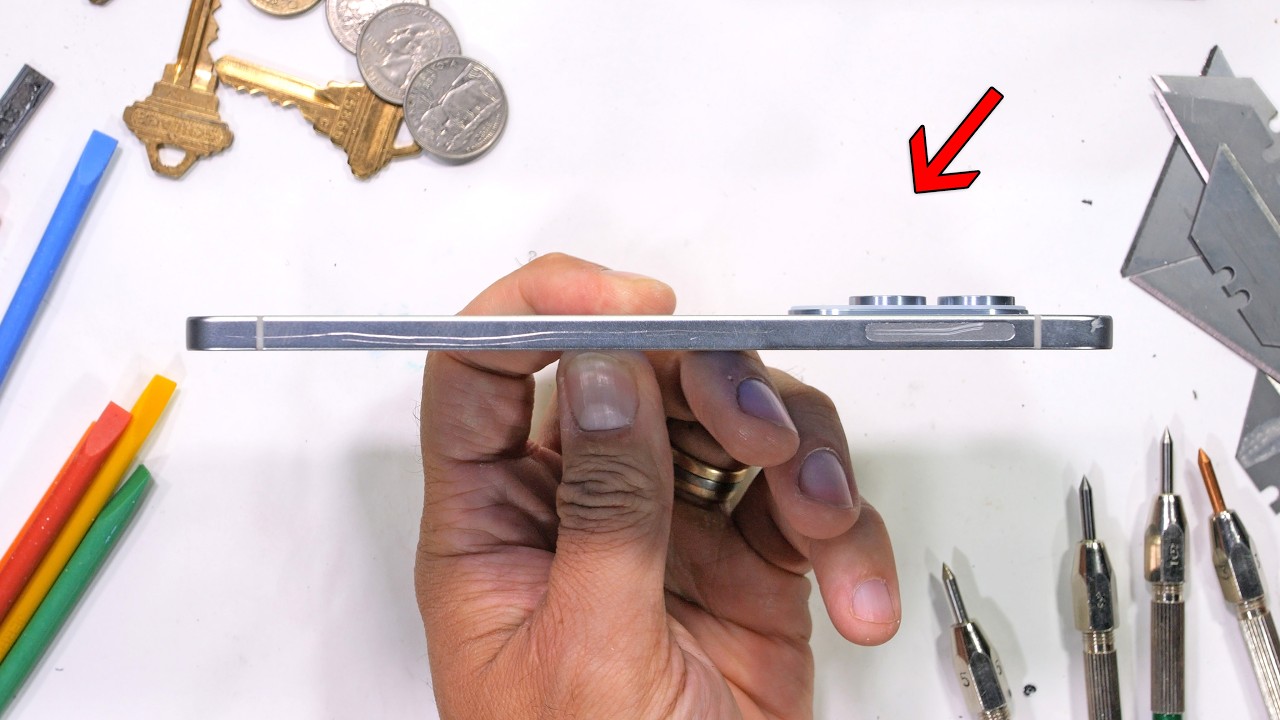
Yet the story is more nuanced and surprisingly in Apple’s favor.
The iPhone Air is now the company’s last titanium-framed model, a material known for its balance between strength and lightness. Apple’s Pro series has shifted to aluminum this year, which raised a lot of eyebrows since aluminum traditionally offers less rigidity compared to titanium. But in the Air’s case, the titanium makes all the difference, especially considering its razor-thin profile.
Durability influencer JerryRigEverything put the phone through his well-known torture tests. Scratches, burns, and the dreaded bend test were all on the menu. Apple boasts about its Ceramic Shield 2 glass, rated at 5 on the Mohs scale according to EU energy labels, compared to 4 on the previous generation. In practice, the display resisted scratches up to level 6 and even faintly at level 7. That’s a major improvement and suggests Apple (with Corning behind the glass tech) has made tangible progress where users actually see it day to day.
Of course, the big question was whether the iPhone Air would fold under pressure. The short answer: not easily. Despite its sleekness, the phone resisted Zack’s bend attempts with impressive stiffness. While yes, with enough force anything can break, the Air required a significant amount – enough to make headlines about its resilience rather than its fragility. This is where thinness meets real-world engineering, and Apple seems to have learned lessons from the infamous 2014 bendgate episode.
Comparisons with competitors are inevitable. Samsung’s Galaxy S25 Edge, also slim at 5.8mm but rocking a slightly larger 6.7-inch screen, has an aluminum frame and faced similar tests. Some users even mistakenly thought it was titanium, but it isn’t. That small difference in materials shows in rigidity and user perception. The rivalry underscores how much marketing around ‘thin yet strong’ still dominates the premium phone conversation.
There are still valid concerns: battery endurance in such a thin body is a common worry. Some point out that Apple conveniently sells a separate battery pack, making skeptics joke that thinness is just a gimmick if you end up carrying an add-on. Early benchmarks, however, suggest autonomy on par with the iPhone 16 Pro – better than expected, even for power users. Long-term results will reveal if another ‘batterygate’ scandal emerges, but for now, Apple appears to have struck a balance between aesthetics and endurance.
The iPhone Air is already available in multiple configurations, starting at €1,199 for the 256GB/12GB RAM variant and climbing to €1,449 for the 512GB model. With its sleek profile, improved glass, and titanium backbone, Apple has delivered a phone that looks fragile but proves surprisingly tough in practice. The full in-depth review is on its way, but first impressions position the Air as more than a design statement – it’s a serious piece of engineering.
3 comments
ngl Apple nailed it this year, thin but strong, I’m shocked as an android guy 🤷♂️
lol apple makes it thin, then trys to sell us battery pack to make it fat again 🤡
damn that scratch resistance is impressive, didn’t expect level 7 barely marks it