Xiaomi 17 Pro Max: The Boldest Attempt Yet at an iPhone 17 Pro Max Rival
Xiaomi has never hidden its ambitions to stand shoulder to shoulder with Apple in the premium smartphone market, but the upcoming Xiaomi 17 Pro Max makes that intention clearer than ever. With the company’s president openly stating that the new lineup is meant to go head-to-head with Apple’s iPhone 17 series, and with a launch date deliberately synced to Apple’s release schedule, Xiaomi is positioning its new flagship as a true iPhone alternative. The move marks one of the boldest challenges yet to Apple’s dominance, particularly in China, where competition is fierce and customer loyalties are being tested like never before.
The most immediate question buzzing across forums and leaks is: why skip from the Xiaomi 15 series straight to the 17? The answer is equal parts simple and strategic. By aligning its numbering system with Apple’s, Xiaomi is sending an unmistakable signal: it doesn’t want to play catch-up, it wants to mirror and compete directly, model for model. So now we have the Xiaomi 17 Pro set squarely against the iPhone 17 Pro, and the newly minted Xiaomi 17 Pro Max squaring off with the iPhone 17 Pro Max. That alignment may seem like a marketing gimmick, but in a market where perception is as critical as specs, the psychology matters.
Design Evolution: Goodbye Circles and Squares, Hello Slabs
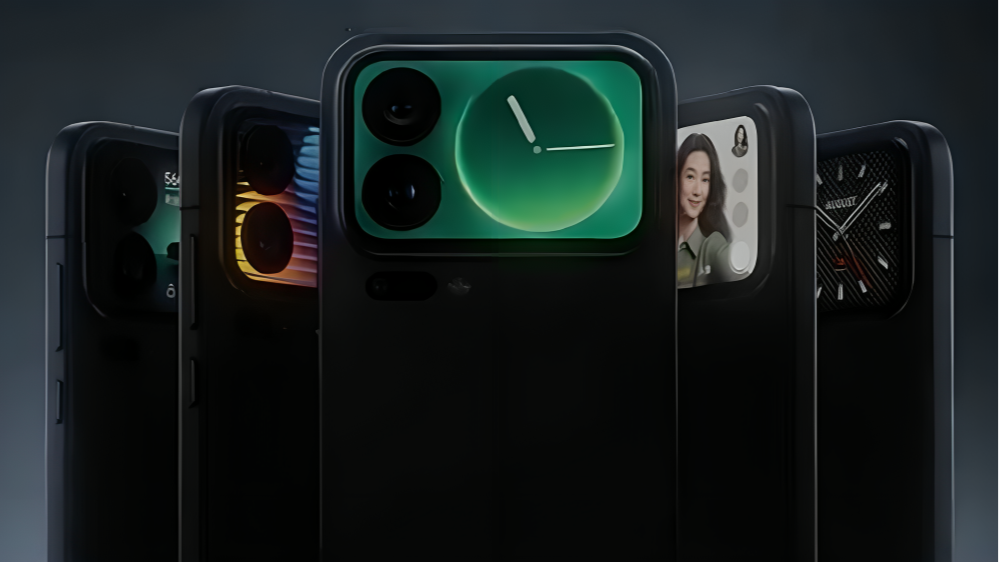
Xiaomi has shaken up its design language dramatically. The circular island from the Xiaomi 15 Ultra and the square module of the 15 Pro are both gone, replaced by a massive rectangular edge-to-edge camera slab that dominates the back. Embedded within this striking block is a second screen – an actual secondary display designed to do far more than a notification light. Whether you want to check the time, glance at app info, use it as a rear-facing selfie preview, or simply show off flashy graphics, this mini-screen adds a level of versatility that no iPhone has attempted. Unlike the quirky dot-matrix notifications of the Nothing Phone (3), this feels closer to a foldable’s cover screen: a real functional surface.
It’s a bold move, and while skeptics argue it might end up being gimmicky, Xiaomi has proven in the past that experimental features can catch on if they’re executed with polish. Expect more revelations on launch day, but for now, the second display is the clearest sign that Xiaomi doesn’t want to simply replicate Apple – it wants to offer a talking point Apple hasn’t.
Raw Power: Snapdragon 8 Elite Gen 5 vs Apple A19 Pro
Under the hood, the Xiaomi 17 series will debut Qualcomm’s brand-new Snapdragon 8 Elite Gen 5 chip. That sets the stage for a direct duel with Apple’s A19 Pro silicon in the iPhone 17 Pro line. Historically, Apple’s chips have had an efficiency and performance edge, but Qualcomm has been narrowing the gap year after year. If early benchmark leaks are to be believed, the Snapdragon 8 Elite Gen 5 finally stands toe-to-toe in both raw speed and AI acceleration, meaning the Xiaomi 17 Pro Max may be every bit as fast as an iPhone in day-to-day use.
One area where Xiaomi could have a decisive advantage is battery life. Rumors suggest the Pro Max will pack a staggering 7,500mAh cell – a massive leap compared to Apple’s sub-5,000mAh packs. In theory, this should translate into marathon endurance. But Apple has historically squeezed impressive longevity out of smaller batteries through ruthless iOS optimization. Xiaomi, by contrast, has struggled in past flagships: the Xiaomi 15 Ultra had a 6,000mAh cell yet still fell short of the iPhone 16 Pro Max in endurance testing. This year, Xiaomi is betting bigger really will be better. If it delivers, battery life could become one of its strongest marketing weapons.
Charging Wars
Fast charging remains one of Xiaomi’s signature advantages. While Apple clings to relatively modest charging speeds, Xiaomi’s flagships routinely offer near full-day replenishment in under an hour. Expect wired charging that leaves Apple’s Lightning and MagSafe experience in the dust. Wireless charging speeds may also see a boost, though that remains unconfirmed. The idea of recharging a monster 7,500mAh battery in record time could prove to be one of Xiaomi’s most compelling differentiators – especially for users frustrated by the slower charging rates on iPhones.
Cameras: A Clash of the Lens Titans
Photography has become the ultimate battleground in the premium tier, and the Xiaomi 17 Pro Max is poised to fight hard. Leaks point to a 50MP triple system – wide, ultra-wide, and telephoto – each promising large sensors and generous apertures. The telephoto lens will reportedly support up to 5x optical zoom. While Apple’s iPhone 17 Pro Max is said to feature an upgraded 48MP triple array with 8x zoom, real-world results will tell the true story.
Here’s where context matters: the Xiaomi 15 Ultra tied Samsung’s Galaxy S25 Ultra for the top spot in major camera tests. That history suggests Xiaomi knows how to tune its imaging pipeline. If the 17 Pro Max continues that tradition, Xiaomi could remain at the very top of smartphone photography rankings. Apple will counter with its unmatched consistency, superior video capture, and a new 18MP selfie camera, but Xiaomi’s hardware-first approach might sway enthusiasts who want maximum versatility.
Displays, Durability, and the Basics
At the premium level, the baseline expectations are set in stone: OLED displays with blinding peak brightness, silky 120Hz refresh rates, and deep color accuracy. Both Xiaomi and Apple will ship devices that look stunning indoors and hold up in direct sunlight. Durability is equally expected, with IP68 water and dust resistance now standard. On these fronts, the differences are negligible, and buyers will be swayed by subtler features like Xiaomi’s second display or Apple’s tighter ecosystem integration.
The Software Divide
Where Xiaomi continues to stumble is software. MIUI – and now HyperOS – has long been criticized for its bloat, heavy-handed design choices, and frequent quirks. Apple, on the other hand, leans on iOS’s polish, stability, and long-term update promise. Xiaomi has stepped up to offer four years of OS updates and six years of security patches, which is commendable. But Apple remains the gold standard, with many iPhones still supported for six or seven years.
For buyers in Europe and the US, availability may be a bigger hurdle than software. Apple is universally accessible, while Xiaomi’s distribution remains limited to China and select global markets. Importing is possible, but carrier compatibility and after-sales support can be deal-breakers. This remains Xiaomi’s Achilles’ heel, even if the hardware looks tempting.
Xiaomi’s Strategy: Apple in Its Crosshairs
By replacing the “Ultra” brand with a “Pro Max,” Xiaomi has all but abandoned its rivalry with Samsung in favor of a direct face-off with Apple. The message is clear: Apple is the opponent worth chasing. And in China, where Apple has struggled against local competitors, Xiaomi senses an opportunity to claim the crown of the domestic premium market. It’s a bold strategy that acknowledges Apple’s dominance abroad but aims to weaken it at home.
Ultimately, whether the Xiaomi 17 Pro Max becomes a true iPhone killer depends on execution. Specs, features, and marketing stunts are one thing; consistent performance, software refinement, and global accessibility are another. But there’s no denying Xiaomi has thrown down the gauntlet harder than ever before. Apple may not be worried about its US customer base, but in China, the iPhone finally has a rival that’s not just another Android phone – it’s a challenger built in Apple’s own image, armed with features Apple doesn’t yet offer.
The battle for the premium smartphone crown is about to get more interesting, and whether you’re in Beijing or Boston, the Xiaomi 17 Pro Max deserves your attention.
3 comments
rubbish bloated software, worst outside china fr
bigger batt but less charging time?? either the hw trash or sw trash 😂
ngl feels like xiaomi just taped this thing 2gether & prays it sells lol