Google has officially entered the world of phone straps, and while its approach differs from Apple’s, it highlights just how rapidly accessories are becoming an extension of smartphone culture. Apple stirred plenty of debate earlier this year when it revealed the Crossbody Strap for the iPhone 17 – a stylish yet pricey option designed to let users wear their iPhones almost like a fashion accessory. Although many people in the U.S. dismissed it as unnecessary, Apple’s move clearly caught the attention of its main rival. 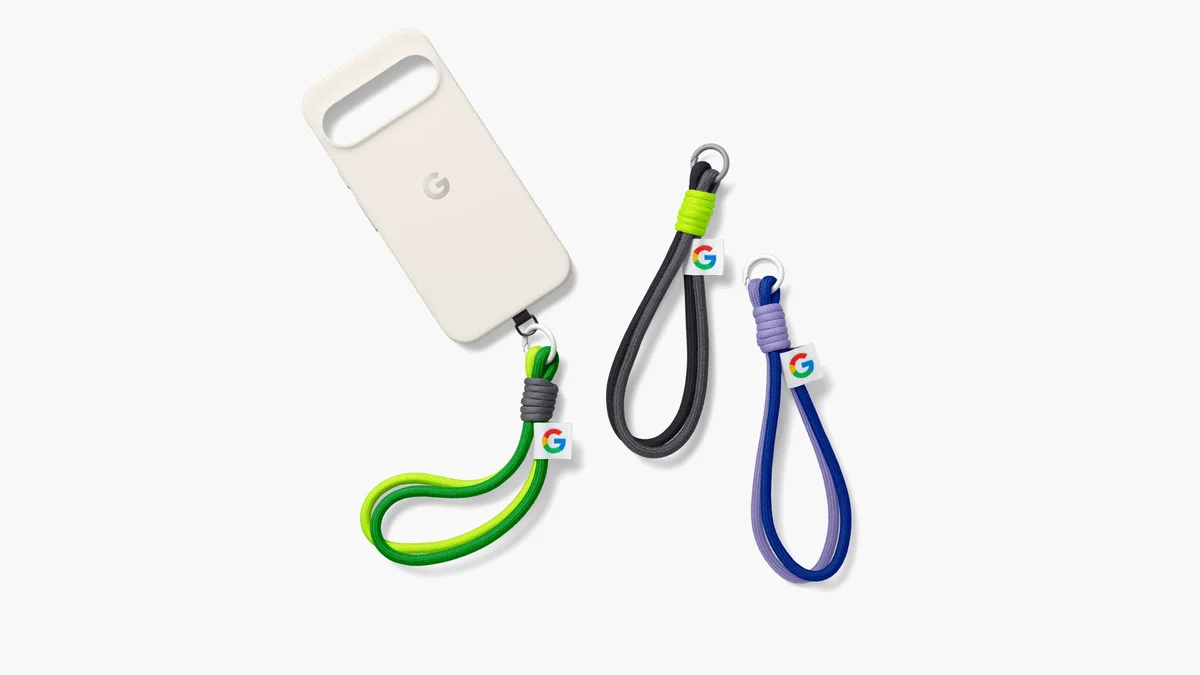
Barely a month after launching the Pixel 10, Google responded with its own interpretation: the Google Rope Wristlet, a lightweight, colorful, and budget-friendly wrist strap.
Unlike Apple’s strap, which is meant to hang across the body, Google’s accessory keeps things simple. As its name suggests, the Rope Wristlet is designed to loop securely around your wrist, reducing the chance of accidental drops while keeping your phone within easy reach. The product attaches via a carabiner ring that clips onto a D-shaped insert, which slides between a phone case and the back of the device. While marketed as a Pixel-friendly accessory, its design ensures broader compatibility with nearly any smartphone case featuring a USB-C port cutout. The only exception is the Pixel Fold series, which Google explicitly notes as incompatible – likely due to the unique way foldable cases grip onto the device.
This type of connection method isn’t new, but Google’s execution makes it appealing. Rather than requiring a proprietary case or special bumper, as Apple’s strap does, the Rope Wristlet can integrate seamlessly into most setups. For users, that means fewer restrictions and no need to invest in expensive add-ons just to make an accessory work. It’s a small but meaningful design decision that underlines Google’s focus on practicality over exclusivity.
The pricing difference between the two companies is striking. Apple’s Crossbody Strap comes in at $59, reflecting its premium positioning and Apple’s knack for turning everyday items into luxury statements. The strap also uses embedded magnets that allow for quick length adjustments – a neat trick, but one locked behind Apple’s ecosystem since you’ll also need one of its branded cases to use it. In contrast, Google is asking just $7 for its Rope Wristlet, and it doesn’t limit you to a single color. Shoppers can choose between three vibrant combinations: Purple/Blue, Green/Yellow, and Black/Grey. At such a low price, many fans might simply buy all three to match different moods or outfits. While Apple’s strap leans into high fashion, Google’s is aimed squarely at accessibility and casual personalization.
There’s a broader cultural angle here too: phone straps are having a quiet resurgence. What was once written off as a niche or even childish accessory is now being reimagined by the biggest names in tech. In Asia, especially Japan and South Korea, wrist and lanyard straps have been popular for decades as both safety tools and fashion statements. Apple’s Crossbody Strap might look like a bold reinvention in the U.S., but in reality, it is an imported idea with a luxury twist. Google’s take, however, is far more down-to-earth, giving users a fun, low-cost way to adopt the same trend without feeling like they’re buying into a status symbol.
Personally, the Rope Wristlet feels like the smarter bet. Its price tag makes it nearly impulse-purchase territory, and its compatibility across devices means it won’t be obsolete if you switch phones. While Apple’s Crossbody Strap will no doubt appeal to style-conscious iPhone users, Google’s strap feels like a practical solution that anyone could benefit from, whether for outdoor use, travel, or just some added security in everyday life. If nothing else, Google deserves credit for showing that not every smartphone accessory needs to be a fashion statement with a luxury markup. Sometimes, simplicity and affordability win the day.
2 comments
7 bucks is a steal, might grab all 3 colors tbh
google finally beating apple in pricing lol