The arrival of the iPhone Air has generated an undeniable wave of excitement in the tech world, and at first glance, it’s easy to see why. Apple’s thinnest iPhone to date, measuring only 5.6 mm, pushes the boundaries of smartphone engineering. Inside this razor-thin frame, Apple managed to pack its powerful new A19 Pro processor (with just one GPU core disabled), a stunning display, and a battery Apple claims lasts a full day of use. Yet, despite its dazzling specs, one issue overshadows the sleek design: battery life. 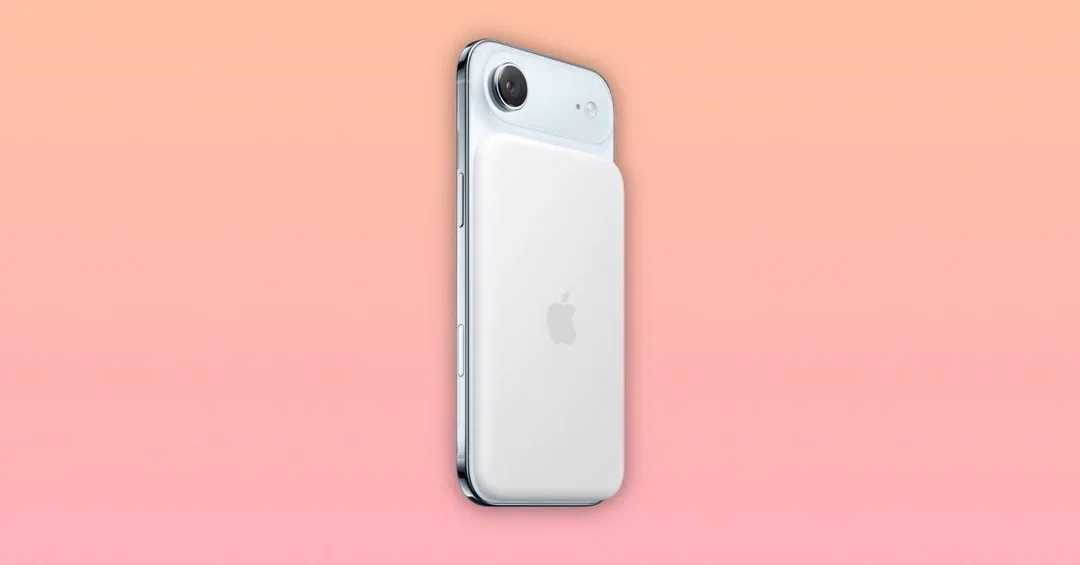
Even Apple appears to acknowledge this potential shortcoming, judging by the resurrection of an accessory many thought buried in the past – the MagSafe Battery Pack.
Apple’s decision to unveil a MagSafe Battery Pack specifically tailored for the iPhone Air has raised eyebrows across the industry. The move feels oddly familiar, reminiscent of 2021 when the company released its first MagSafe pack, largely seen as a patch for the underwhelming battery performance of the iPhone 12 Mini. Back then, the Mini’s tiny size came at the expense of usable endurance, and many owners found themselves recharging multiple times a day. Apple’s solution was to offer a slim snap-on battery pack that provided some relief – but also highlighted the device’s Achilles’ heel.
Fast forward to today, and history appears to be repeating itself. The new iPhone Air MagSafe Battery has been designed exclusively for the Air model, unlike the first version that technically supported all iPhones with MagSafe. According to Apple’s official listing, the accessory provides up to 65 percent additional charge, translating into roughly 40 hours of video playback when combined with the phone’s internal cell. That sounds impressive, but it comes at a cost – literally and figuratively. At $99, the pack adds both bulk and expense to a device marketed for its extreme thinness and elegance.
Critics such as MKBHD and other industry watchers were quick to question Apple’s initial claim that the iPhone Air could last a full day under typical use. Their skepticism seems justified given that Apple itself is nudging buyers toward an external power solution right out of the gate. AppleInsider’s early hands-on impressions also confirmed the pack doesn’t work properly with the iPhone 16 or iPhone 17 families – the dimensions are incompatible, meaning this pack is, without doubt, designed solely for the Air. It’s difficult not to draw parallels to the iPhone Mini era, when Apple’s smallest phone practically required the MagSafe pack to be viable for daily use.
The technical details add another layer of intrigue. According to information uncovered through European regulatory filings and shared by MacRumors, the iPhone Air carries a 3,149 mAh internal battery. Coincidentally – or perhaps deliberately – the new MagSafe Battery also boasts the same 3,149 mAh capacity, effectively doubling the Air’s endurance when attached. That’s a far cry from the original MagSafe pack, which shipped with only 1,460 mAh. In other words, Apple doubled the external battery’s size at the same $99 price point, but in doing so, it indirectly confirmed what many feared: the Air’s internal battery simply isn’t sufficient for the type of user Apple is targeting.
When we break down Apple’s performance claims, the picture becomes even more complicated. With the MagSafe pack, the iPhone Air reaches around 40 hours of video playback – similar to what the iPhone 17 Pro Max achieves on its own. But without the pack, the Air falls significantly short of its flagship siblings. This creates a strange paradox: the very feature that makes the iPhone Air desirable (its ultra-thin profile) is compromised the moment you attach the MagSafe battery. The phone suddenly becomes more than 11 mm thick, doubling in size and essentially nullifying the “Air” branding. Worse still, with the $99 add-on, the total price climbs to around $1,100 – essentially on par with the cost of the more powerful iPhone 17 Pro, which doesn’t share these limitations.
It’s a classic case of Apple’s design philosophy running up against real-world practicality. The company clearly wanted to deliver a futuristic-looking device that pushes the boundaries of industrial design. But in shaving every millimeter of thickness, compromises had to be made, and the battery was the obvious sacrifice. Instead of quietly letting reviewers highlight the shortcomings, Apple preemptively introduced a companion product, one that practically admits the Air won’t be enough for heavy users. To some, this feels like Apple rebranding a flaw as a feature, offering a fix at additional cost.
Looking at the broader context, the iPhone Air feels almost like a proof-of-concept device. It’s gorgeous, conversation-starting, and demonstrates what Apple’s engineers can accomplish when tasked with creating the slimmest iPhone ever. But is it a practical everyday phone? That’s a tougher question. The reliance on an external battery pack, the doubled thickness when used with that pack, and the price parity with Pro models make it a challenging recommendation for anyone but early adopters who value form over function.
The story of the iPhone Mini offers a cautionary tale. Despite vocal fan enthusiasm, the Mini failed to gain lasting traction and was ultimately discontinued after the iPhone 13 generation. If the Air follows the same trajectory, it could end up being remembered as another niche experiment – beautifully engineered, widely admired, but ultimately impractical for mainstream users.
At the end of the day, the iPhone Air raises an intriguing question about what consumers truly value in their smartphones. Is it ultra-thin aesthetics and cutting-edge engineering, or is it long-lasting practicality and balanced performance? Apple’s gamble suggests the company believes there’s still room for radical designs that make bold compromises. Whether consumers agree remains to be seen. What’s clear is that the MagSafe Battery Pack isn’t just an accessory this time – it feels like an essential part of the package.
3 comments
thats basically the iphone mini situation again smh
thin for what? to carry a battery brick anyway
ngl it looks cool af but if u need magsafe day1 its sus