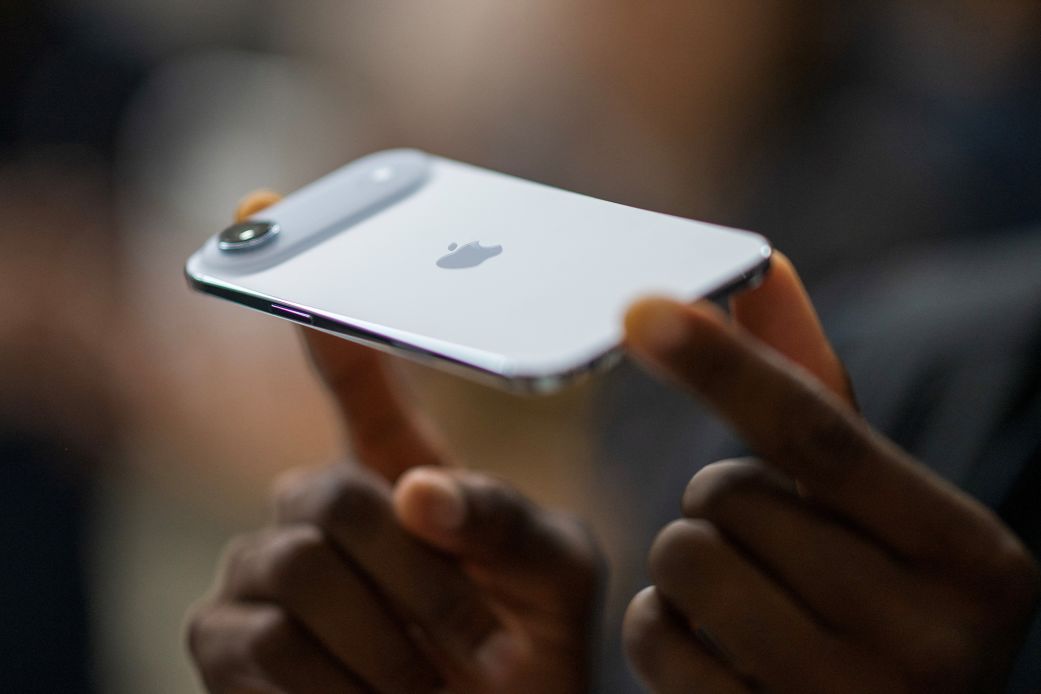
iPhone Air: The Slimmest iPhone Yet, But at What Cost?
Apple has never shied away from dramatic design experiments, and the new iPhone Air feels like a return to its most daring era – when form often triumphed over function. At just 5.64mm thick, it’s the thinnest iPhone ever made, a marvel of engineering and aesthetics. But such a drastic slimming comes with sacrifices, many of which may frustrate power users who rely on Apple’s devices not just for beauty, but for day-to-day reliability.
Apple fans will remember the butterfly keyboards, MacBooks that overheated under minimal strain, or the infamous “bendgate” iPhones that warped in pockets. The iPhone Air seems to follow that same lineage: a stunning device with concessions hidden under its polished titanium and glass skin. So, what exactly did Apple leave on the cutting room floor to achieve this slim figure? Here’s a deep dive into the nine most notable trade-offs – and why they matter more than you think.
1. Battery Life: A Slim Frame, a Shrunken Tank
First and foremost: the battery. The iPhone Air houses a 3,149mAh cell, smaller than the 3,692mAh unit in the standard iPhone 17 and dramatically less than the 4,832mAh monster inside the 17 Pro Max (or 5,088mAh in the eSIM-only variant). According to EU energy label numbers, this translates to around 40 hours of endurance on a single charge – slightly lower than the vanilla iPhone 17’s 41 hours and far below the Pro Max’s 53 hours.
The slim battery also slows down charging. Where the iPhone 17 and 17 Pro Max hit 50% in 20 minutes, the Air takes 30 minutes to reach the same mark. Apple did keep MagSafe, perhaps anticipating that Air owners might lean more heavily on accessories like the MagSafe Battery Pack. Whether this is thoughtful or simply a strategy to boost peripheral sales depends on your perspective.
2. Display Size: A Compromise of Engineering
While the iPhone Air still offers a respectable 6.5-inch display, it feels small compared to competitors. The iPhone 16 Plus offers 6.7 inches, and the Pro Max stretches to 6.9 inches. Apple’s decision to keep the Air at 6.5 inches likely stems from structural constraints. Unlike the aluminum frames of the Pro models, the Air retains titanium – lighter, stiffer, and more resilient against bending. But even titanium has limits, and Apple may have feared that a larger screen would leave the wafer-thin body vulnerable to bending or shattering.
Samsung faced similar challenges with the Galaxy S25 Edge, which, at 5.8mm thick, fits a 6.7-inch display. Apple’s caution may have been wise, but it leaves the Air caught awkwardly between screen sizes: larger than the entry-level 17, yet smaller than the Plus and Pro lines.
3. The Main Camera: Cutting Corners
The biggest disappointment for photography lovers may be the Air’s single rear camera. While even the budget-friendly iPhone 16e tried to justify its cutbacks, a $1,000 phone with one lens feels jarring. Worse still, the main sensor isn’t Apple’s best. It carries over the 1/1.56-inch unit from the vanilla iPhone 17, with 1.0µm pixels – smaller and less light-sensitive than the Pro models’ 1/1.28-inch sensors with 1.22µm pixels.
The Air also caps video recording at 4K 60fps, while the Pro models stretch to 120fps and offer advanced features like ProRes, ProRes RAW, and Apple Log 2. The absence of LiDAR only deepens the gap. Without it, autofocus and portrait modes lose their signature speed and accuracy, and advanced AR and 3D scanning capabilities disappear entirely.
4. Telephoto Lens: A Missed Opportunity
Zoom photography is where Apple’s compromise feels the most evident. The Air relies on lossless 2x zoom from its 48MP sensor, with quality dropping quickly beyond that. For comparison, Samsung’s 200MP sensor on the Galaxy S25 Edge offers far greater flexibility in cropping, even without a dedicated telephoto. Apple’s choice seems less about technical feasibility and more about market segmentation. After all, why give the Air a telephoto advantage that might overshadow the Pro Max?
5. Ultra-Wide Lens: Gone Without a Trace
Casual users may not notice immediately, but the lack of an ultra-wide lens is another blow. Ultra-wide photography brings dramatic perspectives and also doubles as the macro mode on recent iPhones. Its removal strips the Air of versatility, making it feel oddly basic compared to its siblings and rivals.
6. The So-Called “Pro” Chipset
Apple insists the Air runs on a “Pro” version of the A19 chip. On paper, however, it looks suspiciously similar to the vanilla A19: two performance cores, six efficiency cores, a five-core GPU, and a 16-core NPU. The Pro Max carries a six-core GPU, a subtle but potentially meaningful edge in graphics-heavy tasks like gaming or video rendering. The Air does benefit from 12GB of RAM – the same as the Pro models – compared to the vanilla iPhone’s 8GB. But unless benchmarks reveal hidden optimizations, the “Pro” branding feels like a stretch.
7. USB 3.0: An Incomplete Experience
USB-C is standard across all new iPhones, but only the Pro models enjoy the benefits of USB 3.0’s higher transfer speeds. This matters primarily for creatives who shoot ProRes video and offload footage to external drives. Since the Air lacks ProRes support, Apple may have decided faster data transfers were unnecessary. Yet it highlights a frustrating reality: anyone wanting more than casual use must step up to a pricier Pro model, or else face storage upgrade costs that quickly add hundreds of dollars to the bill.
8. Stereo Speakers: Slim Body, Slim Sound
The thinness of the Air left no room for dual speakers. Instead, it uses a single top-mounted unit. While fine for casual listening, it lacks the immersive stereo experience that Apple fans have come to expect. Considering how often iPhones double as personal entertainment hubs, this feels like a downgrade that will impact everyday use.
9. Bumpers Return: A Blast from the Past
Finally, Apple has quietly revived bumpers – protective edge accessories once used during the iPhone 4’s “Antennagate.” This time, the reasoning appears different. Titanium may resist dents better than aluminum, but in such a thin body, drop resistance becomes questionable. The official iPhone Air Bumper, made of reinforced polycarbonate, signals that Apple itself may not fully trust the Air’s durability. In essence, the company is selling both the problem and the solution.
Final Thoughts: Beauty at a Price
The iPhone Air is a showcase of Apple’s engineering bravado, a device that dares to go slimmer when the rest of the industry seems content with thicker, more practical designs. Its featherlight body and titanium build will win over many who value aesthetics and portability. But the omissions – smaller battery, downgraded cameras, weaker audio, missing ports – raise real questions about usability and long-term satisfaction.
Apple could have chosen to maintain a slightly thicker frame and delivered a more balanced product. Instead, it stuck to the mantra that beauty requires sacrifice. Whether consumers embrace or reject that trade-off will ultimately define the Air’s place in iPhone history. For now, it stands as both an achievement and a cautionary tale – proof that thin doesn’t always mean better.
3 comments
1 camera on a 1k phone?? feels like a scam ngl
so we buying magsafe battery packs on top of 1000$ phone? classic Apple move 😂
no ultrawide = no macro shots. missed opportunity, i use mine alot