When Apple revealed the brand-new iPhone Air just two days ago, most expected the conversation to revolve around its extreme thinness – only 5.6mm, an answer to Samsung’s 5.8mm Galaxy S25 Edge. Instead, what’s making headlines isn’t the slim profile, but the controversial design of its rear camera system. 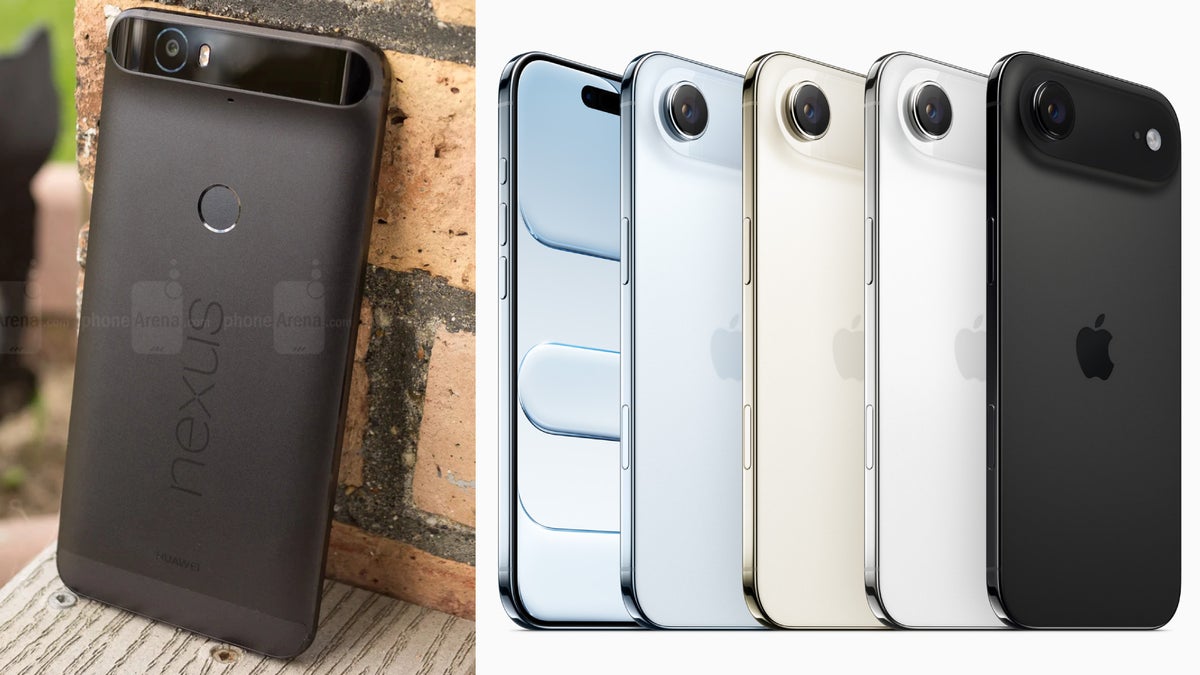
Some critics are already crying plagiarism, pointing fingers back almost a decade to Huawei’s Nexus 6P from 2015.
The iPhone Air debuts as Apple’s replacement for the retired iPhone Plus, aiming to carve out its own identity. But the first thing users notice is the camera. Rather than multiple lenses, the Air sports just a single sensor, embedded in a wide horizontal camera bar that Apple has dubbed the “plateau.” This stretched-out look echoes through the iPhone 17 Pro as well, where the plateau is even more prominent.
The comparison many are making is with the Nexus 6P, a phone Google co-developed with Huawei at a time when the Nexus line partnered with different hardware makers – Motorola, HTC, LG, Samsung, and more. The Nexus 6P carried its own wide camera strip across the back, slightly raised and distinctly blacked out, giving it a futuristic feel back then. Fans with long memories immediately saw the resemblance when Apple’s latest device hit the stage.
But is this really copying, or just history looping in design? Lined up side by side, the differences become clearer. The 6P’s camera bar feels more like a precursor to Google’s later Pixel “visor” design, while Apple’s plateau takes a cleaner, flatter approach. The Air doesn’t attempt the multi-lens complexity of modern Android rivals, instead leaning on Apple’s philosophy of one carefully tuned main shooter.
What complicates matters further is that even Apple’s bigger brother device, the iPhone 17 Pro, has been accused of echoing Google’s Pixel design. The plateau bar stretches even bolder there, leading some to argue Apple has borrowed more than a little inspiration. Others counter that smartphone design is cyclical: flat edges, notches, camera bumps – they come, go, and return with new polish. Seen that way, the Air is less a rip-off and more part of a broader visual trend across the industry.
Still, the resemblance can’t be fully dismissed. For those who remember the Nexus era, it’s uncanny. For newer buyers, the Air’s plateau will feel fresh, even if the idea has roots in the Android world. In the end, Apple’s design language has always evolved by selectively borrowing and refining. Whether you call it copying or convergence, the iPhone Air is sparking a design déjà vu moment – and that alone is enough to keep the debate alive.
1 comment
to me it looks more like a Pixel ancestor, not really a Huawei copy