Apple has officially unveiled the iPhone 17 lineup, marking one of the most notable upgrades in recent years. The new family includes the iPhone 17, iPhone 17 Pro, iPhone 17 Pro Max, and the brand-new iPhone Air, which replaces last year’s iPhone 16 Plus. Pre-orders open on September 12 across 63 markets, including the US, UK, Germany, Australia, Canada, China, India, South Korea, and France, with deliveries beginning September 19. 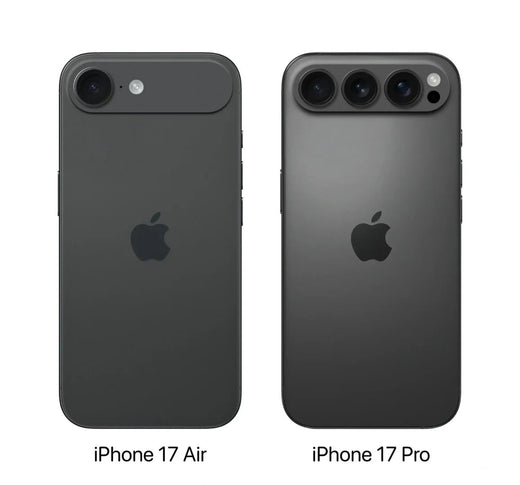
A second wave of 22 countries will receive shipments starting September 26.
The standard iPhone 17 is no longer the ‘basic’ option many were used to. Apple has given it a significant leap forward in display technology, aligning it with the Pro models. For the first time, it brings ProMotion 120Hz refresh rates, Always-On functionality, ProRes video recording, and a less reflective screen for better outdoor readability. On top of that, the storage configuration has been doubled: the base model now starts at 256 GB, which was previously reserved for higher-end versions. This move brings a sense of value, especially since the price remains identical to last year’s 128 GB entry model in key regions like the US, UK, Germany, and China. However, buyers in markets such as India and Japan will see slightly steeper prices.
The iPhone 17 Pro follows a similar storage bump, moving its entry point to 256 GB. Yet, unlike the regular model, the Pro carries a higher cost – roughly $100/€100/£100 more than its predecessor. While that sounds like a hike, it is effectively balanced out when comparing storage like-for-like, since last year’s base model shipped with only 128 GB. The Pro Max, meanwhile, continues to start at 256 GB, so its pricing remains steady in most major regions, with India and Japan again being the exceptions where consumers will need to spend more.
The iPhone Air is perhaps Apple’s most interesting shift this cycle. Taking over from the iPhone 16 Plus, it doesn’t merely represent a renaming but rather a repositioning. The Air receives a polished design upgrade, a Pro-level chipset, and Apple’s smooth 120Hz ProMotion display – features that elevate it far beyond being a ‘large but simple’ iPhone. Its price tag has gone up by $100/€100/£100 compared to its predecessor, but buyers are getting double the storage and a suite of premium perks that were previously reserved for the Pro line.
Here’s a quick look at pricing in key markets:
- US: iPhone 17 $799, iPhone Air $999, iPhone 17 Pro $1,099, iPhone 17 Pro Max $1,199
- Germany: iPhone 17 €949, iPhone Air €1,199, iPhone 17 Pro €1,299, iPhone 17 Pro Max €1,449
- UK: iPhone 17 £799, iPhone Air £999, iPhone 17 Pro £1,099, iPhone 17 Pro Max £1,199
- India: iPhone 17 ₹82,900, iPhone Air ₹119,900, iPhone 17 Pro ₹134,900, iPhone 17 Pro Max ₹149,900
- China: iPhone 17 ¥5,999, iPhone Air ¥7,999, iPhone 17 Pro ¥8,999, iPhone 17 Pro Max ¥9,999
- Japan: iPhone 17 ¥129,800, iPhone Air ¥159,800, iPhone 17 Pro ¥179,800, iPhone 17 Pro Max ¥194,800
With these pricing strategies, Apple is clearly pushing the perception of value through higher baseline storage and premium features, even as it nudges prices upward in select markets. Together with the new Apple Watch Series 11, Watch SE 3, and Watch Ultra 3, the September launch event underscores Apple’s continued effort to blur the line between its standard and Pro models, offering broader access to flagship-grade technology.