The smartphone war between Apple and Samsung has just gained a fascinating new chapter, and the spotlight is firmly on Apple’s iPhone Air. At first glance, it might seem like another annual refresh, but this model is shaping up to be far more disruptive. Apple’s decision to make the iPhone Air not only slimmer than its main rival, the Galaxy S25 Edge, but also more affordable, could prove to be a masterstroke. By coupling a razor-thin design with high-performance hardware, the company may have finally found a formula to ignite excitement in a market that has grown weary of predictable incremental updates.
The iPhone Air’s biggest talking points are its thinness and price. 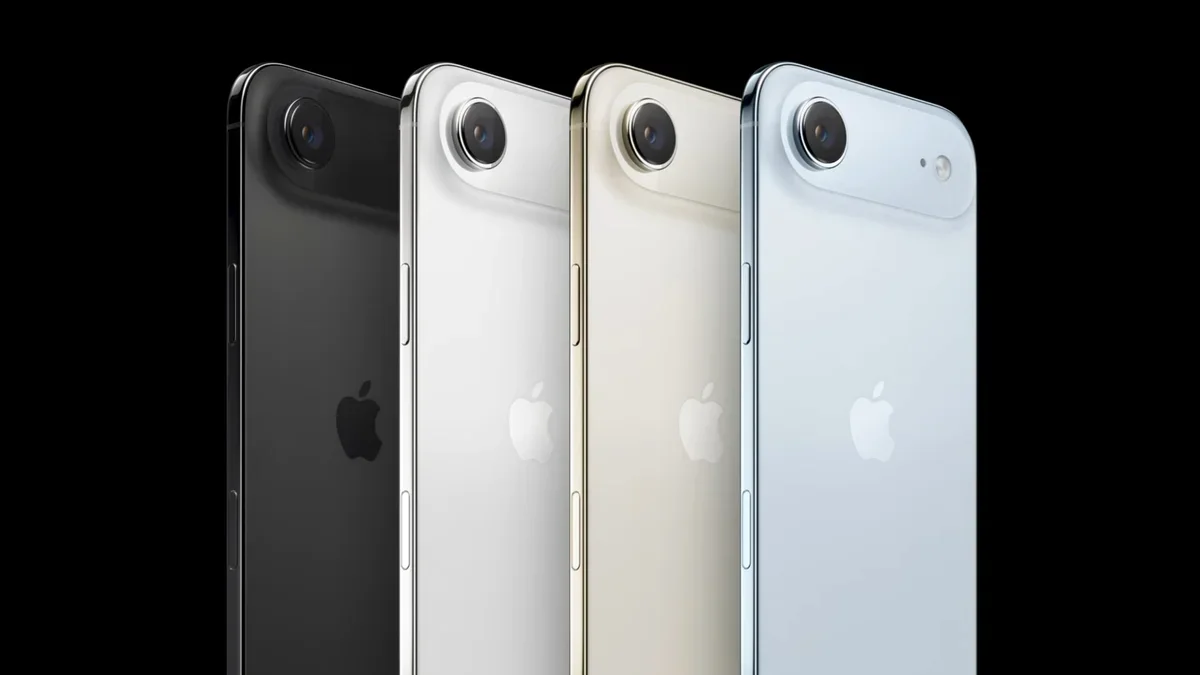
Measuring only 5.6mm, it undercuts the already slender Galaxy S25 Edge (5.8mm), a marginal difference on paper but a noticeable win for Apple’s marketing narrative. Price is even more striking: launching at $999, the Air is $100 cheaper than Samsung’s competing model. For Apple, which has long carried a reputation for premium pricing, that alone feels like a strategic reversal designed to capture buyers who may have been drifting toward Android for value.
Under the hood, Apple has not skimped. The iPhone Air debuts with the A19 Pro chip, a processor built to excel in AI-driven tasks, something that has become a cornerstone of next-gen mobile computing. The titanium frame and ceramic shield glass are borrowed from Apple’s more expensive lines, reassuring buyers that this slimmer body does not mean fragility. During the Cupertino launch event, the unveiling triggered a wave of applause rarely seen at Apple presentations in recent years, signaling a genuine sense of novelty that resonated with both the crowd and online observers.
Still, the Air is not without compromise. To achieve its record-breaking thinness, Apple shrank the battery. While Apple claims the Air will last all day, real-world performance remains to be seen. Battery life has always been the Achilles’ heel of ultra-slim devices, and this will likely be the deciding factor for many buyers. Another notable drawback is the single-lens rear camera. While the Pro models now boast triple-lens arrays and even the standard iPhone 17 carries two, the Air’s lone shooter may feel like a downgrade to those who value versatile photography options. Apple’s answer lies in software optimization: computational photography powered by the A19 Pro is expected to bridge the gap, though whether that suffices is an open question.
Despite these caveats, analysts are optimistic. The iPhone Air fills the gap left by the discontinued Plus model, which already commanded a significant portion of Apple’s sales. Positioned as a device that balances affordability, portability, and flagship performance, it could appeal both to long-time iPhone users seeking an upgrade and to markets like China, where slimmer devices from local brands have been making headway. There is even a nostalgic undertone: many commentators compare this launch to the original MacBook Air reveal, a moment when Apple redefined expectations of thinness and portability. The parallel is not lost – this iPhone Air feels like a statement product, one that reminds consumers that Apple can still surprise.
In essence, the iPhone Air is more than a mid-tier entry. It is Apple’s attempt to redefine what a value iPhone looks like, pairing accessible pricing with headline-worthy design. Whether its smaller battery and stripped-down camera prove fatal flaws or forgivable trade-offs will depend on how well Apple’s software and chip optimizations deliver in daily use. For now, though, the buzz is undeniable. The Air might not just be another model in Apple’s catalog – it could be the moment that recharges the entire iPhone brand.