Intel’s Roadmap: Arrow Lake Refresh in 2026, Nova Lake in 2026/27, and the Shift Toward 14A for Foundry Customers
Intel has officially laid out the next milestones in its desktop CPU and process technology roadmap, with Arrow Lake refresh CPUs due in the first half of 2026, and Nova Lake desktop processors following in late 2026 into 2027. Beyond CPUs, Intel also clarified its strategy around the 18A and 14A process nodes, making clear that 18A remains largely an internal technology, while 14A is being designed from the ground up to support external foundry customers. These announcements were made by John Pitzer, Intel’s Senior Vice President of Corporate Relations, during the Goldman Sachs Communacopia + Technology Conference, where he outlined both the challenges and opportunities facing Intel in the years ahead.
At its core, Intel’s roadmap is a response to the competitive pressure from AMD and ARM, as well as the company’s own need to fill gaps in its desktop portfolio. While Intel still commands an impressive presence in the PC market – shipping seven out of every ten PCs worldwide – the company has acknowledged that the desktop segment has lagged behind its laptop momentum, requiring strategic intervention through refreshed products and entirely new architectures.
Arrow Lake Refresh: A Needed Mid-Cycle Adjustment
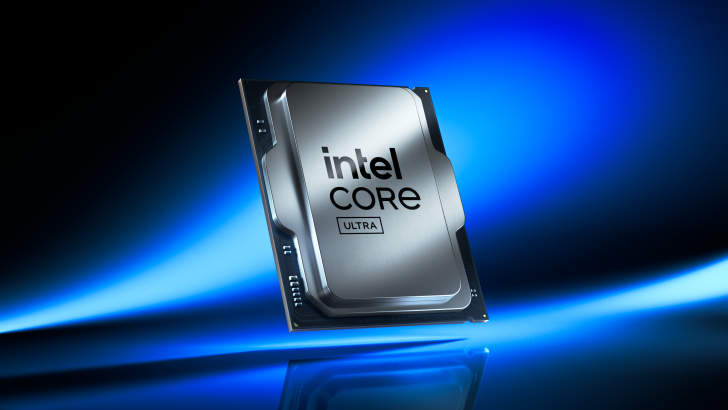
The first step in Intel’s corrective strategy is the Arrow Lake refresh. The current generation of Arrow Lake CPUs, marketed under the “Core Ultra Series 2” brand, did not meet internal expectations. Performance inconsistencies and limited competitiveness against AMD’s lineup left Intel scrambling to shore up its offering. The solution: a mid-cycle refresh designed to extend the life of Arrow Lake and keep the LGA 1851 platform relevant.
This refresh will arrive in the first half of 2026 and will maintain socket compatibility, which means current LGA 1851 motherboard owners will not need to invest in an entirely new platform. The refreshed CPUs will still carry the Core Ultra Series 2 branding, while Intel prepares its longer-term architectural successors. Importantly, Intel is framing this refresh not as a revolutionary leap, but as a stabilizing measure – one that buys the company enough time to pivot toward Nova Lake while maintaining market share in the high-performance desktop segment.
Nova Lake: Intel’s Answer to AMD Zen 6
Following the Arrow Lake refresh, Intel’s next major launch will be Nova Lake, slated for late 2026 into 2027. Nova Lake CPUs will usher in the “Core Ultra Series 4” family and introduce compatibility with the new LGA 1954 socket. Unlike the modest Arrow Lake refresh, Nova Lake represents a transformative step for Intel. The architecture is designed to scale up to 52 cores, positioning it as a direct competitor to AMD’s Zen 6 processors.
Intel’s strategy for Nova Lake rollout is multi-phased: high-end enthusiast “K” SKUs will debut first, targeting gamers and performance enthusiasts. This will be followed by mainstream Non-K models, budget-friendly options, and eventually mobile SKUs as production ramps up. By broadening Nova Lake across both desktop and notebook markets, Intel is betting on a unified architecture that consolidates performance leadership across the PC ecosystem.
18A: Internal First, External Later
One of the most closely watched elements of Intel’s roadmap is its next-generation process technologies, especially the 18A node. Intel has confirmed that while 18A will power Panther Lake (Core Ultra Series 3) at the end of 2025, Nova Lake will also include tiles manufactured on 18A. The inclusion of 18A wafers for both notebook and desktop Nova Lake CPUs underscores Intel’s commitment to deploying its most advanced node across its flagship architectures.
However, Intel has made it clear that 18A is primarily optimized for internal use. The process was designed around Intel’s own product requirements, with little involvement from external partners in the definitional stage. This has made 18A less attractive for foundry customers, who typically demand flexibility, maturity in design kits, and clear yield progression before committing to a node. While some customers were indifferent, others saw Intel’s inward focus on 18A as a barrier.
14A: A Node Built for External Customers
Recognizing the limitations of 18A as a foundry product, Intel is taking a different approach with its next node: 14A. Unlike 18A, Intel has engaged external partners from the definitional phase, ensuring that design choices, PDK readiness, and yield curves meet not just Intel’s needs but also those of prospective customers. In other words, 14A is being positioned as Intel’s first truly customer-centric process node.
This shift is crucial for Intel’s Integrated Foundry Services (IFS) strategy. To sustain profitability and scale, Intel cannot rely solely on internal product demand – it needs major external customers. By actively collaborating early in 14A’s development, Intel hopes to secure commitments before high-volume manufacturing begins in 2027. The goal is to transform Intel into a serious player in the foundry market, where competitors like TSMC have long held dominance.
Laptops Strong, Desktops Catching Up
While desktops remain Intel’s problem area, the company is more optimistic about its laptop portfolio. Products like Lunar Lake and Arrow Lake mobile chips have shown strong battery life, proving that x86-based processors can compete with ARM in efficiency. Pitzer even highlighted that his own Lunar Lake laptop only requires charging once a week, a testament to Intel’s progress on the mobile side.
Panther Lake, expected to debut at the end of 2025, will build on this momentum with Core Ultra Series 3 CPUs. Intel plans to introduce the first SKU before year’s end, followed by multiple variants rolling out in the first half of 2026. These launches will strengthen Intel’s profitability in the mobile sector, even as it works to re-establish leadership in desktops through Arrow Lake refresh and Nova Lake.
Market Position and Competitive Landscape
Despite challenges, Intel remains dominant in the PC space. According to Pitzer, Intel still accounts for roughly seven out of every ten PCs shipped worldwide. AMD takes around two, while ARM-based competitors claim one. This commanding presence gives Intel breathing room, but it also highlights where cracks have formed. AMD is preparing Zen 6, its next-generation architecture that will go head-to-head with Nova Lake, while ARM’s growing presence in laptops threatens to erode Intel’s traditional stronghold.
Intel also faces uncertainty in the datacenter and AI segments, where NVIDIA and AMD currently dominate. Intel has teased Jaguar Shores as a potential response, but details remain sparse, leaving open questions about whether Intel can regain ground in servers and AI accelerators. On the GPU side, Intel’s Arc brand is gaining traction in integrated graphics but has struggled to make meaningful inroads into the high-performance discrete GPU market, despite the release of Battlemage Arc B580/B570 products.
The Bigger Picture: Intel’s Future in Foundry and CPUs
Intel’s announcements reflect both defensive and offensive strategies. The Arrow Lake refresh is defensive – a necessary patch to keep Intel competitive in 2026. Nova Lake is offensive, aiming to leapfrog AMD’s Zen 6 and reassert Intel’s leadership in desktop performance. Meanwhile, the pivot to 14A as a customer-focused node signals Intel’s recognition that it cannot survive as a closed ecosystem. Its long-term future depends on attracting and retaining external customers, much like TSMC has done for decades.
The stakes are high. If Intel secures key customers for 14A, it will strengthen both its foundry ambitions and its broader technology roadmap. If it fails, questions about Intel’s relevance in leading-edge nodes could intensify, especially as AMD and ARM continue to push forward with aggressive roadmaps of their own.
For now, 2026 and 2027 look to be pivotal years for Intel. With Arrow Lake refresh, Panther Lake, and Nova Lake in the pipeline, alongside a strategic shift toward 14A, Intel is effectively reloading on multiple fronts. The next two years will determine whether Intel can truly reclaim the leadership mantle in desktop performance while simultaneously transforming into a competitive foundry provider for the global semiconductor industry.
Conclusion
Intel’s story is one of both resilience and reinvention. The company remains the default choice for the majority of PCs shipped worldwide, but it no longer enjoys the uncontested dominance it once had. Arrow Lake refresh and Nova Lake are intended to fill critical gaps and restore confidence in the desktop market, while 14A represents a more profound change – one that could make or break Intel’s ambitions as a foundry. The road ahead is long, but if Intel delivers on these promises, 2026 could mark the beginning of its comeback. If not, the whispers of decline may grow louder, especially as rivals show no signs of slowing down.
5 comments
Here we go again with roadmap copium 🤣
In Nova Lake we trust. 48+ cores mainstream here we come!!
Another delay of NovaDOA garbage incoming 😂
10nm++++++++++ lmao Intel tradition never dies
ObviousCough gonna buy Arrow Lake refresh?? he already scored 66K in Solar Bay Extreme