ASUS has quietly stepped into the A620A chipset motherboard market, expanding its entry-level offerings for AMD’s Ryzen processors. 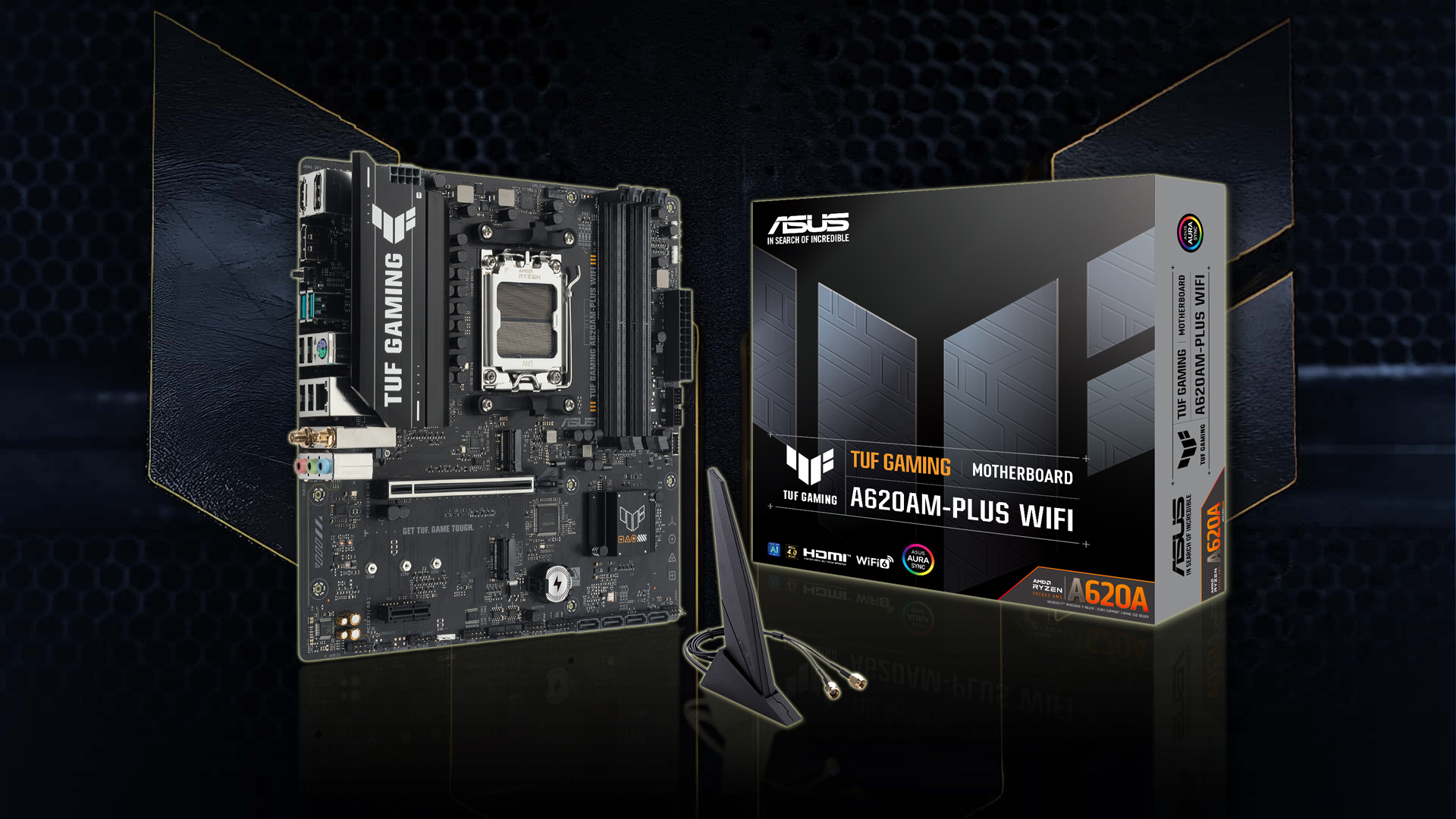
While Biostar and GIGABYTE were the first to adopt this cost-efficient chipset, ASUS has now prepared six new boards across its PRIME and TUF series, aimed squarely at budget-conscious PC builders who still want compatibility with the latest Ryzen 7000, 8000, and even the upcoming 9000 series CPUs.
The A620A chipset is a pared-down version of the regular A620, built around the older Promontory 19 silicon – the same platform that once powered the B550 chipset – instead of the newer Promontory 21. On paper, the primary difference lies in connectivity. Where the A620 uses a PCIe 4.0 x4 link between CPU and chipset, the A620A reverts to PCIe 3.0 x4, effectively halving the uplink bandwidth. For day-to-day use and budget builds, this compromise may not be a dealbreaker, but it makes the board less ideal for heavy I/O or high-bandwidth tasks like multiple fast storage drives and high-throughput expansion cards.
Notably, ASUS’ new A620A models – such as the TUF Gaming A620AM-Plus and PRIME A620AM-K – look almost identical to their A620 counterparts but come with subtle changes
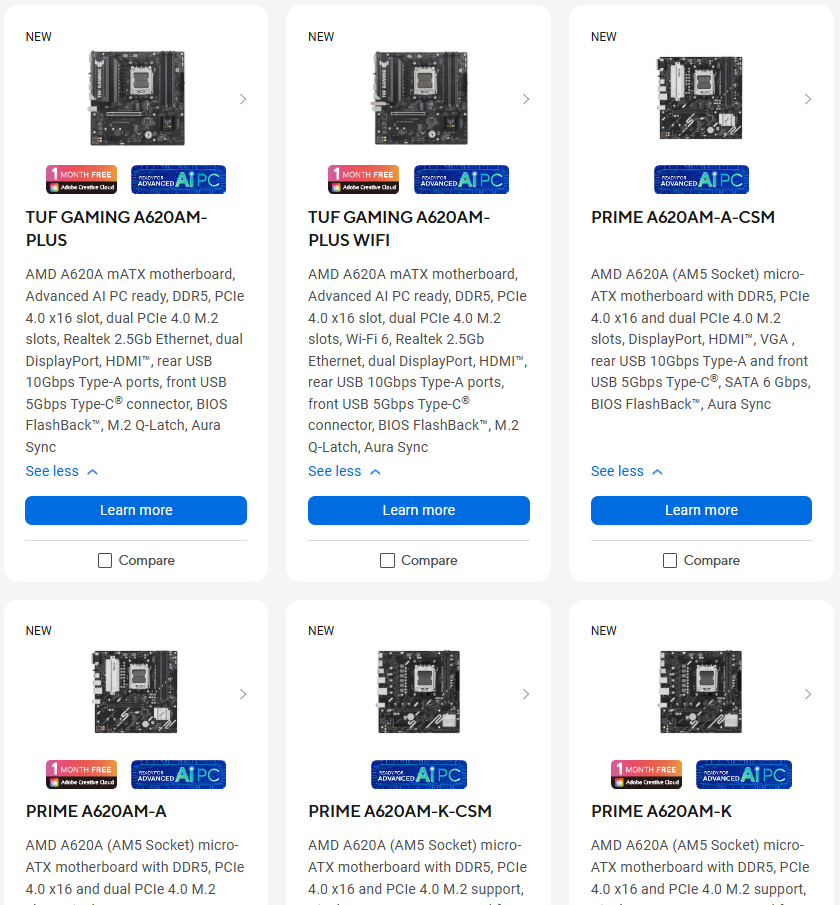
. For example, ASUS has enhanced the rear I/O with faster USB Type-A ports, a detail that should not be overlooked in the entry-level market where every upgrade matters. Another meaningful improvement is memory capacity: while older A620 boards topped out at either 96 GB or 192 GB DDR5 RAM, the A620A versions can handle up to 128 GB or even 256 GB, a nod to future-proofing despite their budget label.
There are also slight adjustments in the expansion slot layout. Some A620A boards appear to lose a PCIe x1 slot, which may reflect ASUS reallocating lanes to deliver those faster USB ports. This choice highlights ASUS’ effort to balance limited resources within the chipset while still offering value to entry-level gamers and system builders.
Of course, as with the A620, the A620A does not support CPU overclocking. That makes sense given the audience: these boards are ideal for CPUs like the Ryzen 5 7500F, Ryzen 9500F, or the Ryzen 8000G APUs. Paired with these chips, the A620A can become the backbone of affordable gaming rigs, office PCs, or even lightweight content creation systems. It’s an appealing option for anyone looking to embrace AMD’s Zen 4 or Zen 5 architecture without stretching their budget.
ASUS has so far confirmed six models: TUF Gaming A620AM-Plus, TUF Gaming A620AM-Plus WiFi, PRIME A620AM-A-CSM, PRIME A620AM-A, PRIME A620AM-K-CSM, and PRIME A620AM-K. Pricing and release dates remain unannounced, but it’s reasonable to expect them to land near the existing A620 lineup. For buyers who don’t need the absolute best bandwidth but still want compatibility with AMD’s latest chips and solid long-term RAM support, these new boards could be a smart compromise in a market that increasingly rewards cost-effective choices.
2 comments
at least usb ports finally faster, took them long enough
good enough for office builds but gamers prob want more lanes