SpaceX has once again positioned itself at the center of the global connectivity race, this time through a landmark $17 billion spectrum acquisition from Echostar. The deal, which splits evenly between cash and SpaceX stock, marks a turning point for both companies and for the U.S. wireless industry at large. 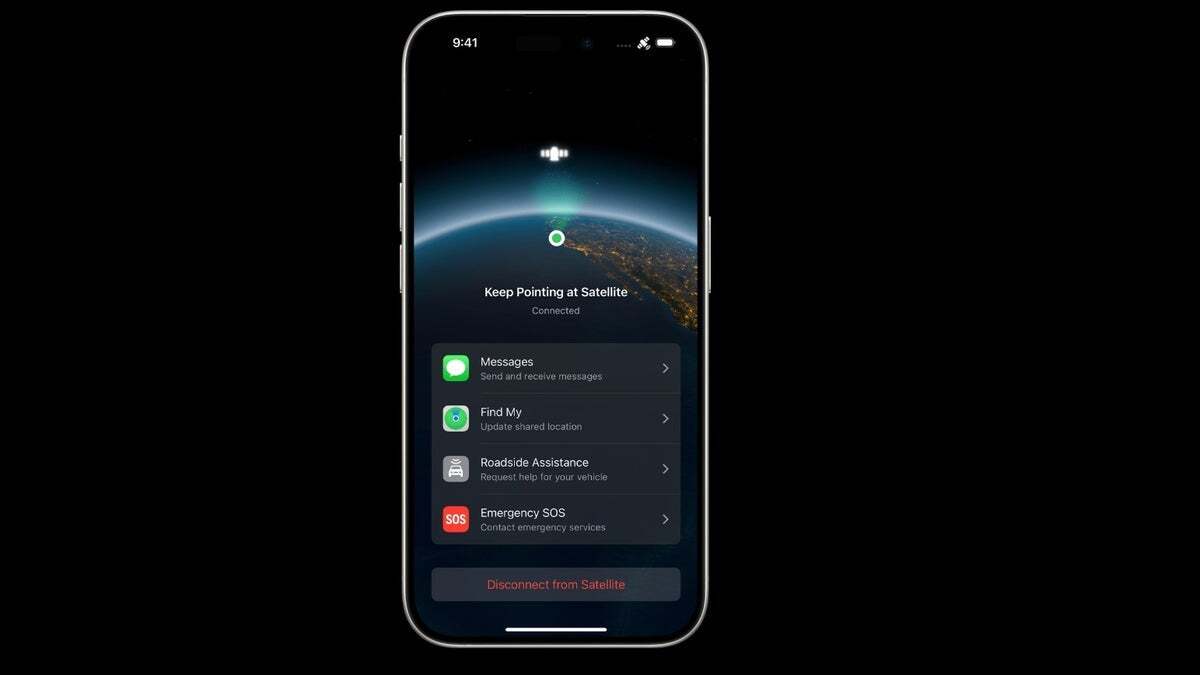
For Elon Musk’s space venture, the purchase represents an opportunity to scale Starlink’s direct-to-cell ambitions to an entirely new level. For Echostar, it offers a lifeline of liquidity and debt relief, while also redefining the company’s trajectory after its failed attempt to become a national wireless carrier.
To understand the magnitude of this deal, it’s worth unpacking the context. Echostar, once aiming to join the likes of Verizon, AT&T, and T-Mobile as the fourth major U.S. carrier, has steadily divested its spectrum assets. Just weeks earlier, the company sold 50 MHz of spectrum across low- and mid-band ranges to AT&T for $23 billion. That sale effectively killed off Echostar’s dream of building its own standalone 5G network, leaving Boost Mobile, its consumer brand, dependent on leasing arrangements. The SpaceX transaction underscores how far Echostar’s strategy has shifted, from would-be industry disruptor to spectrum broker under financial pressure.
For SpaceX, however, the timing could not be better. The company has already deployed over 8,000 Starlink satellites since 2020, with 600 added just in the first half of 2024. Musk’s team refers to these as “cell towers in space” – orbital hardware designed not just for traditional broadband but for direct-to-handset connectivity. By acquiring licenses in the AWS-4 (2 GHz) and H-block bands, SpaceX can finally operate using its own spectrum holdings rather than leasing spectrum from terrestrial carriers like T-Mobile. According to Starlink executives, the newly secured spectrum will provide a “step change in performance,” allowing them to increase cellular capacity more than 100-fold.
What does this mean for consumers? In practice, the deal could signal the beginning of the end for mobile dead zones. Starlink’s direct-to-cell technology aims to connect ordinary smartphones to satellites without the need for specialized hardware. For customers of Boost Mobile, now owned by Echostar, the transaction comes with an added benefit: Boost subscribers will gain access to Starlink’s network, effectively turning coverage gaps into relics of the past. SpaceX President and COO Gwynne Shotwell described the mission succinctly: “This spectrum purchase helps us end mobile dead zones around the world.”
On Wall Street, the deal created an immediate ripple. Echostar’s stock surged by over 17% following the announcement, a reflection of renewed investor confidence. Meanwhile, T-Mobile and AT&T both saw their shares dip, with T-Mobile losing more than 3% and AT&T shedding just over 2%. Investors appear to be recalibrating their expectations as SpaceX positions itself not merely as a satellite broadband provider, but as a direct competitor in wireless services. The fact that Echostar will now hold billions of dollars in SpaceX equity, despite it being privately held, also makes the satellite operator a significant shareholder in Musk’s fast-expanding enterprise.
The Federal Communications Commission (FCC) has framed the deal as a victory for competition and innovation. Chairman Brendan Carr, who previously accused Echostar of “warehousing” spectrum by letting valuable licenses sit idle, praised the outcome. In his view, freeing these airwaves for use by an aggressive innovator like SpaceX represents a win for U.S. leadership in next-generation communications. The FCC’s stance is notable given its earlier threats to revoke Echostar’s licenses if the company did not put them to use. Some observers argue that the regulatory pressure left Echostar with little choice but to sell.
Indeed, the financial backdrop cannot be ignored. Echostar had been flirting with insolvency, weighed down by billions in debt and interest obligations. As part of the SpaceX deal, Musk’s company will assume responsibility for roughly $2 billion in interest payments through 2027, buying Echostar precious breathing room. For critics, this illustrates how regulatory nudges and financial distress aligned to funnel spectrum into SpaceX’s hands. Conspiracy theorists have speculated about political connections – linking Musk to former President Trump and FCC leadership – but there is scant evidence for anything beyond Echostar’s untenable position.
From an industry perspective, the implications are profound. The failed dream of Boost Mobile becoming the nation’s fourth facilities-based carrier highlights just how difficult it is to crack the U.S. wireless oligopoly. But while AT&T’s purchase of Echostar’s earlier spectrum reinforced the status quo, SpaceX’s acquisition could fundamentally disrupt it. With proprietary spectrum and thousands of satellites in orbit, SpaceX is building a parallel infrastructure that sidesteps the cell tower model altogether. If successful, this approach could reconfigure how people think about wireless access – less about coverage maps dictated by terrestrial towers, more about seamless, global connectivity beamed directly from orbit.
The deal also opens the door to new competitive dynamics. Carriers such as T-Mobile and Verizon may find themselves forced into partnerships or confrontations with SpaceX, depending on how quickly Starlink’s direct-to-cell service scales. Rural and underserved regions, long ignored by major carriers due to poor profitability, stand to gain the most from this shake-up. For the first time, mobile users in remote areas may enjoy the same coverage quality as those in urban hubs, without carriers having to build costly infrastructure in hard-to-reach terrain.
Looking ahead, the acquisition highlights a broader trend: the blending of space-based and terrestrial telecommunications. Just as Starlink has transformed home broadband markets in regions lacking fiber or cable, its direct-to-phone ambitions could redefine mobility itself. No longer will users need to think in terms of cell tower density; instead, connectivity may become a truly planetary service, untethered to geography. Whether this leads to collaboration or conflict with traditional telecom giants remains to be seen, but one thing is clear: SpaceX is no longer simply a rocket company – it is rapidly becoming a force in mainstream wireless communications.
In summary, the $17 billion deal between Echostar and SpaceX is far more than a spectrum sale. It is a financial lifeline for one company, a transformative leap for another, and a potential catalyst for a reshaped wireless industry. Regulators have reason to celebrate, investors are recalculating, and consumers – especially those left behind by traditional coverage – may soon see a world where the words “no signal” disappear from their phone screens altogether.
1 comment
Boost customers lucky af now