Just hours before Apple’s highly anticipated September 9 event, new information has surfaced that could shape consumer expectations for the upcoming iPhone 17 family. A regulatory filing in China has revealed the official battery capacities for the lineup, confirming not only bigger batteries but also highlighting differences between models with a physical SIM tray and those relying exclusively on eSIM technology. The discovery, circulated by reliable leaker ShrimpApplePro, underscores Apple’s ongoing transition toward a future without physical SIM cards, a move that could impact global buyers differently depending on regional carrier support.
The iPhone 17 series introduces four distinct models: the ultra-thin iPhone 17 Air, the standard iPhone 17, the powerful iPhone 17 Pro, and the flagship iPhone 17 Pro Max. 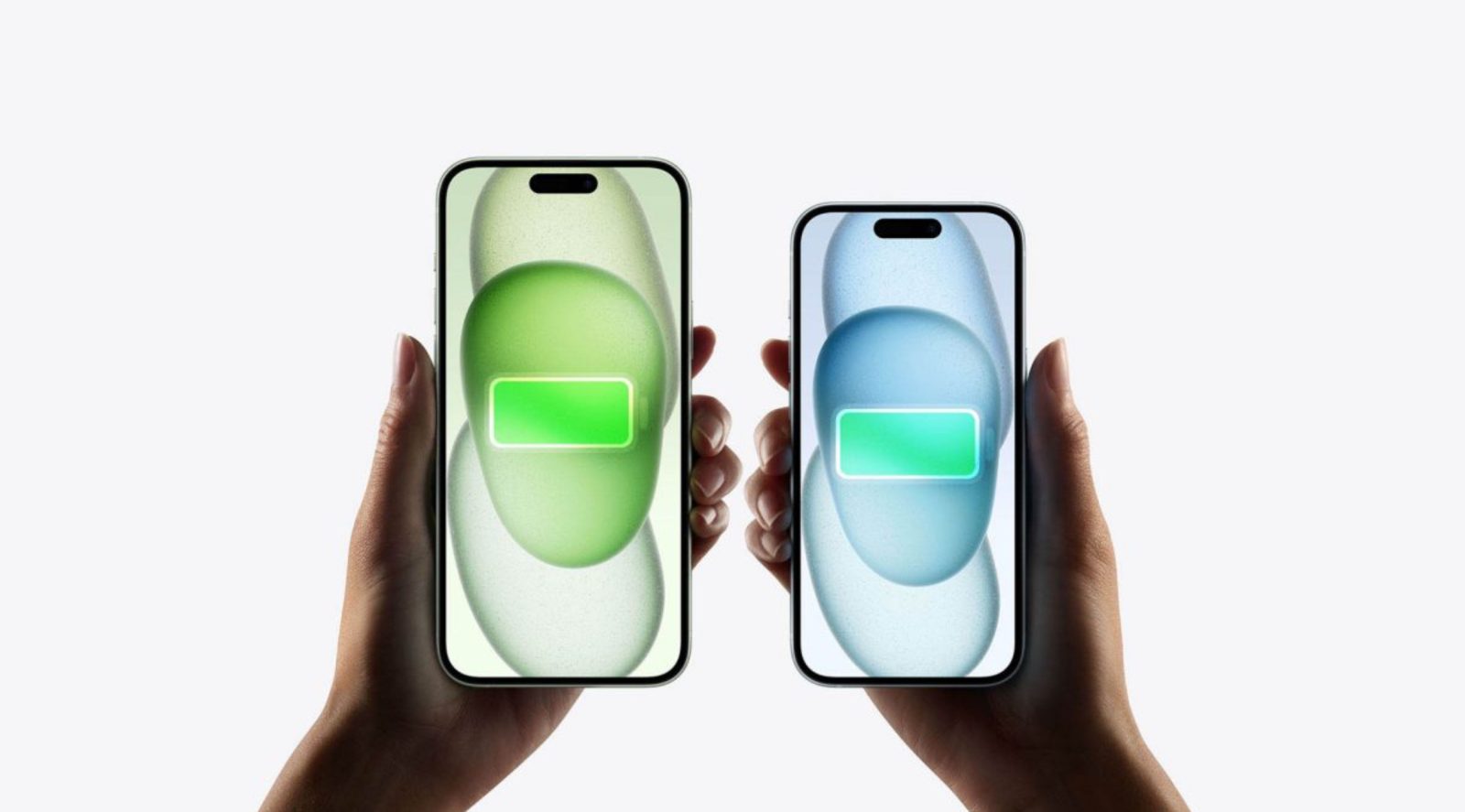
According to the leaked database, Apple is leveraging the internal space previously occupied by the SIM tray to fit larger batteries in eSIM-only models. This seemingly small design decision has tangible results, adding up to hundreds of milliamp-hours to overall capacity.
Here are the numbers as revealed by the leak:
- iPhone 17 Air: 3,036 mAh (with SIM tray), 3,149 mAh (without SIM tray)
- iPhone 17: Single listing of 3,692 mAh, though it remains unclear if this applies to both SIM and eSIM variants
- iPhone 17 Pro: 3,988 mAh (with SIM tray), 4,252 mAh (without SIM tray)
- iPhone 17 Pro Max: 4,823 mAh (with SIM tray), 5,088 mAh (without SIM tray)
The standout revelation is the iPhone 17 Pro Max finally breaking past the 5,000 mAh milestone, something Apple has resisted while competitors like Samsung and Xiaomi have embraced larger cells for years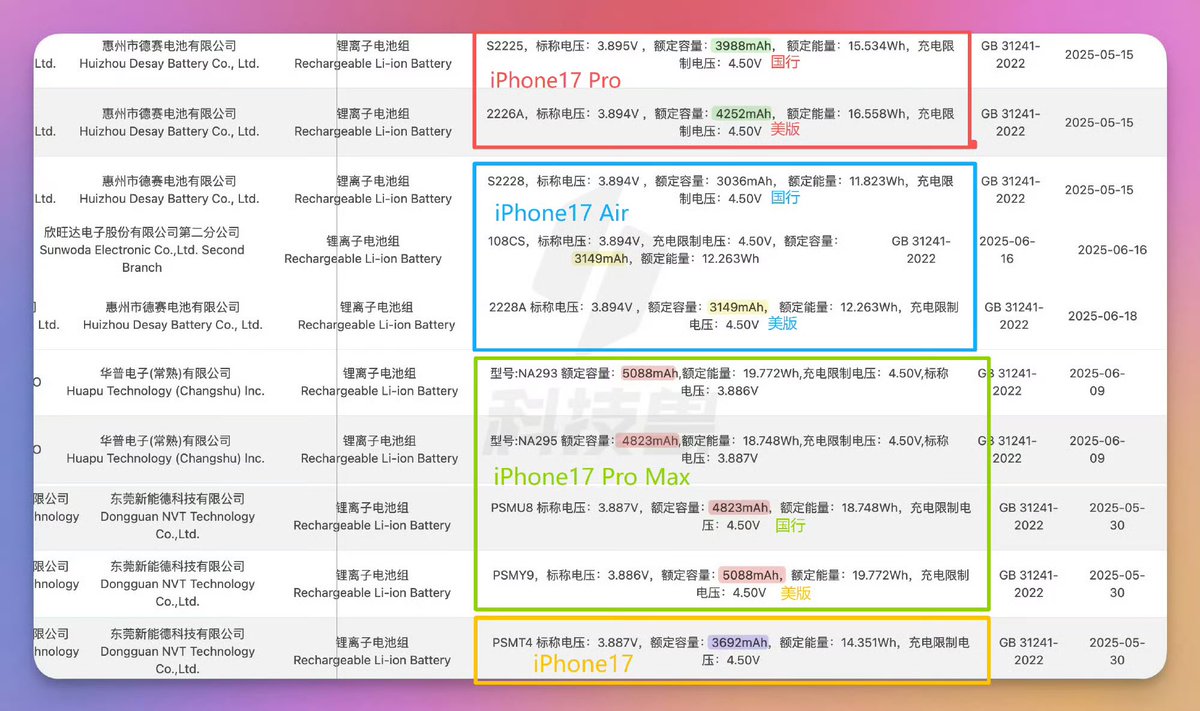
. The Pro Max’s jump represents an 8 percent increase compared to the iPhone 16 Pro Max, and it could translate into noticeably better endurance for power users who rely on heavy gaming, high-resolution video capture, or extended 5G usage. Apple appears to be strategically matching industry standards without compromising too heavily on device thickness or weight.
The iPhone 17 Air, meanwhile, carries the smallest battery of the bunch, reinforcing its role as the ultra-thin option in Apple’s portfolio. To offset the smaller cell, Apple is equipping the device with advanced hardware, including its in-house C1 modem and the A19 Pro chip paired with a 5-core GPU, ensuring that performance efficiency helps stretch out the limited capacity. This suggests Apple is relying on chip-level optimizations as much as raw battery size to deliver acceptable battery life.
The differences between SIM tray and eSIM-only models highlight Apple’s broader strategy. In markets where eSIM adoption is mature, users may benefit from larger batteries. But in countries where physical SIM cards remain dominant, buyers may have to settle for slightly reduced capacity. While the differences range from around 100 mAh to more than 250 mAh depending on the model, they demonstrate how Apple’s design philosophy is increasingly tied to future-forward connectivity choices.
Beyond the iPhone, Apple’s September event – branded as the “Awe Dropping” keynote – will also showcase the next-generation Apple Watch and updated AirPods. Still, the battery revelations are bound to be a central talking point, especially as battery longevity has long been a sticking point in the smartphone industry. Apple’s ability to finally push its largest phone over the 5,000 mAh threshold could silence one of its most persistent criticisms, putting the iPhone on more equal footing with Android flagships in the endurance race.
Tomorrow’s announcements will confirm whether these leaks hold true, but if they do, Apple may have taken one of its most pragmatic steps forward in years: bigger batteries where it counts, and a clear sign that the future of the iPhone is fully eSIM-powered.
4 comments
rip physical sim, guess esim future is real now
c1 modem chip sounds promising, hope it saves battery
finally apple catching up with android on battery lol
pro max gonna be a beast with that battery