Another unsettling discovery has been made at Taiwan Semiconductor Manufacturing Company’s (TSMC) massive construction site in Kaohsiung, as workers unearthed yet another unexploded bomb from World War II. 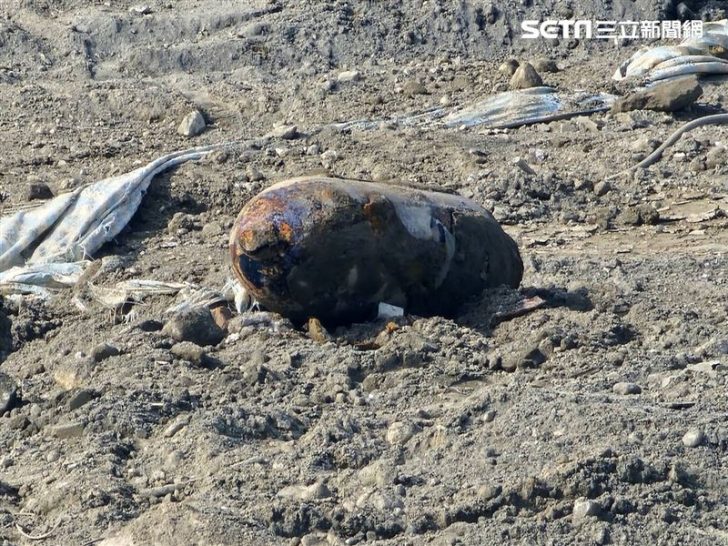
This marks the third such find in less than a year, underscoring the strange overlap between the island’s wartime past and its high-tech future.
The latest bomb was dug up at 11:30 a.m. local time, immediately triggering an alert to Taiwan’s army. Within an hour, the military’s explosive ordnance disposal team had safely removed the rusted device and transported it to a warehouse for controlled disposal. Officials confirmed that the bomb posed no immediate danger to workers on site, but its discovery adds to growing concerns about how many more relics of war remain hidden beneath the soil.
The Kaohsiung site is particularly significant for TSMC, as it is set to become one of the company’s most advanced chip production hubs. The complex will eventually house five separate fabrication plants, known as P1 through P5. The first plant, P1, has already entered the final phases of equipment installation and is expected to begin mass production of 2-nanometer chips before the end of this year. P2 is also planned for 2nm production, while P3 through P5 are slated to move into even more advanced territory with technologies such as TSMC’s 1.4A process nodes.
These new fabs are critical for maintaining TSMC’s leadership in the global semiconductor market, particularly at a time when demand for cutting-edge chips is surging due to AI workloads, advanced smartphones, and next-generation computing platforms. The presence of unexploded ordnance, however, highlights the peculiar historical footprint of the Kaohsiung region. The land once hosted a major oil refinery during the Japanese colonial period, making it a prime target for U.S. air raids in the 1940s. Hundreds of bombs were dropped on the area, many of which evidently never detonated.
Prior to this week’s discovery, workers had already encountered two other bombs at the same construction zone – one weighing 1,000 pounds and another 500 pounds. Both were corroded beyond recognition, making it impossible to identify their exact origin or manufacturing details. All three discoveries so far have required immediate intervention by the military and strict safety protocols to ensure that construction could continue without delay.
Despite these repeated finds, TSMC has not slowed down its aggressive expansion in Kaohsiung. Industry watchers note that the company’s ability to push forward, even amid such extraordinary interruptions, reflects both the urgency of building capacity for next-generation nodes and the resilience of Taiwan’s semiconductor sector. If anything, the discoveries add an unexpected layer of drama to an already historic project: a region once bombed to cripple Japan’s war machine is now being rebuilt into the very heart of the world’s most advanced chipmaking ecosystem.
While engineers, construction crews, and military specialists carefully navigate these explosive remnants of history, the story of Kaohsiung’s chip factories is shaping up to be about more than just nanometers and transistor counts. It’s also about the way the past literally lies beneath the foundation of the future.
1 comment
crazy how war history still explodes into modern tech stuff