The debate over artificial intelligence chips in the United States has taken a new turn, with lawmakers pushing the idea that American consumers and businesses should be first in line for products from NVIDIA and AMD before these chips are exported overseas. This proposal, now tied to the upcoming National Defense Authorization Act of 2026, is wrapped into a measure called the Guaranteeing Access and Innovation for National Artificial Intelligence Act of 2025 (the GAIN AI Act). Supporters argue it is a necessary step to ensure that U.S. 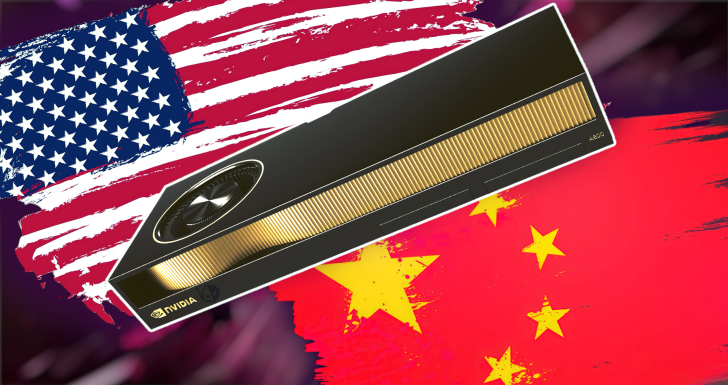
universities, startups, and small companies are not starved of the cutting-edge computing power they need to remain competitive in the AI race.
The push is led by Senator Jim Banks, who stresses that demand for advanced AI processors has massively outstripped supply, creating a choke point that has left American firms and researchers waiting months to secure critical hardware. The new law would require companies like NVIDIA and AMD to prioritize domestic demand, limiting exports if American institutions are still on backorder. In essence, Washington wants to guarantee that the nation’s AI infrastructure has first dibs on the very chips driving global innovation.
Interestingly, the scope of the Act is not yet limited to data-center AI accelerators. Although the immediate target is advanced AI chips used in large-scale computing, consumer GPUs could easily be swept in. Graphics cards, after all, have become essential not only for gaming but also for smaller-scale AI research, creative industries, and even cryptocurrency mining. Any attempt to restrict exports could reshape the global GPU market, potentially raising tensions with major buyers abroad, particularly China, where demand for AI-capable hardware is immense.
NVIDIA, however, has pushed back strongly against the narrative. The company argues that the so-called AI chip shortage described by lawmakers is exaggerated, if not outright misleading. Jensen Huang’s firm points out that supply constraints are real but manageable, and that proposals like the GAIN AI Act risk disrupting international trade while limiting U.S. influence abroad. Some observers note that this mirrors earlier export controls aimed at restricting China’s access to American semiconductors, but with a broader, inward-facing twist.
Beyond restricting exports, lawmakers are also considering highly controversial measures such as requiring a built-in “kill switch” on AI chips shipped to China, ensuring they could be disabled remotely. Such ideas underline the growing anxiety in Washington about technology outpacing regulation and the geopolitical stakes of AI dominance. At the same time, analysts warn that forcing companies like NVIDIA to prioritize one market could backfire: it risks inflating prices, extending waiting lists, and encouraging competitors like Broadcom, Intel, Huawei, and even FPGA-based solutions to gain market share as alternatives.
The broader message is clear: the U.S. wants to tighten control over its semiconductor industry to secure its own technological edge, even if that means redrawing the rules of global supply chains. Whether the GAIN AI Act truly helps consumers, or simply complicates an already strained market, remains to be seen – but the debate itself reveals how central GPUs have become to the world’s economic and political future.
5 comments
Haha waiting lists just make gpus more expensive, companies use it to flex. Pay 20k or wait a year? classic scam
Sad when gov has to force ‘American’ companies to prioritize actual Americans first..
Don’t be fooled when they say consumers, they mean data centers and big AI firms, not gamers like us
Honestly anything that busts the fake shortage game is welcome
Maybe time to just switch to fpga solutions if gpu prices keep going up lol