China has quietly pulled off a milestone that just a decade ago seemed unthinkable: it now deploys more robots per worker than Germany, and experts say it is poised to overtake South Korea, long considered the gold standard in robotic density. 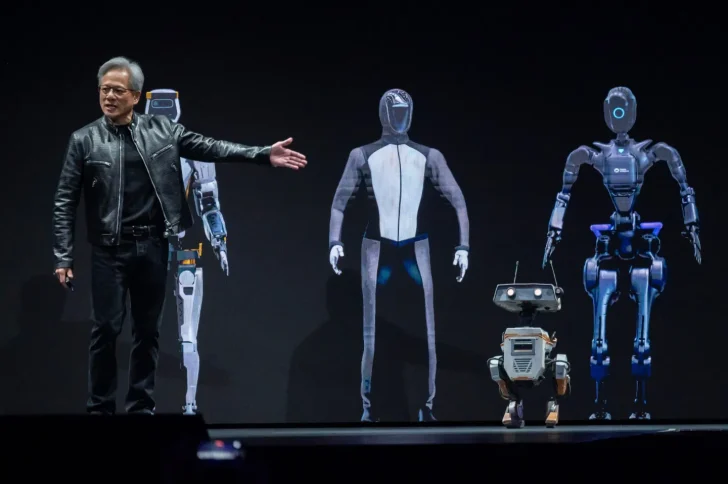
This surge is part of what many observers are calling a national ‘robot frenzy,’ fueled by state-backed subsidies, generous tax credits, and an industrial policy determined to future-proof Chinese manufacturing.
Traditionally, China’s allure for global manufacturers rested on its vast pool of low-cost human labor, particularly for repetitive and assembly-heavy tasks. But rising wages and demographic shifts have forced the country to rethink its advantage. Instead of letting labor costs climb, Beijing has doubled down on automation as the next competitive edge. According to recent reports, Chinese factories are installing around 280,000 industrial robots annually, and more than half of these machines are built by domestic companies. That local dominance matters: homegrown robotics firms not only deliver lower price tags compared to foreign rivals but also align perfectly with the government’s ‘Made in China’ ambition to reduce reliance on imports.
What makes this transformation striking is the paradox it creates. Economics 101 teaches that as a nation develops, labor costs should inevitably rise. Yet in China’s case, the robot invasion has helped reverse that trajectory, driving costs down while boosting productivity and efficiency. Industries from automotive to electronics are embracing automation at breakneck speed. And the push doesn’t stop with assembly-line arms: Chinese companies are pouring resources into humanoid robots as well. Unitree, for instance, is building affordable humanoids that promise to blur the line between science fiction and shop floor reality.
Of course, this success story has shadows. Over the past decade, government data reveals employment across major industrial sectors has shrunk by more than 26%. Automation is not the sole culprit, but it plays a significant role in reducing the need for human hands. Workers displaced by machines face an uncertain future, and critics argue that rapid adoption is widening inequality and hollowing out once-stable jobs. Even industry leaders like NVIDIA’s Jensen Huang, who hails robotics as part of the coming wave of ‘physical AI,’ acknowledge the unsettling truth: every leap in efficiency may mean another worker replaced.
China’s robotic race captures the contradictions of the modern economy. On one side, it showcases technical ingenuity, industrial might, and the potential to set new global standards. On the other, it raises hard questions about livelihoods, ethics, and how far society is willing to let automation reshape human labor. For now, the momentum is clear: China is betting big on robots, and the rest of the world is watching closely.
2 comments
china moving crazy fast with robots, kinda scary but impressive ngl
jobs down 26% is brutal, what do all those ppl do now??