Google’s latest Pixel 10 teardown is attracting attention not only from repair advocates but also from everyday users curious about what makes the phone tick. The Pixel 10 doesn’t look radically different on the outside – Google clearly chose to keep the same familiar design language – but inside, it’s a different story. 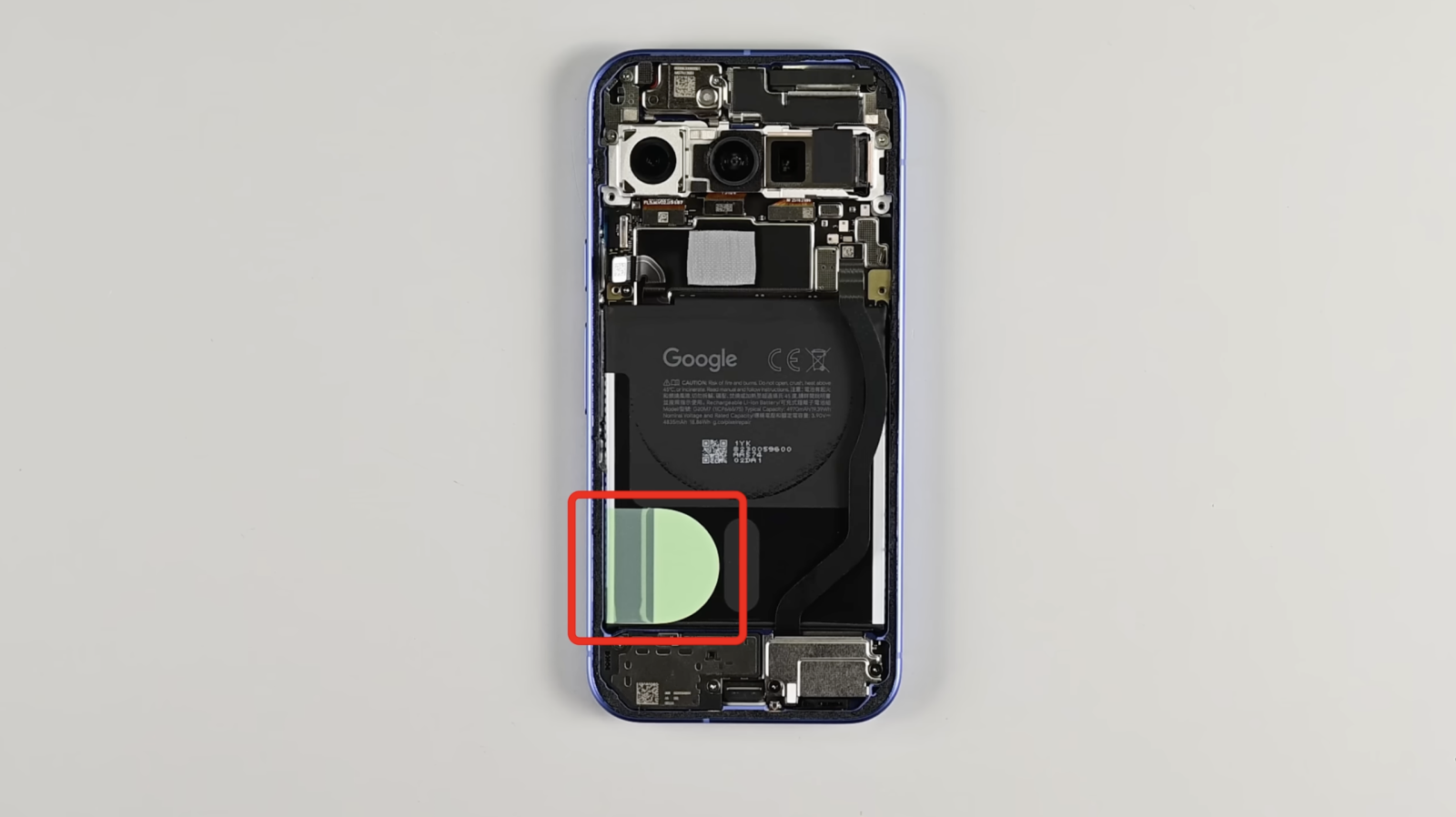
A detailed teardown by iFixit reveals that Google has reimagined the device’s internal structure with an emphasis on repairability, modularity, and practical improvements that may extend the phone’s life span for real-world users.
One of the biggest highlights is the way Google has redesigned the battery replacement process. Past Pixels, like many modern smartphones, required careful prying, adhesive cutting, or even full front panel removal just to swap out the battery. The Pixel 10 introduces a smart “dual-entry pull jacket” system. This design makes it possible to remove the battery without wrestling with fragile tabs or sticky glue. Instead, a green pull strip slices cleanly through the adhesive, allowing for a swift, reliable battery swap. Since battery replacement is the most common repair that most phone owners encounter, this change alone represents a meaningful improvement in usability and longevity.
iFixit notes another thoughtful detail: Google now uses fewer screws overall, and every one of them is standardized with the same T3 Torx Plus head. This eliminates the messy tool juggling that plagues many competing phones. For the average person who may never have cracked open a device before, this means fewer headaches and more confidence that they can perform basic fixes themselves. Small touches like these send a clear signal that Google is listening to years of criticism about locked-down designs.
Beyond repairability, the teardown also shines a light on the Pixel 10’s upgraded components. Nestled inside is Google’s brand-new Tensor G5 chip, a cornerstone for powering the latest AI-driven features, enhanced image processing, and overall system performance. Alongside it, engineers have built in a Pixelsnap magnetic ring that enables Qi2 wireless charging – an updated charging standard that promises better efficiency and stronger magnetic alignment. These internals show that Google hasn’t just focused on user-friendly repairs, but also on meaningful performance and charging upgrades.
The teardown further reveals that Google has maintained a minimalist internal architecture. By organizing key parts behind the same set of screws and simplifying the overall internal layout, Pixel 10 keeps accessibility in mind. While not every component is modular – swapping cameras, speakers, or USB-C ports is still not as straightforward as enthusiasts might hope – the direction is unmistakable. The company is building with the end user in mind, even if the improvements are gradual rather than revolutionary.
This strategy positions Google more favorably in a market where rivals often prioritize sleekness over practicality. Apple, for instance, recently debuted its own low-voltage induced battery removal system, showing that even industry leaders are responding to pressure around repairability. With the Pixel 10, Google joins that wave, earning a 6 out of 10 repairability score from iFixit. While far from perfect, it’s a noticeable improvement over older Pixels and a statement that Google intends to catch up with industry standards while carving out its own approach.
For users, the implications are significant. A phone that’s easier to fix doesn’t just save on repair costs; it extends the device’s useful life, reduces electronic waste, and creates a sense of ownership beyond flashy software features. It’s a move that appeals to both tech enthusiasts and those who simply want their expensive device to last longer without paying premium repair fees. The Pixel 10 teardown, in other words, isn’t just about screws and pull tabs – it’s about a shift in how Google perceives its responsibility to customers and the longevity of its hardware ecosystem.
Not every detail will please everyone. Some still criticize the Pixel 10 as underpowered compared to pricier flagships, and others find the design uninspired. Yet, when looked at from a practical perspective, this device demonstrates a meaningful evolution. The teardown serves as proof that Google is finally balancing cutting-edge technology with repair-friendly design. For many, that’s a far more important change than a slightly tweaked exterior or marginal camera bump.
4 comments
Qi2 is cool but lol this phone still ugly af and overpriced
Repair score 6/10 is not great but at least better than older Pixels
Tensor G5 sounds strong on paper but let’s see real benchmarks
I just want a phone I can fix myself without 20 tools, so this is progress