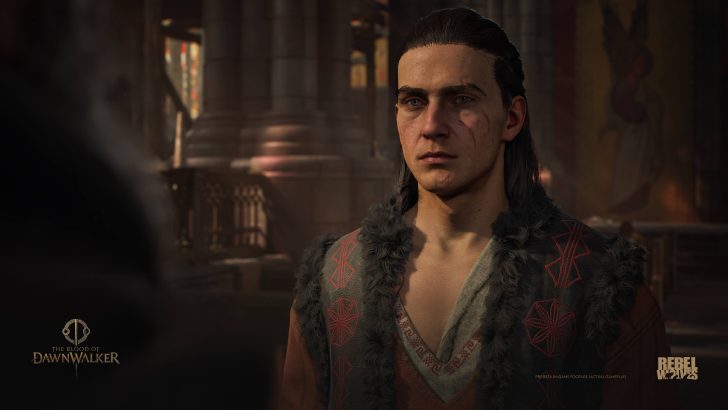
The Blood of Dawnwalker Q&A – A Deep Dive into the Vampiric World of Coen
During Gamescom 2025, Rebel Wolves unveiled an exciting glimpse into their upcoming narrative sandbox RPG, The Blood of Dawnwalker, offering a behind-the-scenes look at the development process. The game, which is set to launch in 2026 for PC, PlayStation 5, and Xbox Series S|X, introduces players to a world where vampires no longer lurk in the shadows. Instead, they have seized control of a portion of human society, reshaping the world in their own image. After the presentation, I sat down with Creative Director Mateusz Tomaszkiewicz, who has an impressive history as the Lead Quest Designer for The Witcher III: Wild Hunt and Quest Director for Cyberpunk 2077 at CD Projekt RED, to discuss the game’s inspirations, mechanics, and the creative process behind this ambitious project.
Choosing the Right Setting
When asked why Rebel Wolves chose to set the game in the 14th century, Tomaszkiewicz explained, “We wanted to explore a world where vampires came out of the shadows and took control of human society. The Black Plague had a devastating impact on Europe, wiping out large portions of the population and overturning the established world order. Amid this chaos, the vampires saw an opportunity to rise, offering salvation to humans by using their blood’s special properties to combat the plague.”
The game takes place in Vale Sangora, a secluded fictional valley nestled in the Carpathian Mountains. The vampires, in their bid to protect humanity from the plague, defeated a local lord who was widely despised and built a cult-like following. They’ve twisted Christian doctrine to their advantage, posing as messianic figures sent to save humanity. “We didn’t want to replace Christianity outright,” Tomaszkiewicz clarified. “Instead, we explored how vampires could manipulate existing beliefs to further their cause.”
A World of Ambiguity
The vampires in The Blood of Dawnwalker are not portrayed as purely evil entities. In fact, the game delves into the complexity of its creatures. “Even the vampires themselves are not just evil; they are driven by their own motivations,” Tomaszkiewicz said. “Some are morally ambiguous, like Xanthe and the main antagonist Brancis, who have their own reasons for the choices they make.” While vampires are central to the story, the game also introduces other creatures that have come into the light, inspired by European folklore, particularly from the Carpathian region.
The Duality of Day and Night
One of the game’s standout features is its day/night cycle. Coen, the protagonist, gains vampiric abilities only at night. Tomaszkiewicz explained, “We wanted to highlight the contrast between day and night, with Coen becoming more powerful after sundown, unlocking abilities that he can’t use during the day. This mechanic influences both gameplay and story, as certain quests and events play out differently depending on the time of day.”
But this duality isn’t just for show. The decisions you make during the night – such as feeding on humans or animals – affect the narrative and even Coen’s personality. As Tomaszkiewicz explained, “Giving into your vampiric nature will impact Coen’s character. He becomes more desensitized to violence, which alters how other characters perceive him.” Players can choose to embrace or resist Coen’s bloodlust, which will shape their experience.
Feeding and Combat Mechanics
Feeding is a crucial aspect of the game. Coen needs blood to survive, and the amount he consumes directly impacts his abilities. However, if Coen is hungry and unable to control his thirst, he may drain a victim completely, potentially altering quests or relationships with key characters. Tomaszkiewicz elaborated, “At night, your blood bar is essentially your health bar. If you’re low on blood, you’ll need to drain humans or animals to replenish it. If Coen is desperate, he may choose to feed more aggressively, which could have serious consequences.”
Combat in The Blood of Dawnwalker also reflects the player’s choices. The game offers both traditional and non-directional combat systems, allowing players to choose between precise directional swings or simpler, more intuitive attacks. Tomaszkiewicz shared that this change was implemented after listening to feedback from players who felt the directional combat was too complicated. “The omniblocks and omniattacks let players focus on fluidity and ease, while still maintaining tactical depth,” he explained.
As for feeding during combat, Tomaszkiewicz confirmed that while Coen can replenish his blood while fighting, it’s not as efficient as feeding outside of combat. “It’s a balance. We want to ensure that combat remains challenging, but not overpowered. Players must decide when to use their feeding abilities strategically,” he added.
Character Development and Loot
Character development plays a major role in The Blood of Dawnwalker. As Coen progresses, he unlocks new abilities and powers, many of which are tied to his vampiric nature. These abilities are acquired by draining other vampires of their blood, each vampire offering a unique power that can be added to Coen’s arsenal. Tomaszkiewicz said, “You can develop Coen in various ways, whether you want to focus on sword fighting, magic, or tapping into your vampiric abilities. It’s all about player choice.”
The game also features an in-depth loot system, where players can equip Coen with various weapons, armor, and talismans. “Gear is essential for making Coen more powerful,” Tomaszkiewicz noted. “We have different armor types, ranging from light to heavy, and each one has its own advantages. There are also cosmetic options for those who want to make Coen look stylish, though we don’t currently have a transmog system.”
The Non-Linear Narrative
The narrative in The Blood of Dawnwalker is non-linear, with players given the freedom to tackle quests in different orders and explore the world at their own pace. Tomaszkiewicz explained, “We want players to feel like every quest, whether it’s main or side, is important. Even the small quests can have big consequences, depending on how you approach them. You can choose to rescue your family early, for example, but it will be more difficult, and there will be consequences if you don’t complete other quests first.”
Additionally, players can affect the strength of certain enemies by taking actions in the world. “Exploring the valley and completing quests can weaken enemies, making them easier to defeat. But there are also moments where your actions can make enemies stronger,” Tomaszkiewicz added. “It’s all about the choices you make.”
The Future of the Game
The game’s development is progressing well, with much of the content already built out and playable. “The game is on its way to beta, but we’re still fine-tuning certain systems, including combat and some of the graphics,” Tomaszkiewicz said. “We’re using Unreal Engine 5, and while the game is playable from start to finish, we’re still polishing some areas.”
Players can expect around 40 hours of gameplay for the average playthrough, though those who want to fully explore the valley and uncover all its secrets can expect to spend more time in the world of The Blood of Dawnwalker. As for the absence of horses in the game, Tomaszkiewicz revealed that while there won’t be horseback riding, Coen has access to other fast travel options, including shadowstep and planeshift abilities.
The combat system, too, has seen improvements based on player feedback, with changes to the radial menu and the addition of a new camera option to address concerns about the camera being too close. “We’ve taken a lot of feedback into account,” Tomaszkiewicz concluded. “We want the game to feel fluid and immersive while still offering the depth that RPG fans love.”
Conclusion
The Blood of Dawnwalker is shaping up to be one of the most ambitious RPGs in recent years. With its complex narrative, dynamic day/night cycle, and deeply personal choices, the game promises to offer a rich and immersive experience. Fans of The Witcher III and other narrative-driven RPGs will find plenty to love, but with enough twists to make it stand on its own. As the team at Rebel Wolves continues to polish the game ahead of its 2026 release, it’s clear that this is a title worth keeping an eye on.